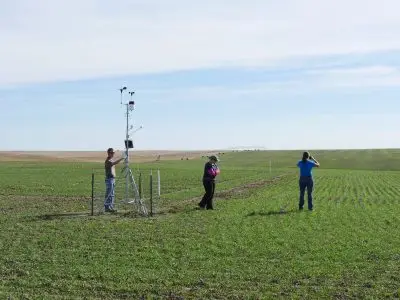
A needs assessment led by the University of Wyoming Extension may help the state’s agricultural community plan for and manage challenging environmental conditions like drought, wildfires and water shortages.
Danielle “Nellie” Bruns, an associate professor in the University of Wyoming’s Department of Zoology and Physiology, has received a five-year $1.78 million research grant from the National Institutes of Health (NIH) for a project investigating how muscles cope with low amounts of oxygen.
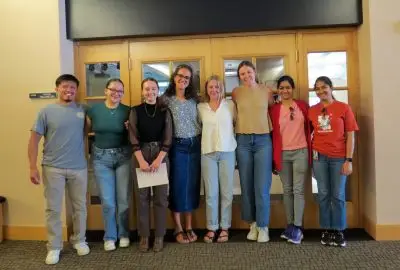
Throughout the summer, members of the University of Wyoming College of Agriculture, Life Sciences and Natural Resources have been celebrated for their exceptional efforts and accomplishments.
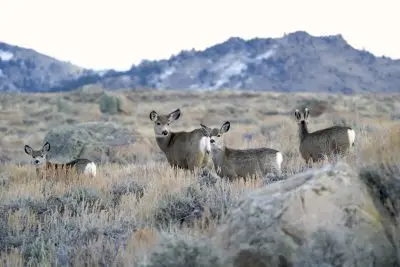
If the spread of cheatgrass and other annual invasive grasses is left unchecked, mule deer will lose key habitat in northeast Wyoming, a new University of Wyoming study suggests.
The story of Wyoming is inseparable from the story of agriculture — from the grit of early cattle ranchers who carved out livelihoods on the open range, to today’s farmers, ranchers, and natural resource stewards navigating drought, invasive species, and market uncertainties.
Jessie Williamson wants to understand how mountain hummingbirds, specifically two species, respond to extreme environments in the high-elevation Andes Mountains of Peru and Bolivia.
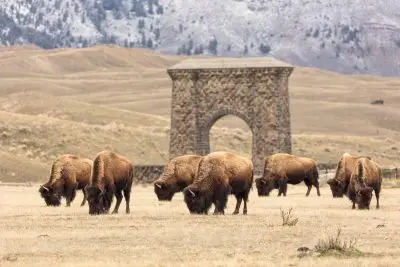
Scientists from the University of Wyoming, Washington and Lee University, and the National Park Service have published research shedding new light on the value of bison recovery efforts in Yellowstone National Park.
The University of Wyoming welcomes accomplished weed scientist Brian Mealor, director of the Sheridan Research and Extension Center, as interim director of the Wyoming Agricultural Experiment Station.
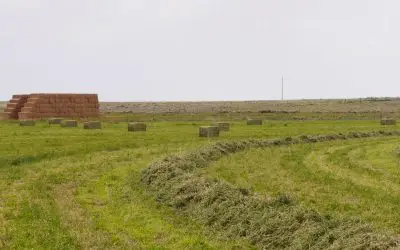
To assist producers facing wildfires, the University of Wyoming Extension has launched a new online platform to help coordinate hay donations and provide fire recovery resources.
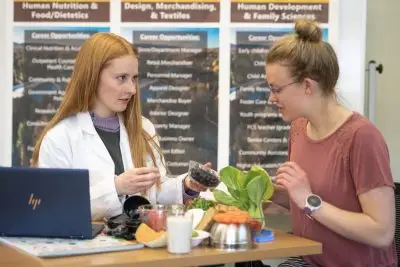
The University of Wyoming recently received accreditation for a new graduate program in nutrition and dietetics, housed in the Department of Family and Consumer Sciences.
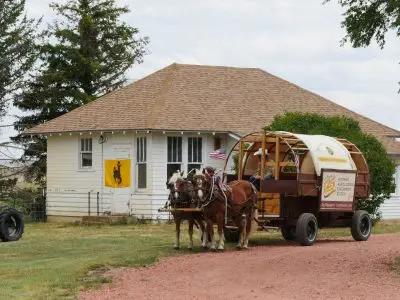
Like many educational institutions, the University of Wyoming champions new innovations and discoveries. But UW has a unique respect for keeping traditional technologies alive, too.
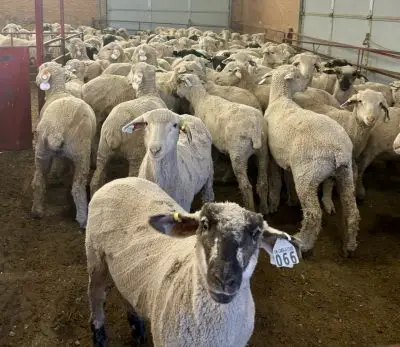
The Wyoming Wool Initiative, in partnership with the University of Wyoming College of Agriculture, Life Sciences and Natural Resources, is now accepting applications for its 2025-2026 Lamb-a-Year program.