
The University of Wyoming conferred its highest award, the honorary doctoral degree, upon an individual who was recognized during UW a commencement ceremony on May 11.
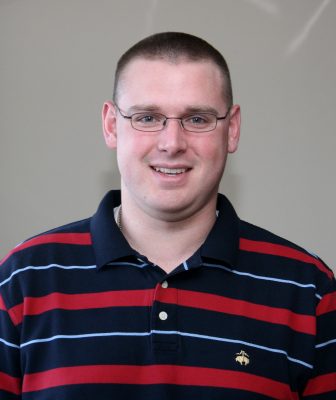
Noah Hull, laboratory technical manager for global health at the Association of Public Health Laboratories (APHL), is an alumni of UW. Hull will receive a Doctor of Science degree.
UW alumni, current or former trustees, and faculty members are eligible to nominate individuals for honorary degrees who embody the university’s high ideals; exemplify the values of excellence, service, and integrity; and possess distinguished accomplishments in their professions, public service, or service to humanity. Submissions are referred to a joint committee of trustees and faculty members, which forwards recommendations to the full Board of Trustees for approval.
Hull is a distinguished scientist and public health expert renowned for his expertise in infectious disease epidemiology, molecular diagnostics and bioinformatics. At APHL, he oversees projects related to next-generation sequencing, bioinformatics, genomic epidemiology and wastewater-based epidemiology. His leadership at APHL has been instrumental in supporting over 70 countries to enhance their capabilities and capacity in detecting and responding to infectious disease threats.
Hull obtained his Ph.D. in infectious disease epidemiology and molecular diagnostics from UW’s Department of Veterinary Sciences in 2017. He completed his Master of Public Health in epidemiology from the University of Alabama-Birmingham in 2013 and his Bachelor of Science in molecular biology from UW in 2012.
Before his role at APHL, Hull was the microbiology program manager at the Wyoming Department of Health’s Wyoming Public Health Laboratory, where he managed the laboratory’s response to the COVID-19 pandemic, including the implementation of a 24/7 schedule, the recruitment of over 120 additional surge staff, and the processing of up to 3,500 patient samples daily.
Hull is a member of several professional societies and has received numerous awards and honors for his contributions to the field of public health.
“Throughout his career, Dr. Hull has consistently demonstrated an unwavering commitment to advancing public health on both a national and global scale,” wrote Joseph Reed, the Wyoming Department of Health’s laboratory administrator. “He has not only displayed exceptional expertise in next-generation sequencing, but his visionary leadership and dedication to promoting health equity and access for all populations have made him a true trailblazer in the field.”
During his time with the Wyoming Department of Health, Hull continually reached out to citizens and UW collaborators, including UW undergraduates, says Rachel Watson, a senior lecturer in UW’s Division of Kinesiology and Health and director of the UW Science Initiative’s Learning Actively Mentoring Program. This included volunteering his time to connect educators and students with cutting-edge technologies they otherwise never would have the opportunity to learn and use; scheduling tours of his lab on Saturdays; donating older yet still state-of-the-art pieces to UW’s student lab; and volunteering as an official learning coach for a microbiology capstone course.
“Noah understands that inspirational change is born of connections between scholars who are all doing meaningful work. Noah knows that team science is the cornerstone of the future and that relationships are the key ingredient in the change equation,” Watson says. “Noah recognizes that true team science integrates not only other pedigreed scholars, but also educators, students, and citizens. Noah is a leader. If one were to look at a statewide web/social network, Noah would be a hub.”
To read about another individual outside of the College of Agriculture, Life Sciences, and Natural Resources awarded an honorary degree this May, see the original version of this article published on UW News.