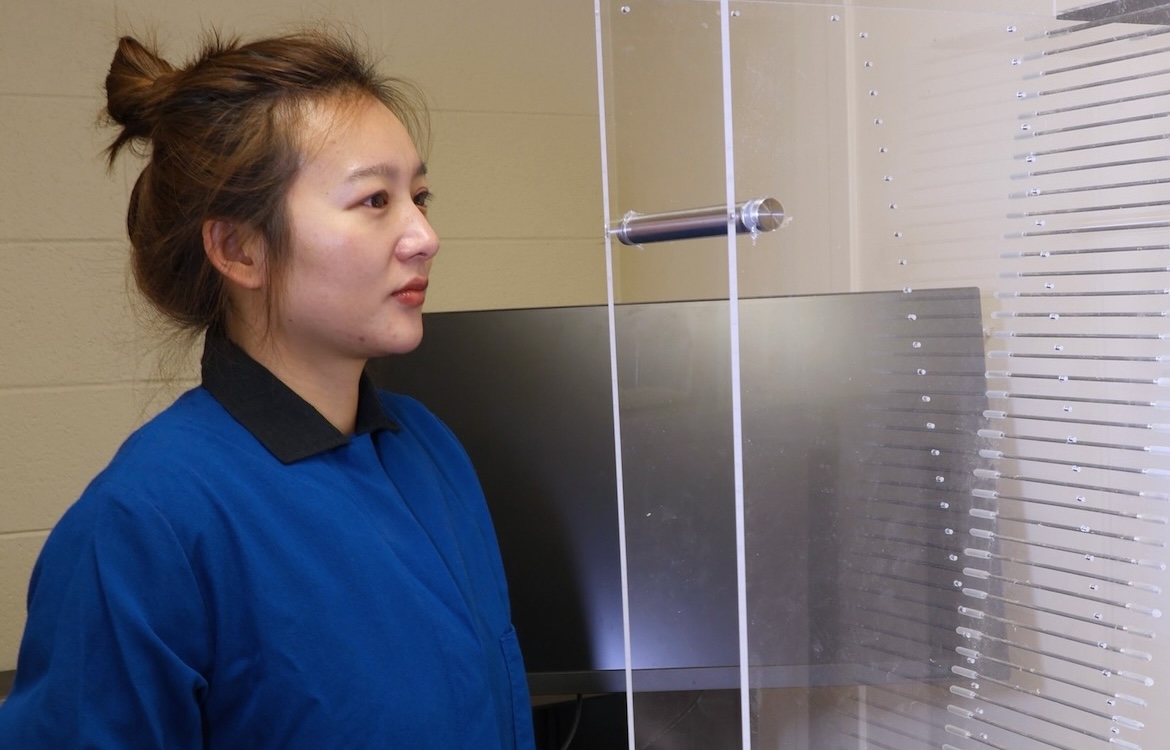

The University of Wyoming Extension welcomes Brenna Litynski as an agriculture and natural resources educator serving Albany County.

Litynski obtained her bachelor’s degree in environmental studies and art from St. Mary’s College of Maryland in 2021. She moved to Wyoming to earn a master’s in animal and veterinary science, which she completed in May 2024. During her time at UW, she proposed a Farm to Table program focusing on social media and outreach and participated in UW Extension Ranch Camp. In 2022, she won the Ranch Camp student paper competition. She was invited back to 2023 Ranch Camp as a guest speaker.
Litynski has a background in educational roles serving many age groups and populations. She has worked as a swing dance instructor, a swimming coach, an art teacher, and a graduate assistant in the Life Sciences Department. In 2023, she received the LIFE GA Dedication and Excellence Award for her work as a graduate assistant. In addition, Litynski has experience as a research assistant in a UW lab and a field technician for the USDA, where she helped maintain an 800-acre ranch.
“As part of my work with Extension, I aim to translate complex research and information about agriculture and natural resources in a way that is easily understood and accessible to the public and producers,” says Litynski.
Litynski started her new role with UW Extension Monday, May 27. She can be contacted at blitynsk@uwyo.edu.