Continuing a time-honored community tradition, the 42nd annual Fremont County Farm and Ranch Days will take place Wednesday-Thursday, Feb. 11-12, at the county fairgrounds in Riverton.
Wyoming’s Cent$ible Nutrition Program (CNP), which provides free nutrition and physical activity education to residents with limited resources, has shifted from a county-based model to a regional structure in response to a loss of federal funding.
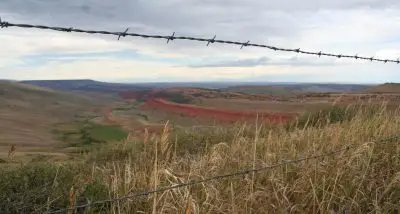
The University of Wyoming Extension has published a new interview-based report identifying key changes, challenges, and opportunities encountered by ranchers in Wyoming’s Upper Wind River Basin.
Chase Markel, a University of Wyoming Ph.D. student from Wheatland, is harnessing artificial intelligence to transform how animal scientists study risk factors for congestive heart failure in cattle.
For Wyoming commercial pesticide applicators seeking to renew a valid license before it expires and for new commercial applicators seeking in-person education, a conference will be held at the Ramkota Hotel and Conference Center in Casper starting Tuesday, Jan. 20.
Drea Hineman, a University of Wyoming student from Gillette, has earned regional recognition for her innovative space-farming research supported by NASA. As a Wyoming NASA Space Grant Consortium research fellow, Hineman studies sustainable food production in reduced-gravity environments—in other words, farming in space.
If you’ve ever stayed home sick, you’ve probably experienced the unpleasant temperature swings that accompany a fever. You may remember feeling chilled, then warming up as your fever spiked—a well-established process governed by the autonomic nervous system. But maybe you also wrapped up in a blanket to keep warm. The science behind this kind of behavioral response is less well understood.
Whitebark pines tend to grow slowly and live long, sometimes surviving for more than 1,000 years. But, as extreme weather events increase in both frequency and severity, whitebark pines have grown increasingly vulnerable to extinction. According to a new study led by UW researchers, this heightened risk is partly because many different white-bark pine populations are responding to environmental changes in sync.
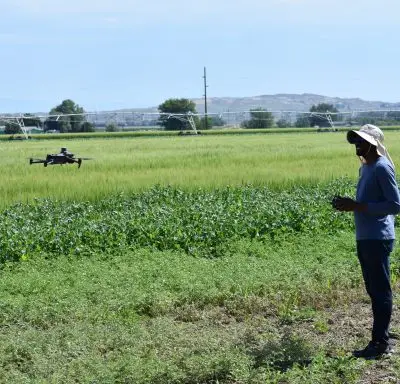
Led by Donna Harris, assistant professor of plant breeding and genetics in the Department of Plant Sciences, a team of scientists is using drones to help speed the development of soybean and dry bean varieties.
The 29th Range Beef Cow Symposium, an educational event for cattle producers in Wyoming and across the Intermountain West, will take place Monday, Nov. 10, through Tuesday, Nov. 11, in Cheyenne, Wyoming.
The state of Wyoming might not have a veterinary school—but it does have a veterinary lab. This unique facility serves as a hub for veterinary diagnostics, training, and research, and plays a key role in safeguarding human and animal health. While some Wyoming residents might not realize it, the Wyoming State Veterinary Laboratory (WSVL) plays a key role in safeguarding human and animal health.
Have you ever opened your fridge to discover that those strawberries you bought last week are now coated with an unappetizing layer of gray fuzz? Fungal diseases threaten crop production, food security, and human health worldwide. Gray mold alone afflicts more than 200 plant species, including agricultural crops, and results in more than $10 billion in losses annually.
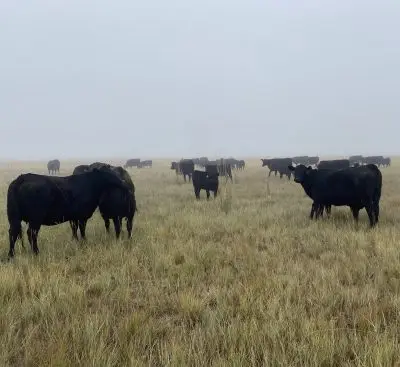
Todd Heward’s family has been ranching in Shirley Basin, Wyoming, for more than a century. For decades, he has grazed cattle near and on reclaimed uranium mine sites, observing changes in the landscape over time. Under his conscientious management, Heward has seen former mining sites slowly return to grasslands with healthy soil and diverse plant communities.