



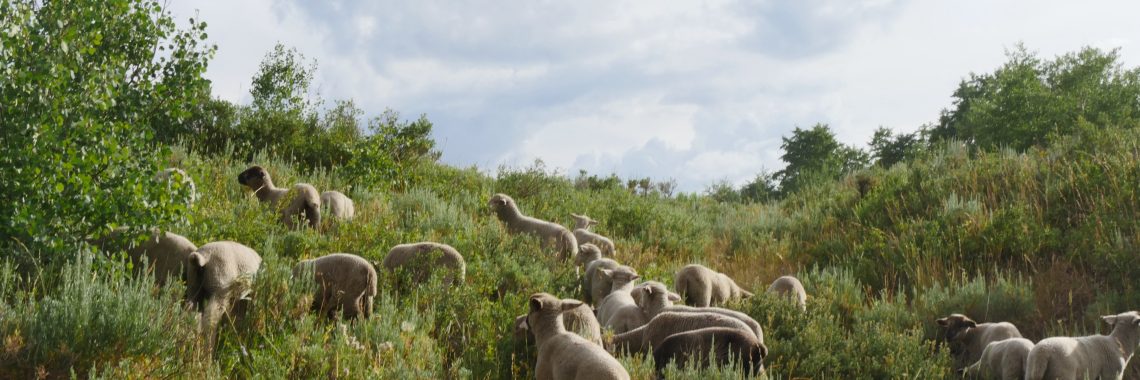
As many Wyoming residents have experienced firsthand, invasive plants like cheatgrass increase wildfire risk and compete with native species for water and nutrients. In some cases, they can also be toxic to grazing animals.
While these scourges pose serious threats to agricultural operations, a new study1 by UW scientists may provide some reassurance for Wyoming sheep producers. Nutritionally, the researchers found, eating a higher proportion of at least some of these plants is unlikely to hinder livestock performance. The sheep rumen, it turns out, is quite resilient.
Previous research indicates that the High Plains region is likely to experience warmer temperatures and higher atmospheric carbon dioxide concentrations in the future. Unfortunately, studies also suggest that invasive species like cheatgrass and Dalmatian toadflax will thrive under such conditions.
Paulo De Mello Tavares Lima, an assistant professor in the UW Department of Animal Science, noticed a gap in the literature: how might the expansion of invasive plant populations affect livestock nutrition and performance?
“Why not evaluate the nutritional value?” he wondered. “Maybe ruminants can thrive even in the high presence of these forages.”
Determining digestibility
Lima’s research focuses primarily on precision livestock management, but he also studies ruminant nutrition and methane emissions. His goal is to support domestic ruminant production, especially of sheep, in Wyoming and worldwide.
Lima’s latest research2 suggests that sheep performance will likely not suffer even if they consume a higher proportion of cheatgrass and Dalmatian toadflax. Furthermore, consumption of these forages may not result in higher methane emissions than consumption of native species—a potential boon for both animal productivity and the environment.
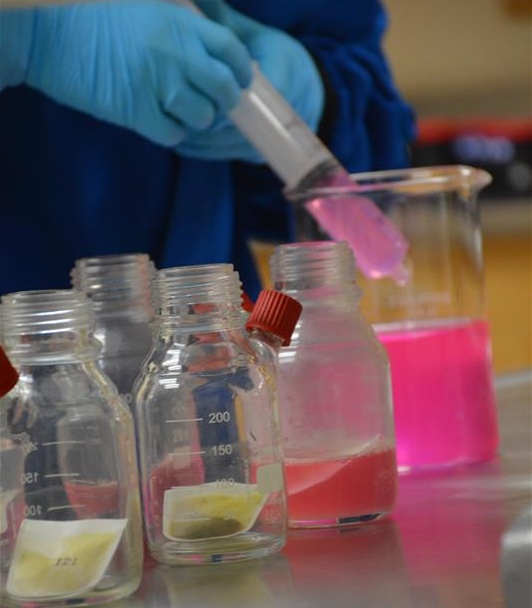
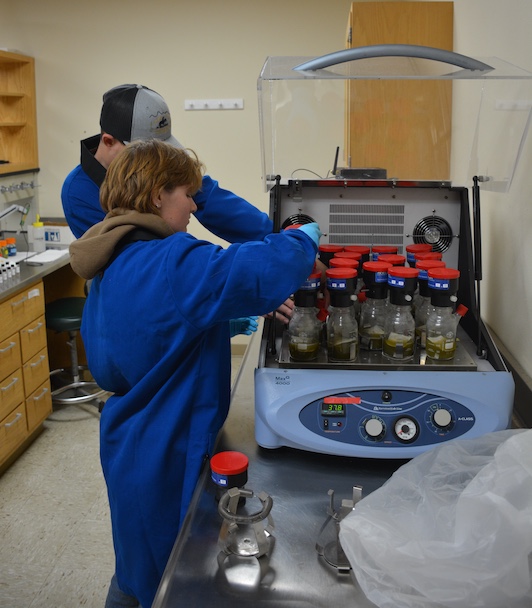
Starting in December 2024, Lima ran multiple trials “in vitro,” simulating a sheep’s digestive process by combining rumen fluid and dried forage samples in an anerobic environment. Through these lab experiments, he analyzed the gas production, digestibility, and nutrient content associated with each forage type.
“For most parameters, the invasive forages are comparable to the native grasses,” Lima found. His results indicate that cheatgrass and Dalmatian toadflax are just as digestible as native forages like Western wheatgrass, suggesting they may be a viable forage resource for domestic ruminants.
That’s potentially good news because if the invasive forages were less digestible than their native counterparts, the animals would likely consume less feed and their performance might suffer.
Monitoring methane
Lima also observed that the two invasive forages produced about the same amount of methane emissions as native forages.
Methane production is a direct product of the digestive process, he notes, so emissions are influenced by digestibility. “But in this case, we had some indication that the digestibility of these forages was just as high as that of the native grass,” he says.
While the livestock industry tends to get a bad rap for contributing to the release of heat-trapping gases like methane, Lima’s research may indicate that sheep production—which helps sustain communities in Wyoming and around the world—is not necessarily incompatible with a healthy environment.
Perceptions of the livestock industry aside, it’s possible that lower methane production may increase animal productivity. “In terms of animal production, the carbon that is converted to methane is carbon that is not utilized by the animal to grow,” Lima explains. “So, you’re losing some of the energy potential of the feed provided to the animal.”
Implications for the sheep industry
Lima’s study suggests that, even in the face of warming temperatures and increased carbon dioxide concentrations, Wyoming sheep production will likely remain sustainable. If invasive grasses like cheatgrass and Dalmatian toadflax continue to spread across the landscape, grazing management may look a little different, but the animals will adapt.
“The main take-home message in terms of animal nutrition is that unless the animals are eating almost the entirety of their diet from these plants, they can cope without issues,” Lima says.
His results may be useful for producers who are trying to optimize forage nutrition while minimizing the negative impacts of invasive plants. Cheatgrass, for example, has a short life cycle and loses nutritional value quickly. Its nutritional value peaks in late winter through early spring; later in the season, livestock tend to lose interest in the grass and it becomes a fire hazard. Implementing a targeted grazing system that encourages heavy grazing of cheatgrass early in the season could potentially provide decent-quality forage while also reducing fuel for wildfires.
In previous field trials, Lima and UW partners observed sheep grazing invasive species under various conditions. Although Dalmatian toadflax contains compounds that can be toxic to grazing animals if consumed in large amounts, livestock typically avoid consuming large quantities of the plant. Nutritionally speaking, consumption of Dalmatian toadflax and cheatgrass can be compatible with decent animal productivity, Lima concludes—a hopeful sign for the sheep industry.
To learn more, contact Lima at pdemello@uwyo.edu.
This article was originally published in the 2025 issue of Reflections, the annual research magazine published by the UW College of Agriculture, Life Sciences and Natural Resources.