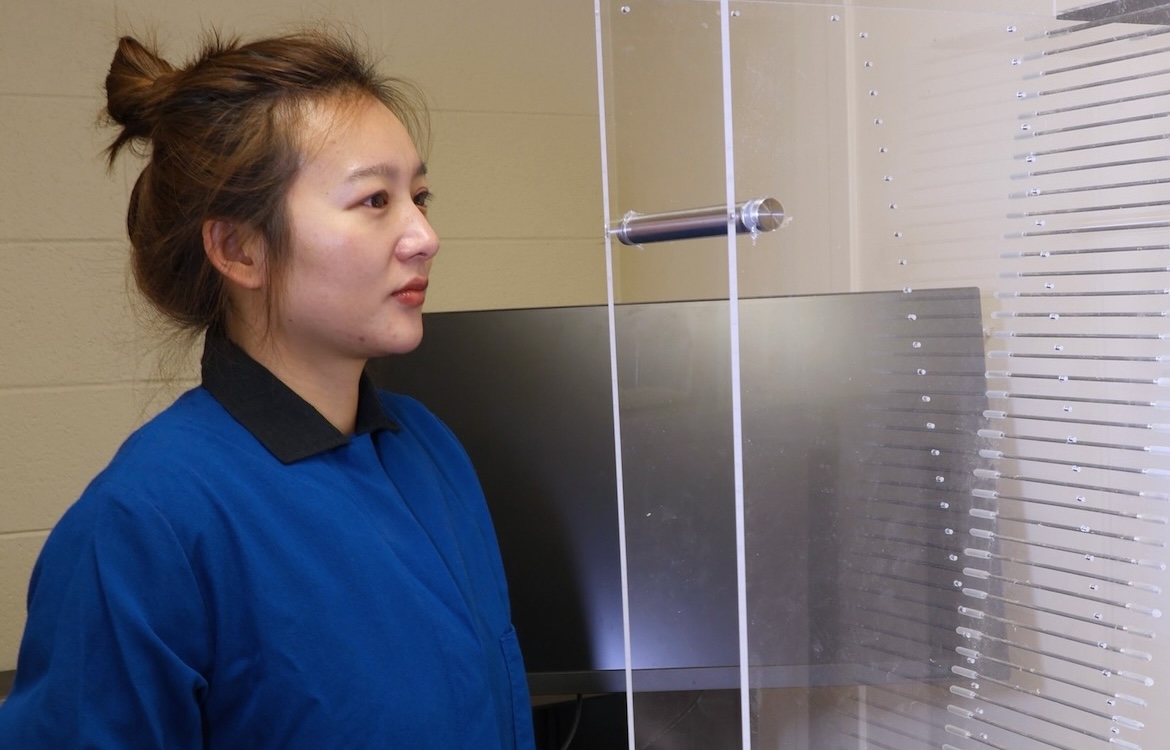


The University of Wyoming Extension welcomes Brenda Madrid and Rebecca Austin as 4-H youth development educators, both serving Laramie County.
As the military 4-H educator, Madrid will primarily work with youth whose family members are serving in the military, especially those associated with the Francis E. Warren Air Force Base and Wyoming National Guard. Austin will principally work with Laramie County youth whose families are not affiliated with the Air Force base or Wyoming National Guard.
Both educators started their new roles in Laramie County on Tuesday, March 9.

Brenda Madrid
Madrid earned her associate’s in agricultural sciences in 2009 from Casper College. She went on to attain a bachelor’s in agriculture education from Utah State University in 2011.
Most recently, she was the director and owner of Blue Bear Daycare, where she cared for and managed a daily schedule for 15 children. She also oversaw four employees.
Madrid has previously served as a UW Extension 4-H youth development educator in Platte County. During her time at the Platte County office, she collaborated with other 4-H educators to create a tween babysitting program, which taught youth the entrepreneurial skills and safety measures necessary for running a successful babysitting business.
Madrid looks forward to connecting with members of the Laramie County community and developing new 4-H programming.
“I wanted to be in a position in life where I can give back to my community, and Extension has a wonderful way of doing that within the state of Wyoming,” she says.
Madrid can be reached at bmckinzi@uwyo.edu.
Rebecca Austin
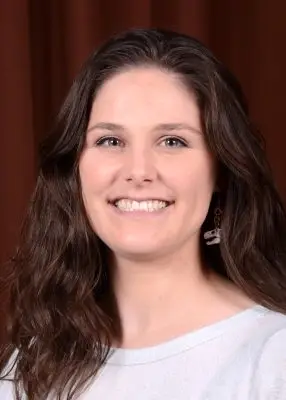
Austin graduated from UW in 2019 with a bachelor’s in fine art. In May 2026, she will receive a master’s degree in learning design and technology from UW.
Austin has created educational materials and facilitated workshops during her time as the makerspace coordinator for the Innovation Wyrkshop at the University of Wyoming.
As a graduate student, Austin developed a free website that provides accessible science, technology, engineering, and math (STEM) resources for students, teachers, and parents. She believes that her academic experiences will help her create and evaluate evidence-based programs that respond to community needs.
“I want to help create the kind of programs I would want for my own kids, and create spaces where kids feel encouraged, capable, and excited to explore new ideas,” says Austin. “4-H provides me the opportunity to be the kind of role model and mentor I once needed: someone who helps youth see their strengths, build confidence, and discover a love of learning that lasts a lifetime.”
Austin believes her visual arts background will also help her design youth programs that encourage creativity, critical thinking, and self-expression.
Austin can be reached at raustin5@uwyo.edu.