


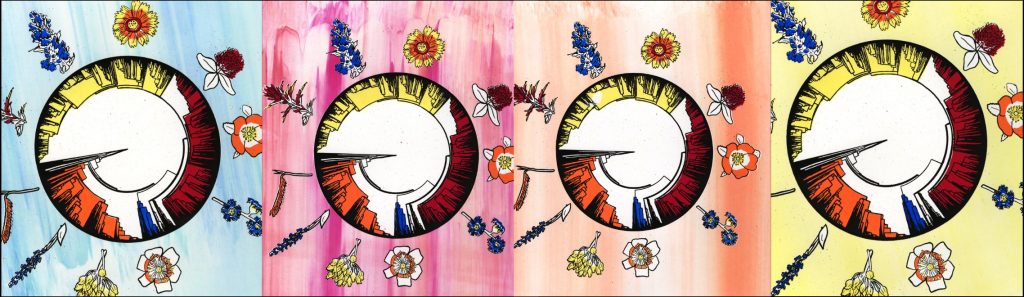
Erin Bentley studies native plants and outreach education. Lars Roeder teaches and creates art, specializing in printmaking. Dave Tank directs the Rocky Mountain Herbarium and investigates plant biodiversity and evolution.
Despite their different areas of interest and expertise, these three educators share a commitment to unconventional, hands-on education. Together, they’ve piloted Kaleidoscope Science, a program that helps students of all ages understand science through artistic creation.
Blurring the line between art and science
“Science and art aren’t exclusive,” says Bentley, a PhD student in UW’s botany department and the Program in Ecology and Evolution (PiEE). “They’re just lenses through which we view the world, which is the idea behind Kaleidoscope Science. By integrating multiple lenses in this kaleidoscopic approach, you can get a more holistic view of whatever it is that you’re researching or studying or interacting with.”
This transdisciplinary approach goes beyond interdisciplinary methods of study, she explains. Interdisciplinary methods might be described as a chunky vegetable stew, in which different fields of study—like botany and printmaking—work together, but remain distinct.
In contrast, “transdisciplinary is when you’re literally transcending the boundary of your disciplines,” Bentley explains. “You’re creating new methods, not just ‘stealing’ methods and utilizing them in a different place.”
In other words, instead of making stew, Kaleidoscope Science incorporates different disciplines to create a well-blended carrot cake.
Plants and prints
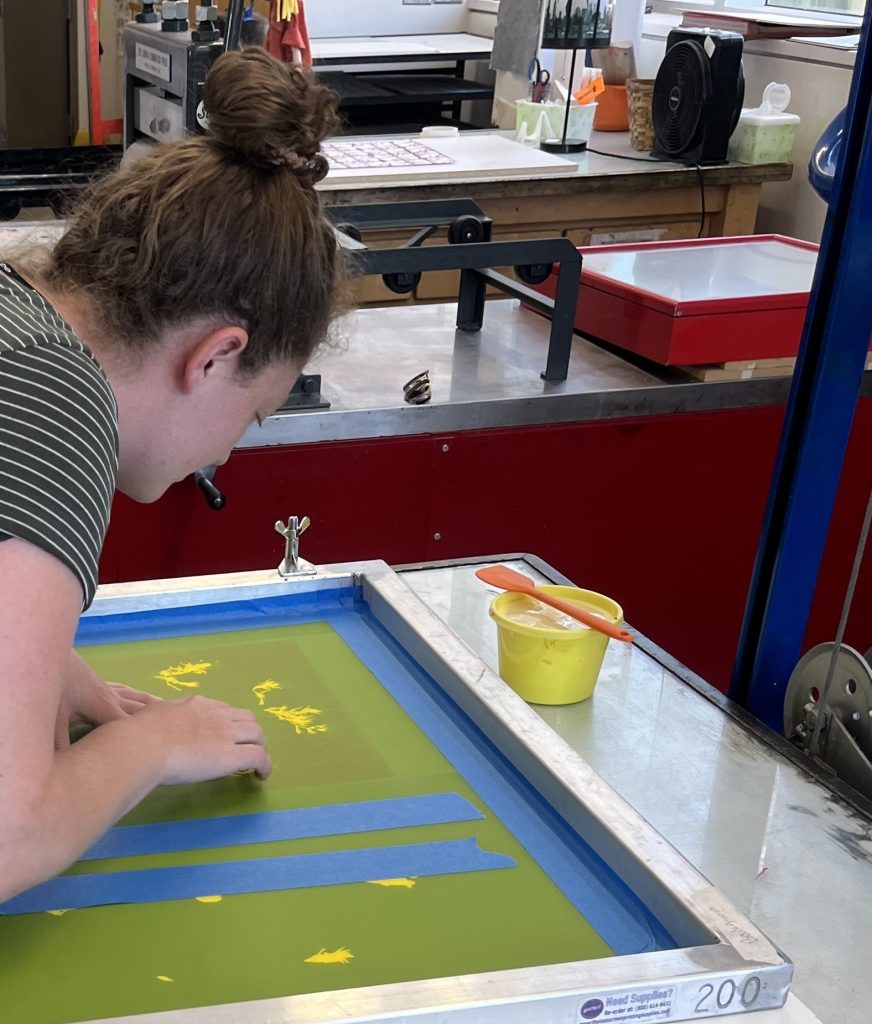
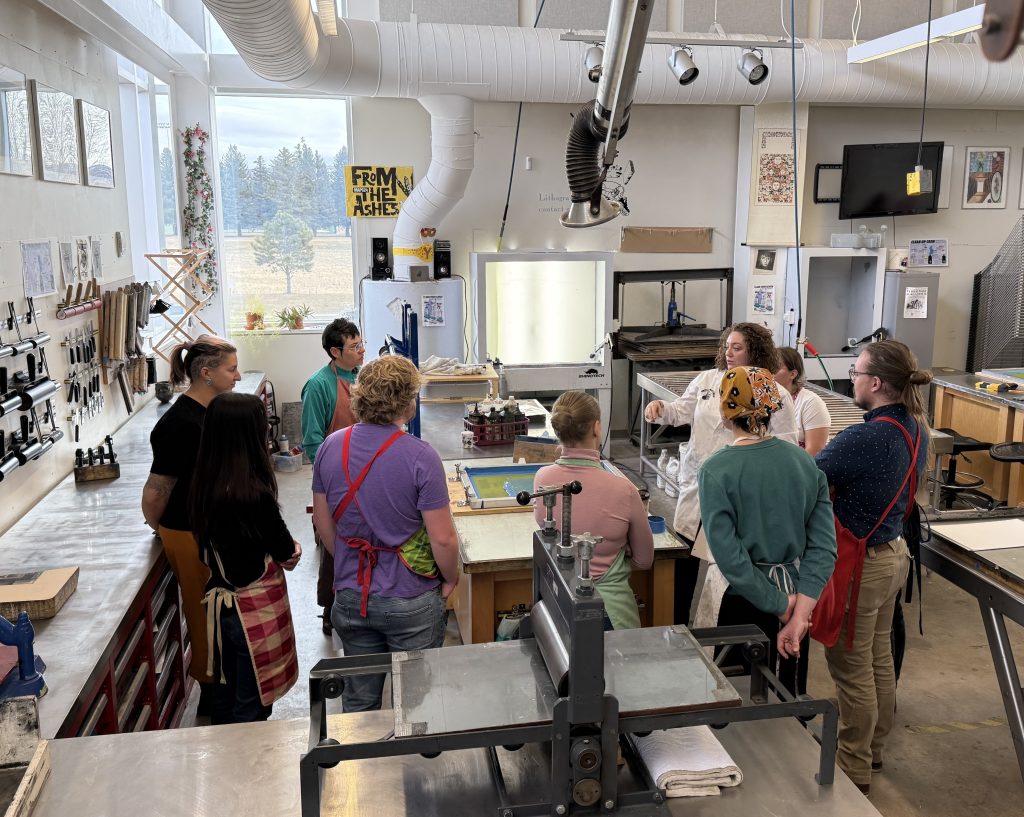
The Kaleidoscope Science team uses screen printing to introduce participants to both the Rocky Mountain Herbarium and the art of printmaking.
Located on the UW campus, the herbarium is a constantly evolving library of plant specimens. With more than a million specimens and records stretching back to the 1890s, it’s a key resource for researchers studying plant biology and biodiversity.
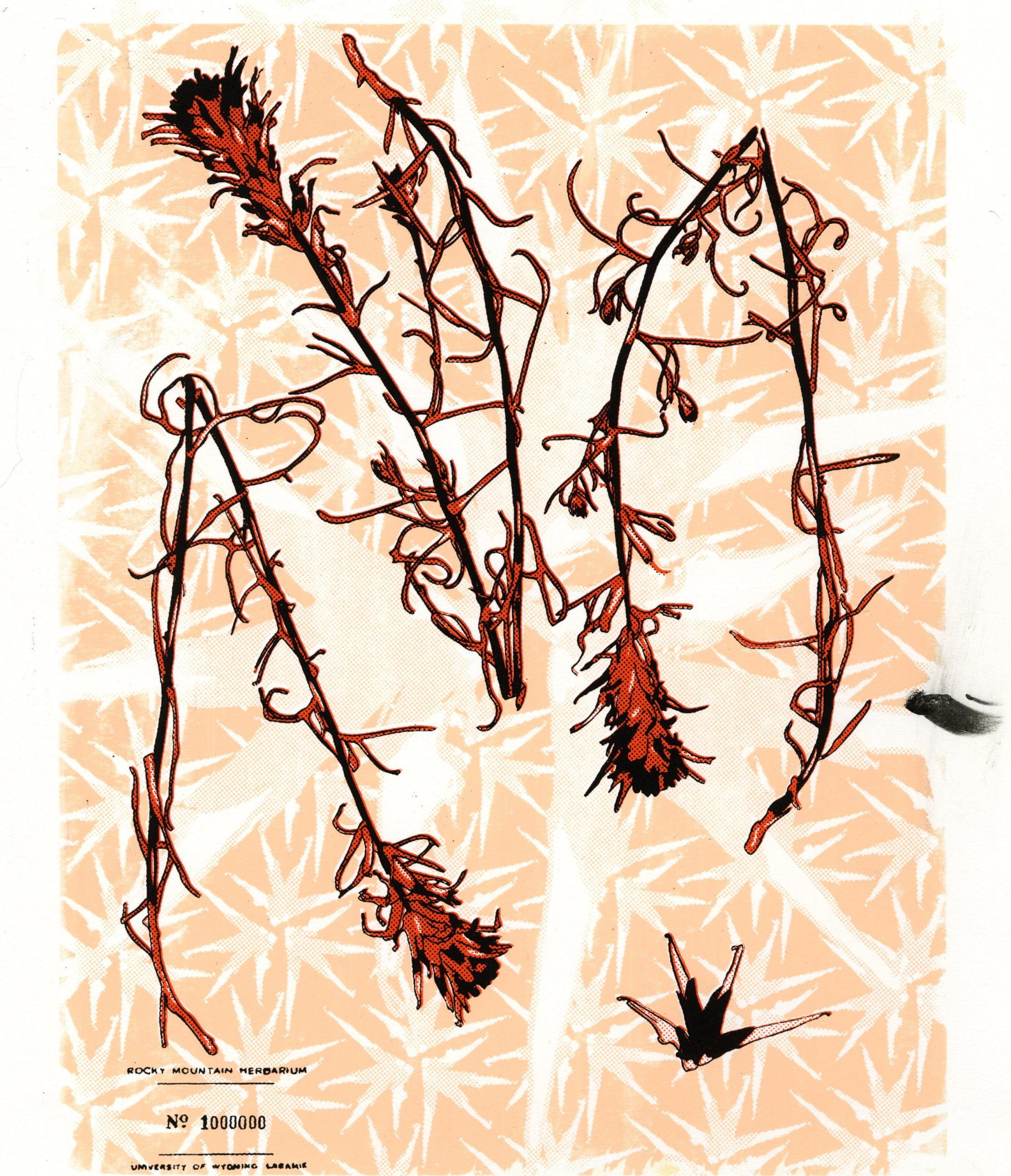
However, many Wyoming residents don’t realize that the herbarium exists, or that it’s open to the public. By incorporating herbarium specimens into its programming, Kaleidoscope Science encourages community members of all ages to engage with this valuable resource.
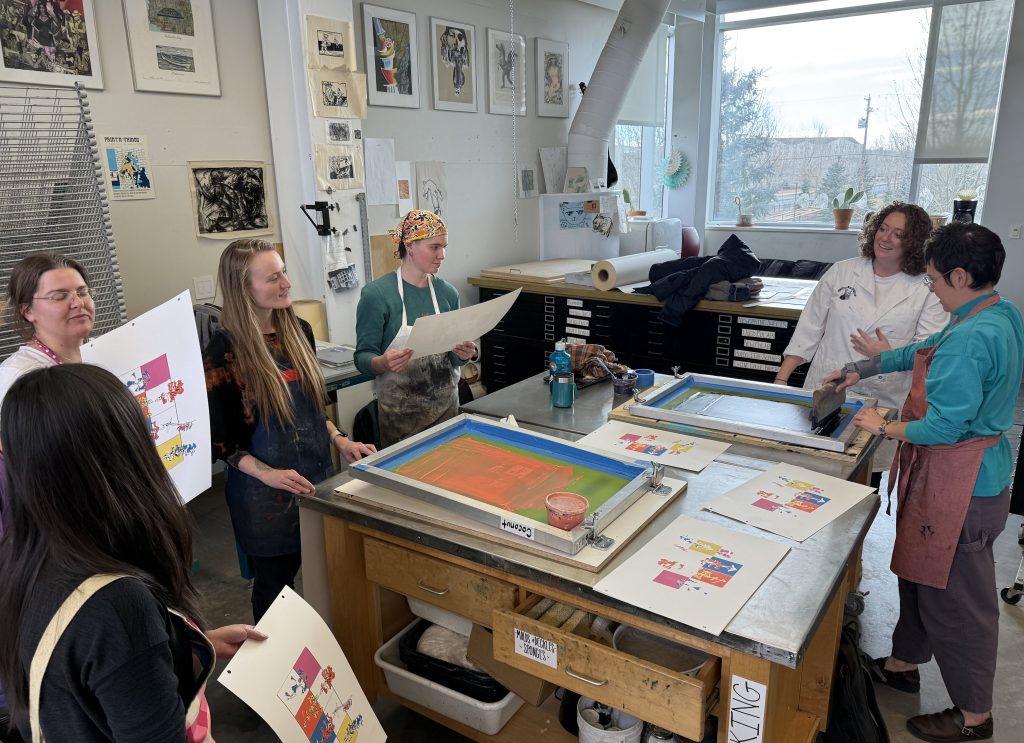
After an introduction to the herbarium, Kaleidoscope Science participants break out into groups and research a topic, such as the Wyoming paintbrush, from four different lenses: history, art, science, and culture. Each lens is assigned a specific color and each participant makes a screen print in the color associated with their assigned lens. Then, they switch groups and share what they learned with participants who researched the plant through different lenses. At the end of the session, participants take their artwork—and newfound knowledge—home.
Kaleidoscope Science screen prints often feature the Rocky Mountain Herbarium’s millionth specimen: Wyoming’s state flower, the Wyoming paintbrush.
But why this art form? Screen-printing equipment isn’t easily transportable, and most Kaleidoscope Science events take place in community settings. However, despite the logistical challenges, Roeder believes screen printing is well suited to community education. “It’s the most accessible, efficient printmaking process,” he explains.
An assistant professor of printmaking, Roeder was the first faculty member to bring screen printing classes and equipment to UW. He describes the art form as “inwardly collaborative and outwardly distributed.”
While Bentley may have created the template, each Kaleidoscope Science participant makes their own print and contributes to the dissemination of art and scientific knowledge, Roeder explains. Each colorful print carried home in a student’s backpack is “a printed multiple, but conceptually each is a unique, stand-alone artwork.”