



Study results from four UW research centers compiled in new publication

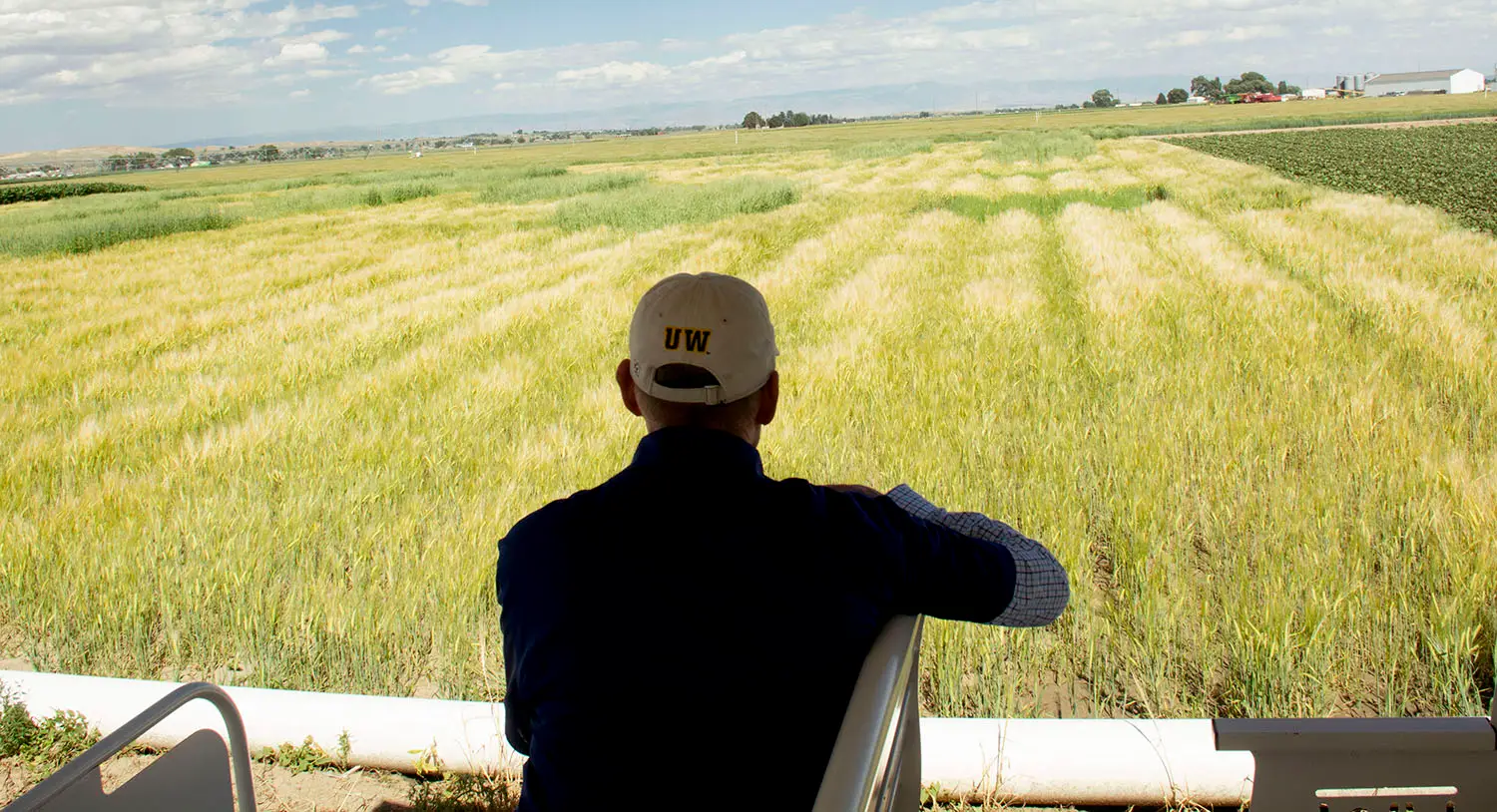
Test plots of various ancient grains being grown at the Powell R&E Center.


Person looking at wheat field
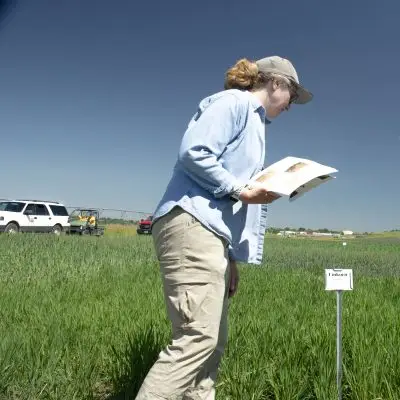
A field day attendee at a recent Sheridan Research and Extension Center field day studies an ancient grain research plot. Information about the research is in the field days bulletin.

Field study results from the University of Wyoming’s four research and extension centers across the state are now available in the Wyoming Agricultural Experiment Station (WAES) 2020 Field Days Bulletin.

The free 124-page publication details research at the Laramie R&E Center, Powell R&E Center, the James C. Hageman Sustainable Agriculture Research and Extension (SAREC) near Lingle and the Sheridan R&E Center. The publication can be viewed online or downloaded at bit.ly/2020FieldDaysBulletin.

The WAES is the research branch of the College of Agriculture and Natural Resources.

Each research project’s background and results are compiled into two pages and lists the scientists involved and their contact information.

The wide-ranging research includes grasses, wheat, potatoes, barley, beans, sugar beets, silage, alfalfa, fertilizer and pesticide and herbicide management, among many others.
Share the Post:

Related Posts

Artist booth at an Ag & Art Tour event, where a local artist displays watercolor paintings and handmade prints while engaging with a visitor; set outdoors with rural landscape, showcasing the connection between agriculture, creativity, and community.

UW Extension to Host Ag & Art Tour in Natrona County

For those interested in connecting with local artists and agriculturalists, the University of Wyoming Extension will lead a series of free self-guided Ag & Art tours from May through September.
The first Ag & Art event takes place in Natrona County Saturday, May 16, from 10 a.m. to 2 p.m.
“We had a great season last year and are excited to bring this event to five counties this summer, kicking things off [in] Natrona County,” says Hailey Sorg, Wyoming’s Jay Kemmerer Outdoor Recreation, Tourism and Hospitality (WORTH) Institute extension educator.

Read More
Amy Storey, a University of Wyoming third-year master’s student in zoology and physiology, completes a field survey for a collection site in Grand Teton National Park. This included taking habitat measurements about the floral and bee community as well as collecting environmental data, such as wind speed and land use. Storey’s presentation, titled “Parasites and Bumble Bee Decline in Wyoming,” was named the winning entry for a master’s student at the Wyoming Chapter of the Wildlife Society meeting in Sheridan April 8. (Rebecca Armentrout Photo)

UW’s Storey Makes Winning Presentation at Wyoming Chapter of Wildlife Society Meeting

Wild bumble bees are in decline, and various parasites may be a major cause. But there hasn’t been any data on whether Wyoming bees have parasites and to what degree—until now.
Amy Storey, a University of Wyoming third-year master’s student in zoology and physiology, shed light on her research when she took center stage at the recent Wyoming Chapter of the Wildlife Society meeting in Sheridan.

Read More

Help us improve this website!

We’re working to make AgNews easier to use and more useful for you. This quick survey takes about 1–2 minutes.