

University of Wyoming College of Agriculture and Natural Resources facilities are being used as a basecamp and shelter for personnel battling the Mullen fire in the Medicine Bow National Forest west of Laramie.
The university is coordinating with other emergency units responding to the blaze.
Dean Barbara Rasco complimented Laramie Research and Extension Center director Scott Lake and his crew.
When notified the facilities might be needed, “Scott and his team were able to get a program in place within 30 minutes to house displaced livestock and to support fire control efforts,” she said. “I am proud of the efforts of CANR staff particularly at LREC under Scott’s leadership to host firefighters and support staff battling the Mullen fire by making the Cliff and Martha Hansen Teaching Arena available.”
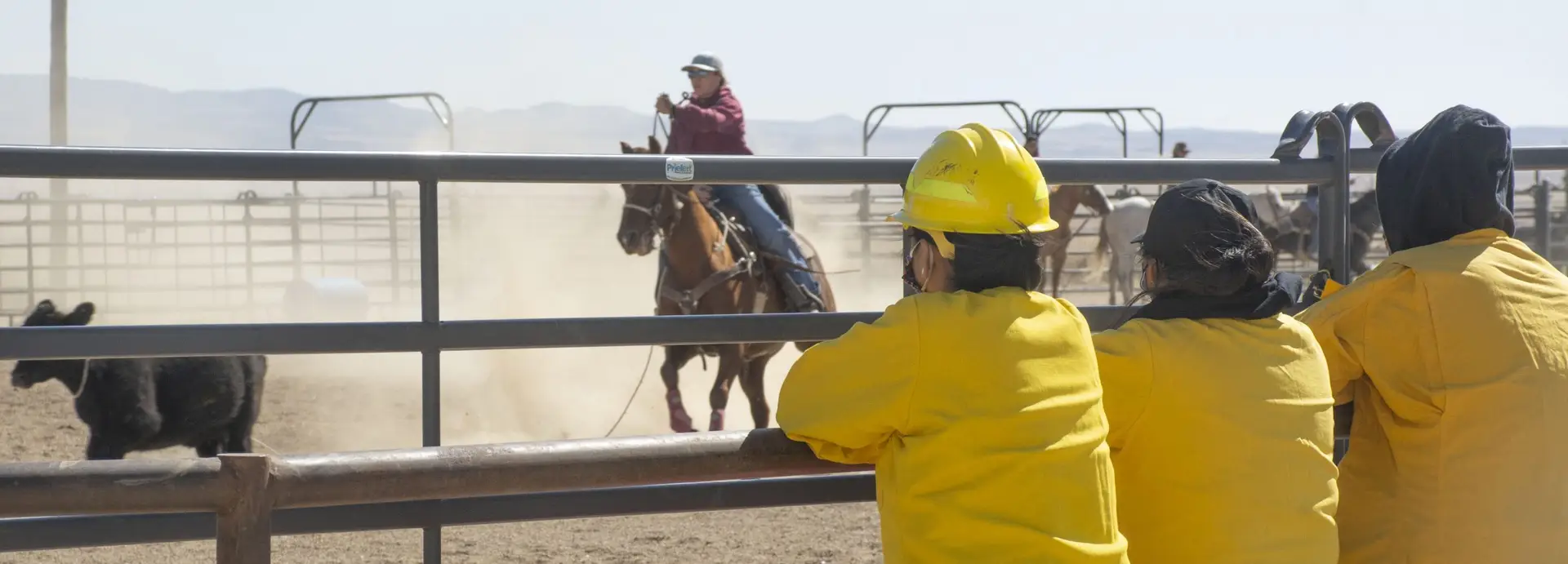
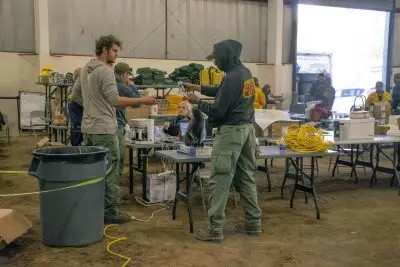
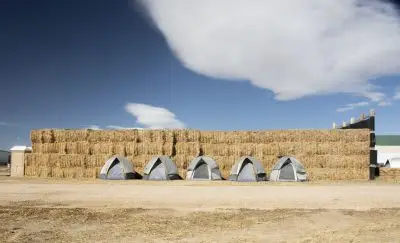
The arena west of Laramie on Wyoming Highway 230 is now the command center and basecamp, which offers additional comfort/protection for the firefighters. The facility has become a small firefighting city, with hundreds of pieces of firefighting equipment and tents set up inside the arena. The university’s Laramie Research and Extension Center facilities west of Laramie also are being used to set up firefighters’ tents.
“Controlling this fire is the top priority in our community now, and I’m happy that the College of Agriculture and Natural Resources is able to help out,” said Rasco.
The firefighters are genuinely grateful for the ability to get in out of the wind and cold they were facing at Sodergreen, the previous basecamp site, said Bill Mai, UW’s deputy vice president for administration.
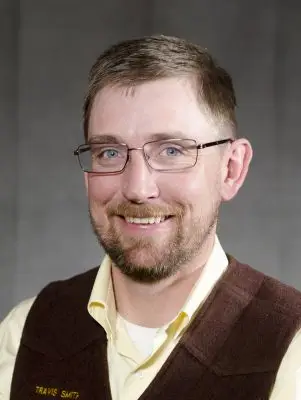
The arena facility’s manager, Travis Smith, worked with UW’s administration Sunday to “make that all happen,” Mai said.
“He and his folks have really made the firefighters’ lives a lot better in the midst of the weekend storm,” Mai added. “They are tired and hungry, and they don’t need to be cold and wet on top of that.”
Tyson Drew, the facilities manager for UW’s Department of Athletics, has similarly “gone above and beyond” to make the Arena-Auditorium concourse available. Nearly 70 firefighters were housed in the arena earlier in the week.
“This, in the midst of having all of the last-second major adjustments in athletics scheduling, Tyson, likewise, has helped the firefighting community out in ways he probably doesn’t even comprehend,” Mai said.
“We appreciate the level of engagement the University of Wyoming has had with our team since day one,” says Southern Area Blue Team Incident Commander Mark Morales. “This existing relationship helped our team meet a critical need in a short amount of time.”
Mai said firefighting crews have had to quickly make major adjustments coming to Laramie in an attempt to contain the Mullen fire. He said many of the fire crews have been “living on the edge all summer” fighting the various large fires throughout the West. Now, it is October, near the end of normal fire season, and fire personnel are experiencing the wind and cold.
“They are fighting a fire that threatens so many homes and structures, and all of the associated infrastructure, in some pretty unforgiving terrain,” he said. “This situation really has asked a lot of what has to be some pretty weary folks. The fact that UW could have a role in making their burden a little lighter by providing some weather relief really has recruited a completely new cadre of Cowboys into our fold. Tyson and Travis deserve a lot of that credit for stepping up when they, themselves, have been asked to go above and beyond for quite a while, too.”
To see more photos, go to http://bit.ly/hansen-firefighters.
For more public information related to the Mullen fire, go to https://inciweb.nwcg.gov/incident/7208/.
For an interactive story map with summary information on the fire’s history and its present dimensions, go to https://arcg.is/1mnyXL.