

Year: 2026

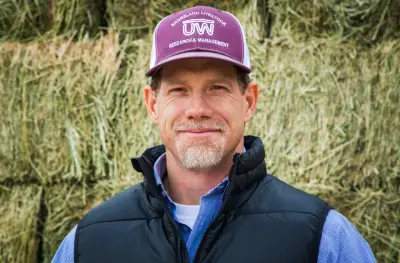
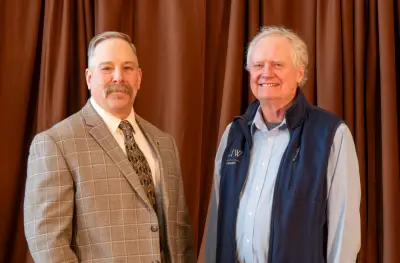
Tim Robinson, professor of statistics at UW.

UW Alum and Professor of Statistics Publish Reclamation Study

A University of Wyoming alumnus and a UW professor of statistics have published a study proposing the use of spatially balanced rotating panel designs as a time and cost-efficient way to monitor the ecological reclamation of oil and natural gas sites while increasing data quality. 
Read More »
two mice sit together under the reddish glow of a heat lamp

The Science of Snuggling: What Huddling Mice Can Teach Us About Body Temperature Regulation

If you’ve ever stayed home sick, you’ve probably experienced the unpleasant temperature swings that accompany a fever. You may remember feeling chilled, then warming up as your fever spiked—a well-established process governed by the autonomic nervous system. But maybe you also wrapped up in a blanket to keep warm. The science behind this kind of behavioral response is less well understood.
Read More »
Colorful sunset over a turquoise alpine lake surrounded by rocky slopes and pine trees

A Century of Data Suggests Whitebark Pines May Be in Peril

Whitebark pines tend to grow slowly and live long, sometimes surviving for more than 1,000 years. But, as extreme weather events increase in both frequency and severity, whitebark pines have grown increasingly vulnerable to extinction. According to a new study led by UW researchers, this heightened risk is partly because many different white-bark pine populations are responding to environmental changes in sync.
Read More »
Man wearing sunhat uses a handheld controller to fly a drone in a crop field with pivot irrigation system and mountains in the background

Drones Drive Wyoming Crop Research

Led by Donna Harris, assistant professor of plant breeding and genetics in the Department of Plant Sciences, a team of scientists is using drones to help speed the development of soybean and dry bean varieties.
Read More »
A fabric clock.

Re-Forming Fast Fashion: UW Course Examines Textile Recycling Challenges

In today’s world, we’re bombarded by thousands of cheap clothing options. It’s easy to pick up new clothes for the summer—and it’s easy to dispose of these items, too. But in associate professor Jennifer Harmon’s Introduction to Textile Science class, UW undergraduates learn that disposing of clothing and other textiles is not as simple as it seems.
Read More »
A microscope image of two Chlamydomonas gametes fusing together.

Studying Algal Reproduction Could Help Prevent the Spread of Malaria

How exactly do gametes come together and fuse to create new life? That’s what Jen Pinello, an assistant professor in UW’s molecular biology department, set out to investigate. Surprisingly, her research may also hold the key to preventing the infectious spread of deadly diseases, such as malaria.
Read More »

Help us improve this website!

We’re working to make AgNews easier to use and more useful for you. This quick survey takes about 1–2 minutes.