

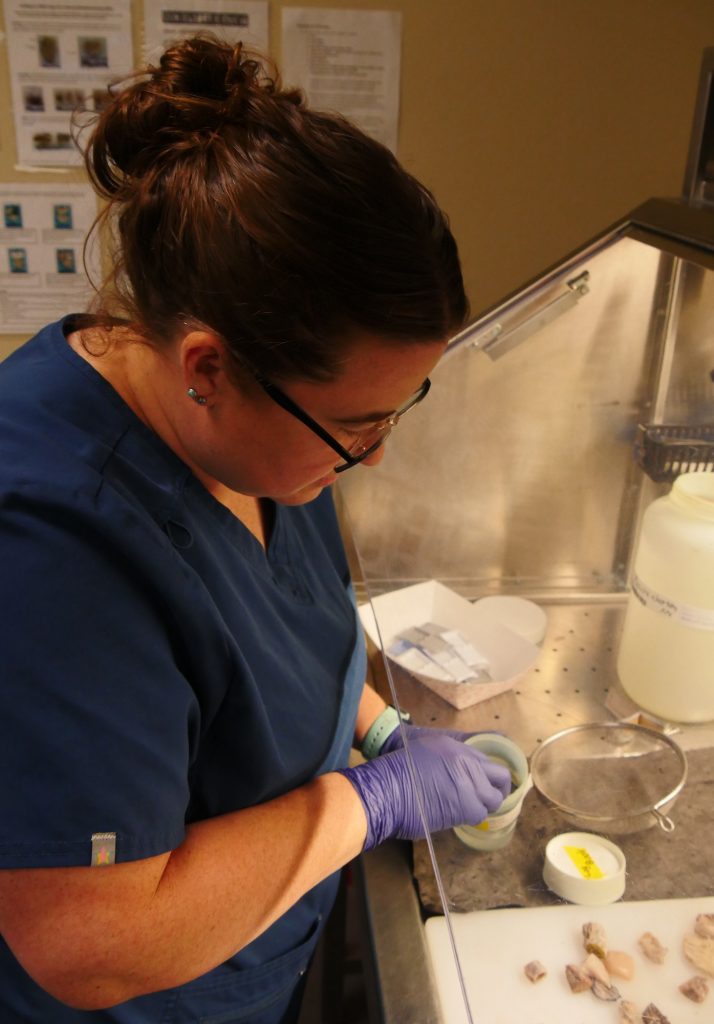
The state of Wyoming may not have a veterinary school—but it does have a veterinary lab. This unique facility serves as a hub for veterinary diagnostics, training, and research.
While some Wyoming residents might not realize it, the Wyoming State Veterinary Laboratory (WSVL) plays a key role in safeguarding human and animal health, both on an individual basis and statewide.
Service to the state
The lab’s primary mission is to provide timely, accurate, accessible, and affordable diagnostics to Wyoming residents and veterinarians. “We offer a service that is designed to help the public,” says Alexandra Brower, WSVL director. “WSVL has been providing animal diagnostics for the state of Wyoming for nearly 80 years. This long history has created deep connections with many animal producers and veterinarians.”
Every year, WSVL staff perform diagnostic tests on more than 100,000 animal tissue samples, from small bits of tissue to stomach contents and even whole bodies. Many of the animal diseases diagnosed at the vet lab—including brucellosis, plague, Q-fever, tularemia, anthrax, and highly pathogenic avian influence (HPAI)—are zoonotic, meaning they can spread to humans.
While most diagnostic tests come with a fee, the WSVL provides rabies testing of animal tissue samples free of charge. The lab also processes more than 165,000 blood samples annually, largely for federally regulated diseases like brucellosis and equine infectious anemia.
Most samples are sent in by veterinarians, though the WSVL also works directly with Wyoming producers. In 2024, for example, the lab worked with private veterinarians to diagnose the first confirmed anthrax cases in Wyoming cattle since the 1970s. As a result, the outbreak was successfully contained.
During the COVID-19 pandemic, WSVL staff tested thousands of human samples in the lab’s biocontainment facility—not a typical role for a university-affiliated veterinary laboratory.
The decision was both unconventional and indicative of the lab’s commitment to serving Wyoming communities. “Taking on that role, as well as being responsible for all the rabies testing in the state, is unusual and above and beyond for a veterinary lab,” Brower comments.

Local, state, and federal networks
In February 2025, staff at the Wyoming State Veterinary Laboratory diagnosed HPAI in chickens that were linked to the state’s first human case of HPAI.
While most confirmed cases in humans have been mild, prompt diagnoses of zoonotic diseases can help public health officials respond more effectively to potential outbreaks.
In these situations, the WSVL provides critical diagnostic testing and interfaces with federal and state agencies to help ensure public safety.
“Because suspicion is not a diagnosis, sample testing must be conducted before planning and responses to animal illness can take place,” Brower explains. “Reaching a diagnosis is the necessary step that allows practitioners to treat patients, and public health and regulatory entities to take actions that control human and animal disease.”
In order to efficiently diagnose and respond to disease outbreaks, the WSVL works closely with both private veterinarians and state entities such as the Wyoming Livestock Board, Wyoming State Veterinarian’s office, the Wyoming Department of Health, and the Wyoming Game and Fish Department.
In addition to state agencies, the WSVL regularly interfaces with federal entities, including the USDA, CDC, and National Veterinary Services Laboratories (NVSL).
After WSVL staff receive and test a sample, they share the results with the submitter, often a veterinarian. In cases like HPAI, where the test results may have a wider impact on human and/ or animal health, samples are also sent to NVSL to confirm the diagnosis, then reported to the appropriate regulatory agencies.
As part of its engagement on the federal level, the WSVL is a member of the National Animal Health Laboratory Network (NAHLN), an organization formed after 9/11 to respond to biosecurity threats. Each year, members of the diagnostics team are required to complete proficiency testing, ensuring they are prepared to diagnose diseases regulated by the network.
Advanced biosecurity facilities
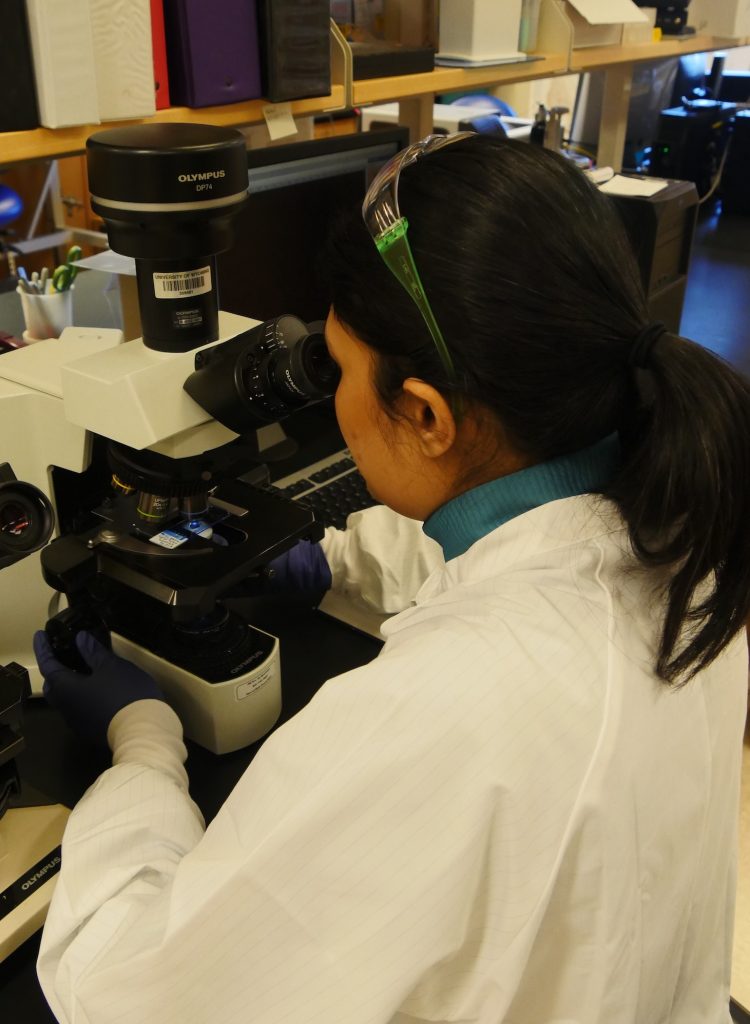
To maximize safety and minimize exposure to highly infectious pathogens, the WSVL boasts a highly secure biocontainment facility known as a Biosafety Level-3 (BSL-3) lab. Across the country, only a few facilities of this type exist in university-affiliated diagnostic labs.
The BSL-3 facility allows faculty and technicians to safely study and diagnose infectious diseases. In particular, BSL-3 labs are approved for study and diagnosis of select agents, or federally regulated microbes. To prevent the spread of these diseases, security and procedures in the facility are regulated by the CDC and FBI.
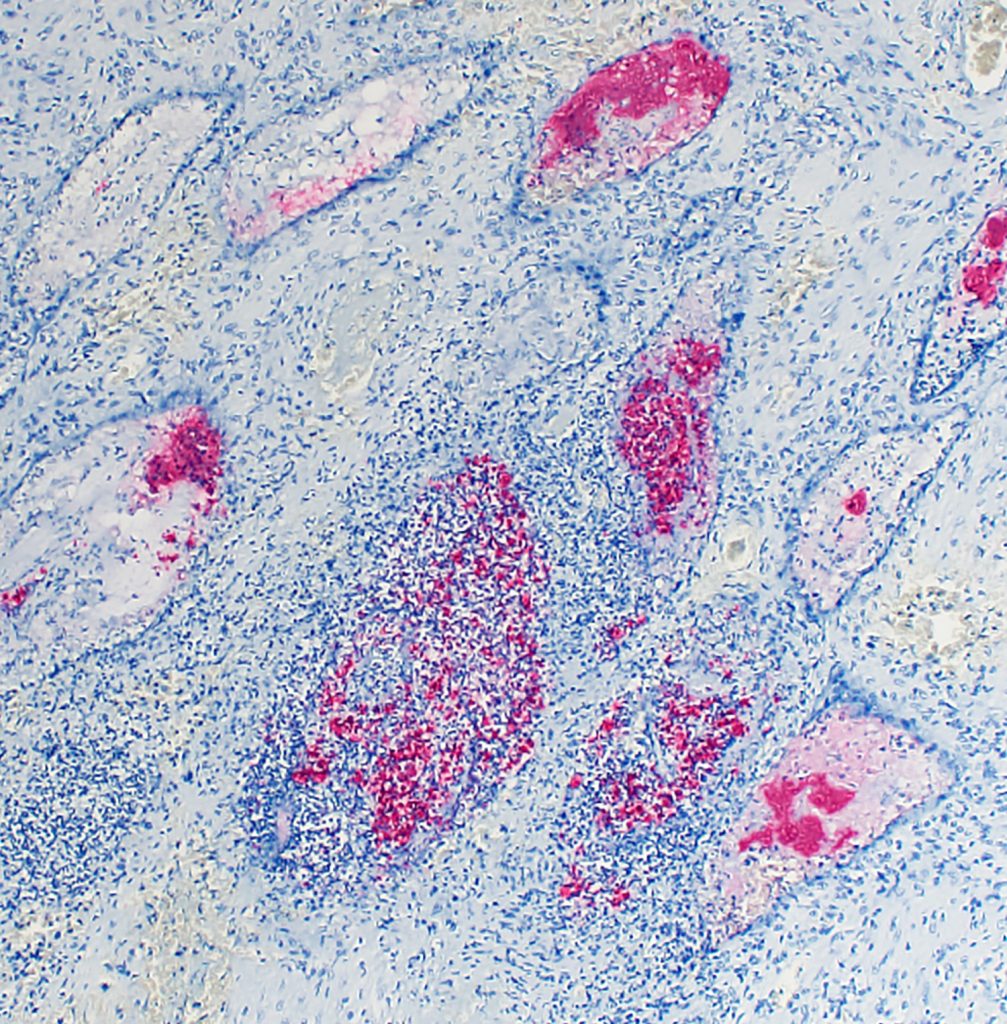
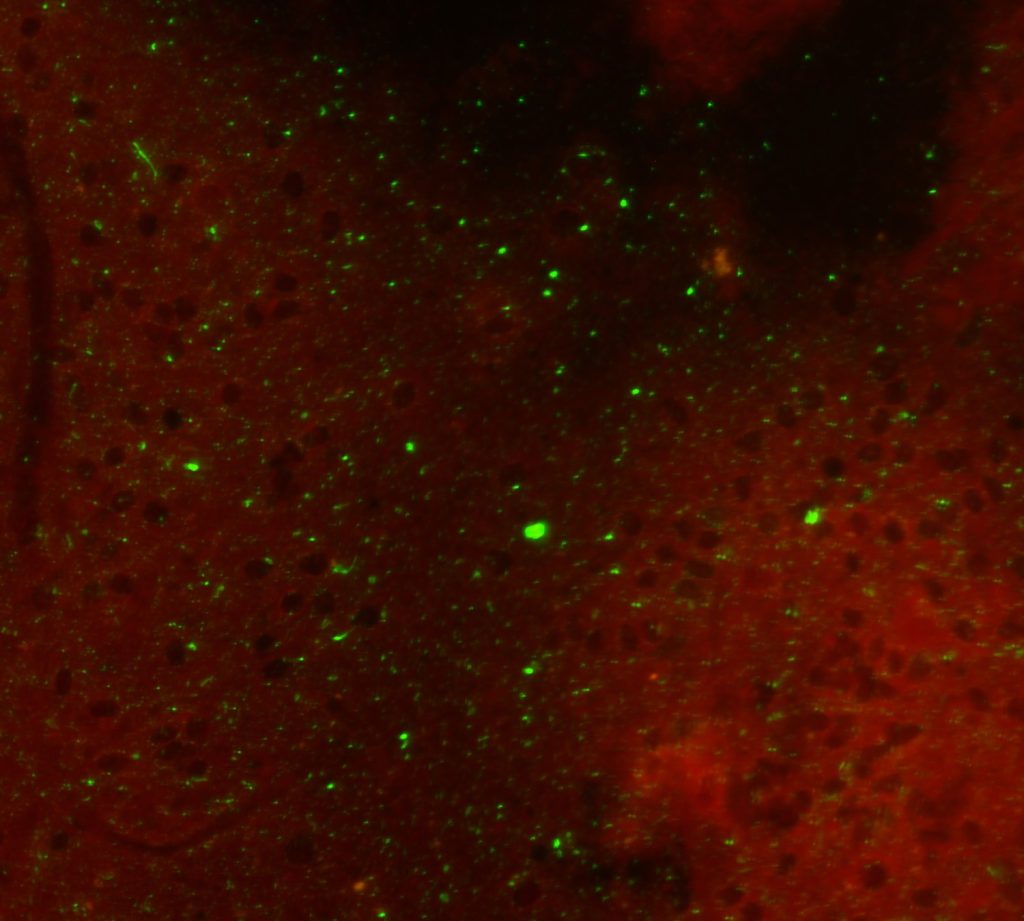
At the WSVL, the BSL-3 is used for diagnoses, necropsies, and vaccination research related to diseases like HPAI and brucellosis. In this highly secure environment, WSVL staff also run diagnostics for potential cases of Q-fever, plague, tularemia, anthrax, and other infectious diseases transmitted by wild and domestic animals. In 2021, COVID-19 testing was conducted in the facility.
“The Wyoming State Veterinary Laboratory is unique in that it gives us the option to use enhanced biosafety to do our work, mitigating the risk of human exposure while allowing us to work on important disease outbreaks,” Brower comments.
Enhanced biosafety facilities provide an opportunity not only to diagnose diseases like HPAI, but also to conduct follow-up research. These investigations can help scientists better understand disease transmission and pathogenesis, and even develop vaccines.
“The BSL-3 labs at WSVL provide the ideal environment to explore these questions following high biosafety and biosecurity standards,” Brower notes. “Our lab’s ability to study these infectious agents in such a setting is not only critical for understanding how a virus like HPAI behaves but also for developing more effective prevention and control strategies to protect both human and animal health.”
Training the next generation
Most faculty in UW’s vet sciences department are stationed at the WSVL, serving as instructors and mentors as well as researchers and diagnosticians.
For students interested in pursuing a career in veterinary sciences, animal production, or animal health regulation, the WSVL provides key training opportunities. Many of the students who work in the lab go on to serve Wyoming communities.

When Brower toured veterinary practices across the state in 2024, she was amazed to find that in most clinics, at least one staff member had received diagnostic training at the WSVL.
“Whether it was veterinary technicians or people who had gone off and gotten their degrees and come back as vets or other staff members, there were people all over the state that had been UW students and had worked in our lab,” she says. “They all had very positive memories about individuals they worked with in the lab, research that they had done, things that they had learned.”
Community connections
In addition to providing students with training opportunities, the WSVL maintains close relationships with stakeholders across the state.
“The relationships the laboratory has with the state’s animal health community increase the likelihood that individuals will reach out with questions related to animal disease diagnostics and will submit samples for testing,” Brower notes. “Identification of animal disease outbreaks, including the current HPAI outbreak, have occurred because of WSVL’s strong community connection.”
The vet lab also facilitates learning opportunities for Wyoming residents. WSVL faculty and staff provide continuing education for veterinarians at the Wyoming Veterinary Medical Association’s annual meetings, engage with youth at university-sponsored STEM events, and attend producer meetings like the Wyoming Stock Growers Convention. Currently, the WSVL is developing a continuing education seminar and wet lab for producers and veterinarians interested in learning more about emerging issues, such as Johne’s disease.
“We want to communicate with and learn from our vets and our producers about current strategies for testing, for diagnosis, and for treating animal diseases,” Brower says. “There are more complex diseases that require a collaborative approach, so it’s important to ensure the communication infrastructure is set up to best manage them. In many cases you can’t just treat them with antibiotics and have them go away.”
Going forward, Brower hopes to expand outreach efforts to better serve Wyoming veterinarians and producers. She encourages Wyomingites to reach out and inquire about the vet lab’s services.
To learn more about the Wyoming State Veterinary Laboratory, visit www.uwyo.edu/wyovet or call (307) 766-9925.
This article was originally published in the 2025 issue of Reflections, the annual research magazine published by the UW College of Agriculture, Life Sciences and Natural Resources.