

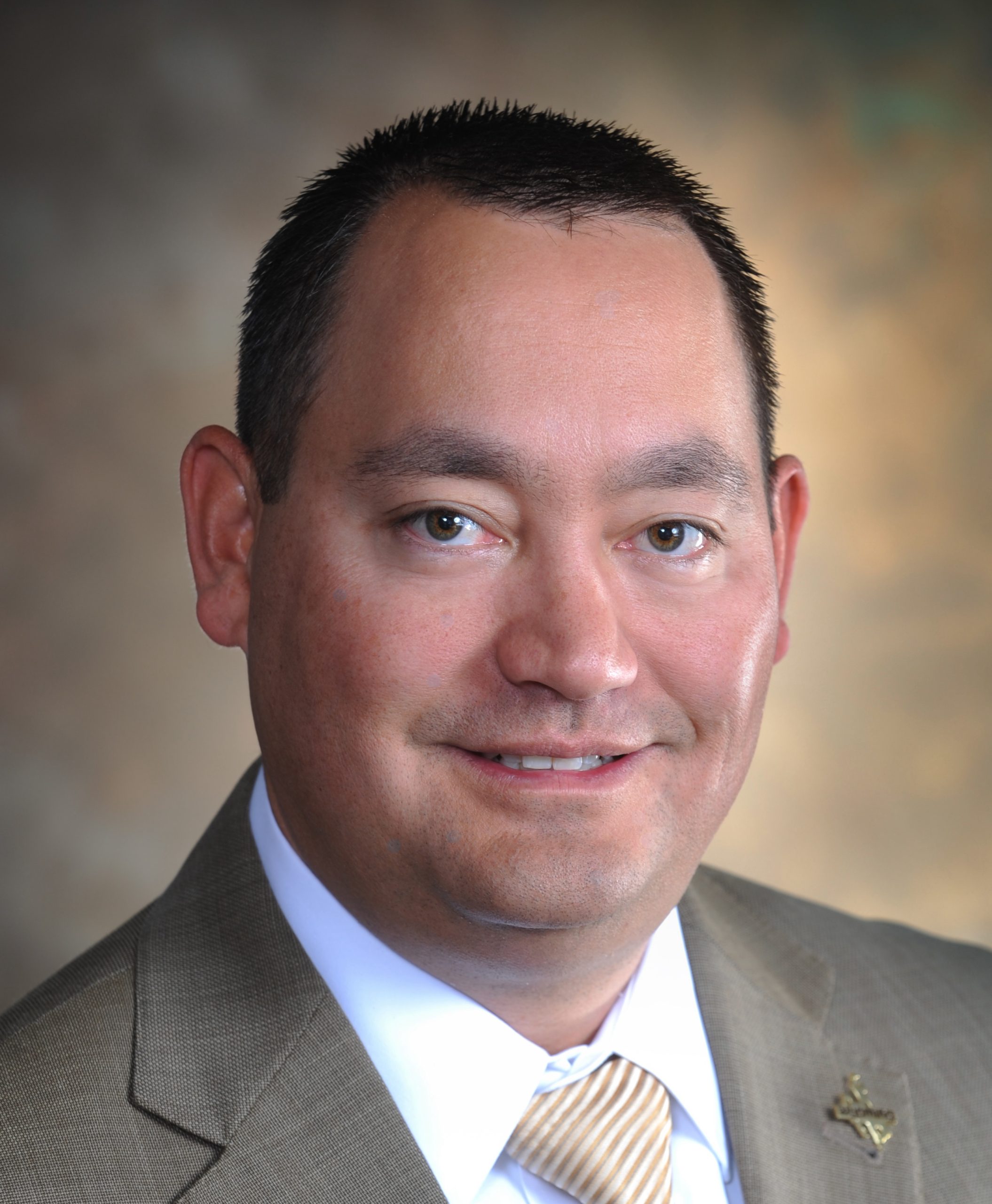
A Wyoming work ethic, UW education, and lifelong passion for agriculture. That’s Doug Miyamoto’s recipe for success. As director of the Wyoming Department of Agriculture (WDA), Miyamoto is an internationally recognized advocate for the agricultural community. Motivated by a powerful connection to Wyoming people and places, Miyamoto has advocated tirelessly for his home state throughout his career.
An affinity for agriculture
As a Wyoming native and third-generation UW graduate, Miyamoto is proud of his heritage. “Everything that I’ve done has been centered around the state of Wyoming and that’s where I essentially got all of my upbringing, all of my influence,” he says. “It all comes from this state and this place.”
From Miyamoto’s perspective, Wyoming culture is inseparable from agriculture. “The cowboy culture in this state is one that has been given to us by generations of people that are all involved in agriculture, and they still provide the backbone of the industry and its identity today,” he observes.
Born and raised in Rawlins, Miyamoto didn’t grow up on a farm or ranch, though many of his friends did. His parents were science teachers, not producers, and he was a competitive swimmer, not a rodeo champion. But he was drawn to agriculture from an early age.
“I always liked agriculture, wanted to be involved in it,” he recalls. “For those of us that aren’t born into a family operation, you have to figure out how you can contribute. For me, it was through the sciences. I used academics as my pathway to a career in agriculture.”
Ranching research
For Miyamoto, there was never a question of where he’d go for college. “The University of Wyoming has always been a major influence on my development,” he says. “That consistency of [UW] being there from a very early age all the way through my career has been really fun.”
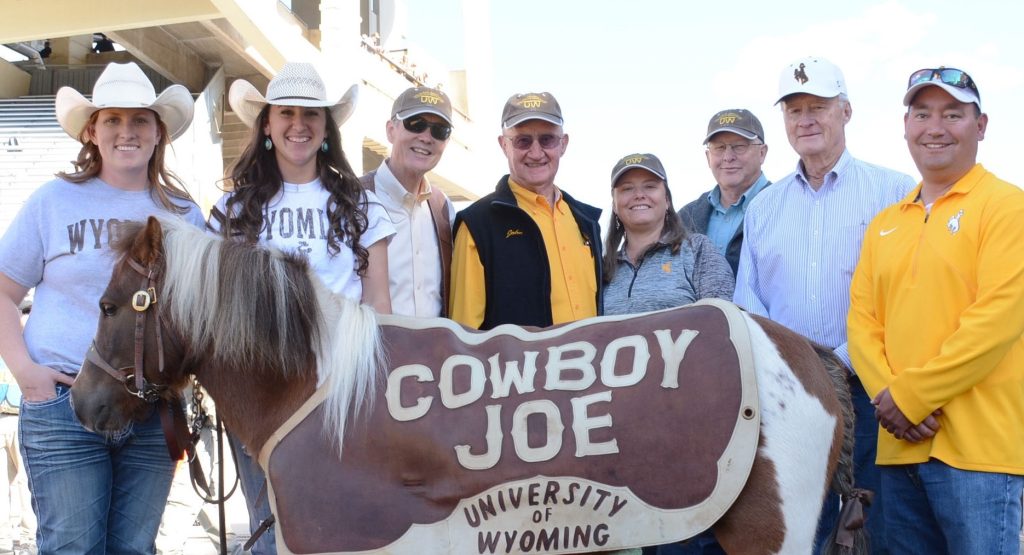
Miyamoto attended UW on a swimming scholarship, competing in NCAA Division I athletics while earning an undergraduate degree in rangeland ecology and watershed management. He graduated in 1996 and later completed a master’s degree in the same field.
Miyamoto’s graduate research, completed on a ranch in southeastern Wyoming, incorporated both soil science and range management. His project assessed the long-term efficacy of rangeland renovation efforts undertaken two decades before, in the 1970s.
The goal was to determine whether rangeland renovation techniques could be used to improve soil quality—and if so, how long did that improvement last?
The original study suggested that furrowing and ripping had boosted native cool season plant growth, improving winter forage quality. Miyamoto was tasked with determining whether those benefits extended into the present.
In addition to sampling plant communities, he measured carbon and nitrogen concentrations in thousands of soil cores to see if nutrient levels remained elevated, even after 20 years.
Ultimately, Miyamoto’s results suggested that some benefits from the original treatment remained, though to a lesser degree than he predicted.
The policy pipeline
As a scientist, Miyamoto didn’t set out to pursue a career in policy. But it turned out he had a talent for advocacy as well as research.
From 1999 to 2011, Miyamoto worked for the USDA’s Natural Resources Conservation Service (NRCS) in various roles. One of his first forays into the policy realm involved partnering with conservation districts across Wyoming to plan and implement watershed improvement efforts. “We were trying to come up with a voluntary, incentive-based, and local way of improving water quality in impaired watersheds,” he explains.
One day, Miyamoto got a call from the Western Governors’ Association, an organization that represents governors of the 22 westernmost U.S. states and territories. They were looking for a USDA liaison to help guide policy development for the latest Farm Bill, which included controversial topics like sage-grouse conservation.
Miyamoto agreed to help. Soon, he’d gained valuable experience in not only Farm Bill legislation, but also Endangered Species Act reform, Clean Water Act and Clean Air Act issues, renewable energy policy, and more. Along the way, he also earned a reputation for his leadership skills and aptitude for building partnerships.
Miyamoto was named deputy director of the Wyoming Department of Agriculture in 2011. In 2013, the Wyoming Livestock Board asked him to temporarily serve as director of their agency as well.
Miyamoto was a bit hesitant about taking on the position—after all, his background was in range science, not animal health, brand law, or law enforcement. He had, however, earned respect in both state and federal agricultural circles as a thoughtful, effective leader.
State, federal, and international advocacy
In 2015, following a successful stint at the Wyoming Livestock Board, Miyamoto was appointed director of the WDA.
“My job as the director of the Wyoming Livestock Board and the director of the Wyoming Department of Agriculture has been much more meaningful than anything else that I’ve done in my career,” he says. “You’re a lot closer to the farm and ranch in these jobs in the state of Wyoming…than if I would have stayed purely on the policy side of the federal government.”
In addition to his strong ties within the state, Miyamoto is quick to acknowledge the importance of regional and national collaborations.
“Probably the most influential things that I’ve been able to do in these jobs has been to be able to work with my counterparts—other directors, secretaries, commissioners of agriculture from across the United States—to advocate for farmers and ranchers,” he says. “Directly, and as a group, we carry a pretty powerful message, and I think that that’s been very helpful in both Farm Bill development and the ability to get policy initiatives and trade initiatives across the finish line in Congress.”
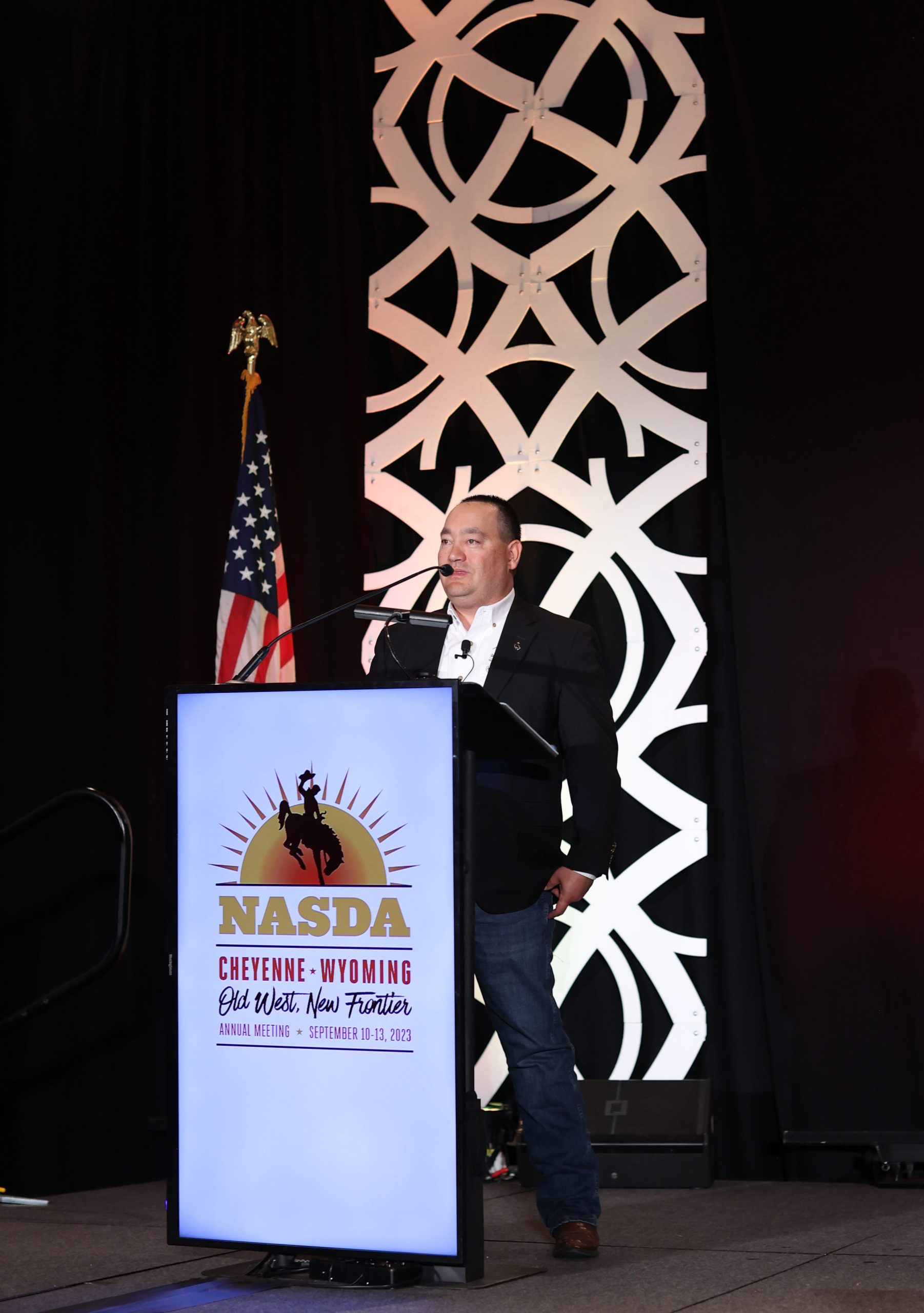
In 2023, Miyamoto was elected president of the National Association of State Departments of Agriculture (NASDA), an organization that brings together top agricultural officials in every U.S. state and territory. It was an exciting opportunity, he says, because it meant he had the chance to advocate for agriculture at the international level.
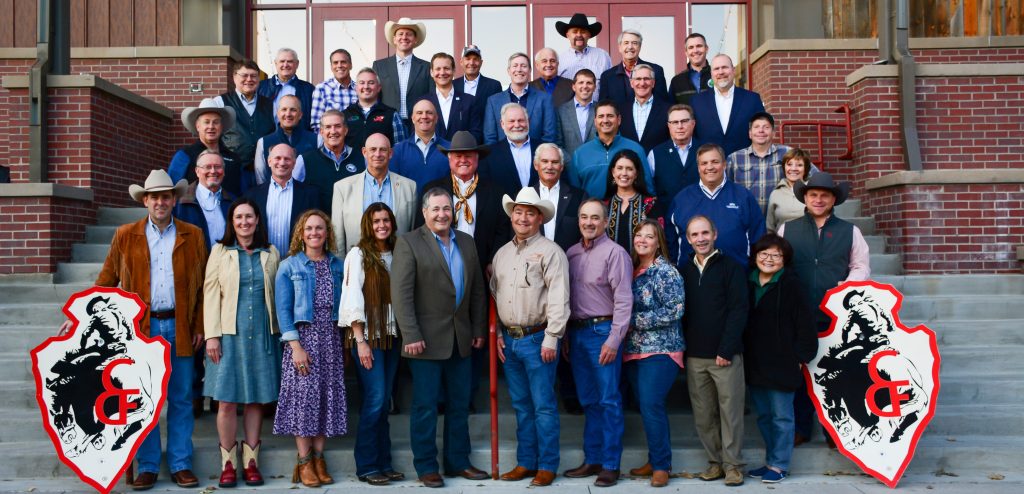
As NASDA president, Miyamoto also brought the organization’s annual convention to the state of Wyoming for the first time. It’s an accomplishment he’s proud of, especially since many of his peers had never experienced agriculture in the West firsthand.
“Agriculture in Wyoming is so different because we’re the highest, driest, coldest, least populated state in the Union,” Miyamoto notes. “To be successful in agriculture out here, you have to be tough. We have a lot of variability and a lot of conditions that most other people in agriculture don’t have to contend with.”
But Miyamoto likes a challenge. In fact, it’s his favorite part of the job.
“The Wyoming Department of Agriculture is a regulatory entity,” he explains. “But we also get to do advocacy for farmers and ranchers, and that’s the part that I enjoy the most—advocating for our farmers and ranchers and trying to help them become more profitable, more sustainable, and to have a good shot at a solid living out here in the arid West.”