


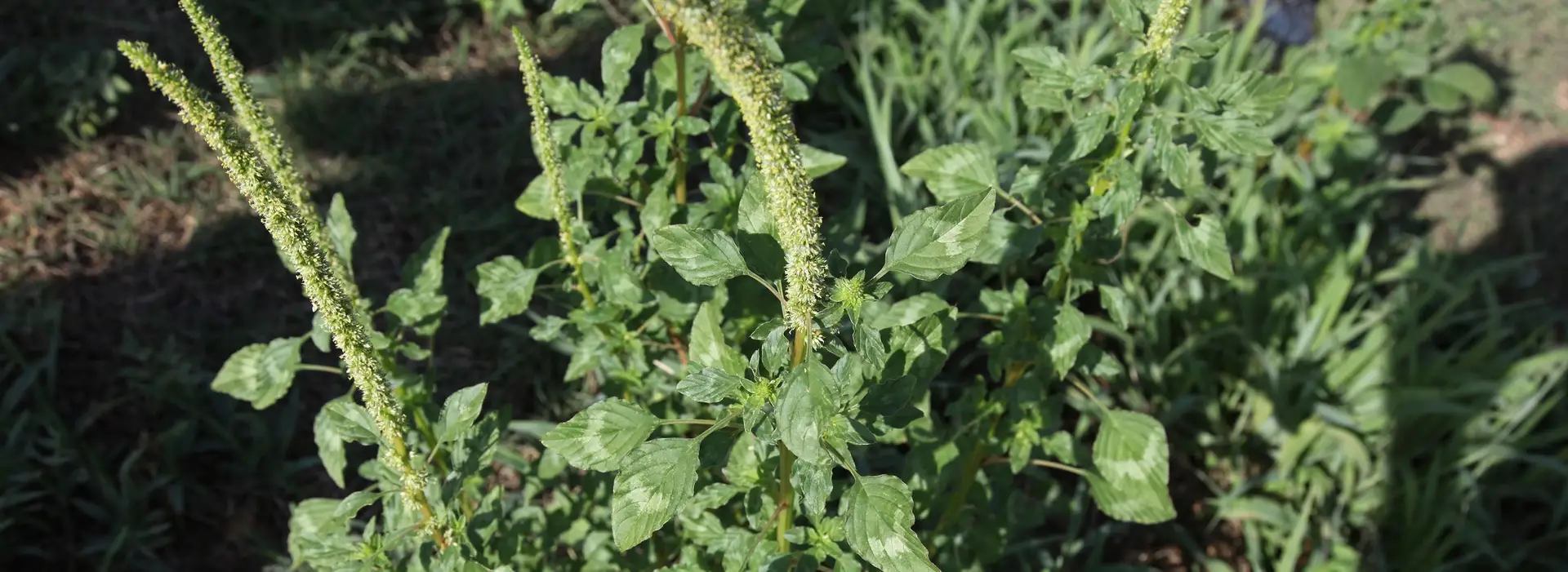
Up to one million seeds per plant, growth of 3 inches per day and highly adaptive to environments and herbicides – Palmer amaranth has proven to be a weed of major concern.
Goshen County has the only known reports in Wyoming – so far.
“The biggest thing right now that producers need to be doing is just looking for it,” said Caleb Carter, University of Wyoming Extension educator based in Goshen County.
Native to the deserts in the southwestern U.S., Palmer amaranth has slowly spread to the southeastern part of the country. It is believed to have spread through feed, contaminated seed, cotton and equipment.
Equipment is the assumed culprit for bringing Palmer amaranth into Goshen County in the summer of 2017.
Left unchecked, Palmer amaranth can easily take over a field in just a few years. It has the ability to reduce yields up to 91 percent. Scouting and identification is critical, said Carter.
Carter notes one of the biggest challenges is Palmer amaranth looks very similar to other weeds in the amaranth family.
“My fear is people are going to write it off as a redroot pigweed or something like that,” said Carter. “That’s a weed that we’ve had forever, and it’s just kind of around, but it’s not something that’s at the level of concern as Palmer amaranth. It won’t take over a whole field necessarily.”
Palmer amaranth has petioles longer than the leaf blade. It has symmetrical leaf arrangement like poinsettias. The seed head is 1 to 2 feet long with a smooth, hairless stem. It has notched leaf tips, and leaves sometimes have white chevron. Palmer amaranth can also grow up to 8 feet tall.
Carter explained Palmer amaranth has been known to come in mixes like CRP and cover crop mixes. He suggests producers try to buy weed-free seed. He mentioned the weed is not typically an issue for dryland pastures but mostly in irrigated fields.
For more information, Carter encourages producers to reach out to their local extension educators or visit the High Plains CropSite at bit.ly/palmerinfouwyo.
Additional resources can also be found in the UW Extension publication Amaranthus species: A current and emerging threat in Wyoming, B-1299 (go to http://www.uwyo.edu/uwe, click Publications, then enter the title or number); Purdue Extension at http://bit.ly/PurduePalmer; North Dakota State University Extension at http://bit.ly/NDPalmer; or at University of Nebraska Extension http://bit.ly/NebPalmer.