


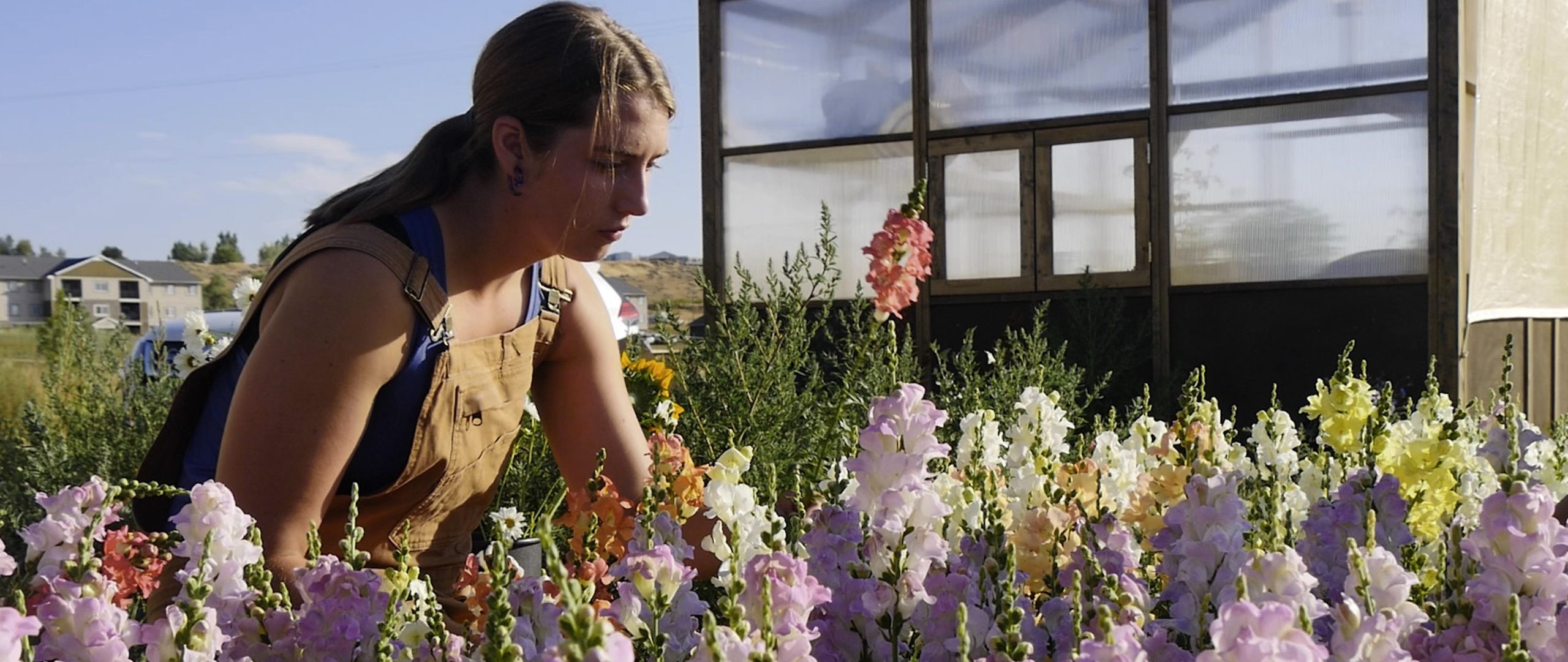
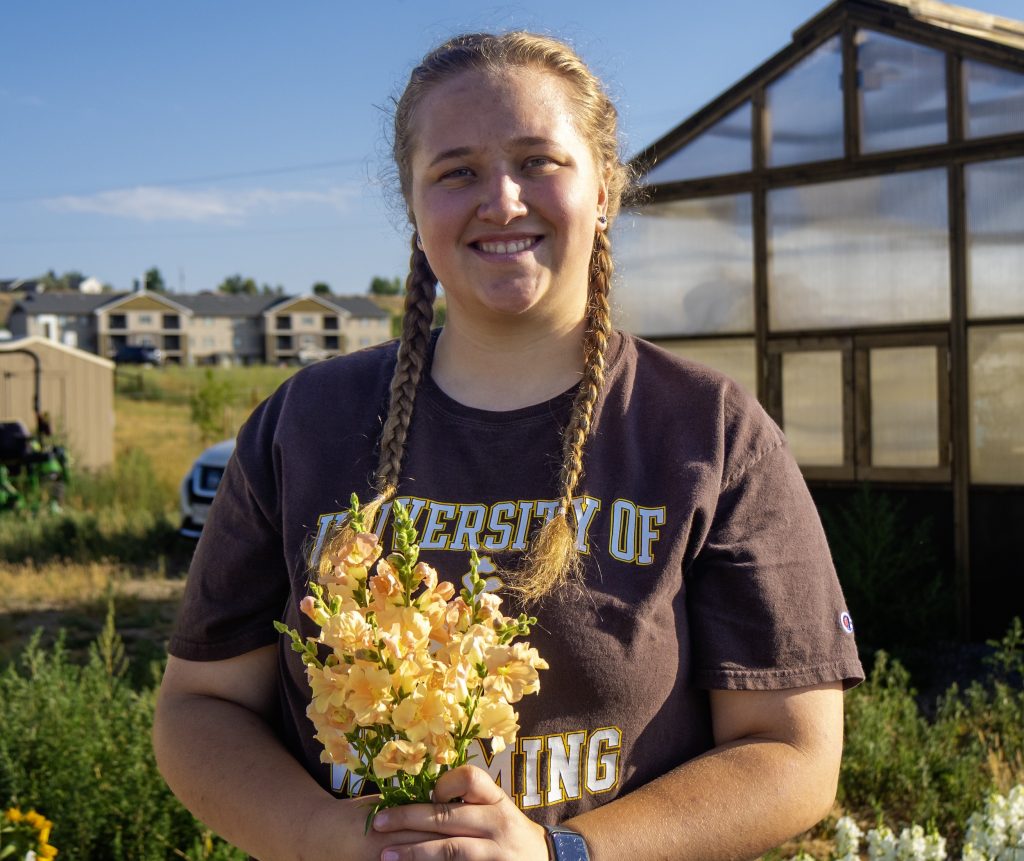
Emzie Coop, a UW student majoring in plant production and protection, dreamed of one day opening a cut-flower operation. But, aside from participating in her local FFA chapter in Scottsbluff, Nebraska, she didn’t have a background in agriculture.
When she heard about UW’s GrowinG Internship Program for aspiring farmers and ranchers, Coop jumped at the opportunity to gain real-world experience.
In an effort coordinated by the Department of Agricultural and Applied Economics, the GrowinG program connects new and beginning farmers and ranchers with established Wyoming producers. Through education, mentoring, and technical assistance, GrowinG internships help budding agriculturists develop the skills they need to successfully manage their own operations.
“This program functions as a real-world classroom, turning economic theory into practical experience and helping students see the complexity of the choices producers face every day,” says Ben Rashford, head of the Department of Agricultural and Applied Economics and co-founder of the program.
Learning by doing
When Brandie Mae Orchard, proprietor of Mae Orchard Blooms in Crowheart, saw an ad for the GrowinG program, she eagerly applied to become a host. “I love [the] University of Wyoming and I thought, ‘What a great opportunity to not only get a little hands-on help, but to also teach and educate future students who may want to grow something in our state,’” she recalls.
Orchard serves as farmer, florist, photographer, marketer, and delivery person for Mae Orchard Blooms. A performing arts major who worked in finance for 15 years, she knows firsthand how valuable—and often difficult to obtain—real-world agricultural experience can be.
“The hands-on experience is like gold and sometimes it’s hard to get the opportunity,” she comments. “We’re building these beautiful relationships and connections that allow students to hopefully go and do this on their own but know that they have people they can reach out to in the future to help them.”
In 2024, Coop secured an internship at Orchard’s peony farm. During her 10 weeks at Mae Orchard Blooms, she learned firsthand what it took to grow, harvest, and process locally grown flowers, then transform them into elegant floral displays. “The internship I had with Brandie [at Mae Orchard Blooms] was really foundational,” she reflects. “It was my first time having experience in the field that I was interested in.”
A blooming industry
The GrowinG Internship Program launched in 2022. Over the past four years, 25 operations in 12 Wyoming counties have hosted GrowinG interns, with some hosts and interns participating multiple times. Host operations have ranged from multigenerational cow-calf ranches to cut-flower operations like Mae Orchard Blooms.
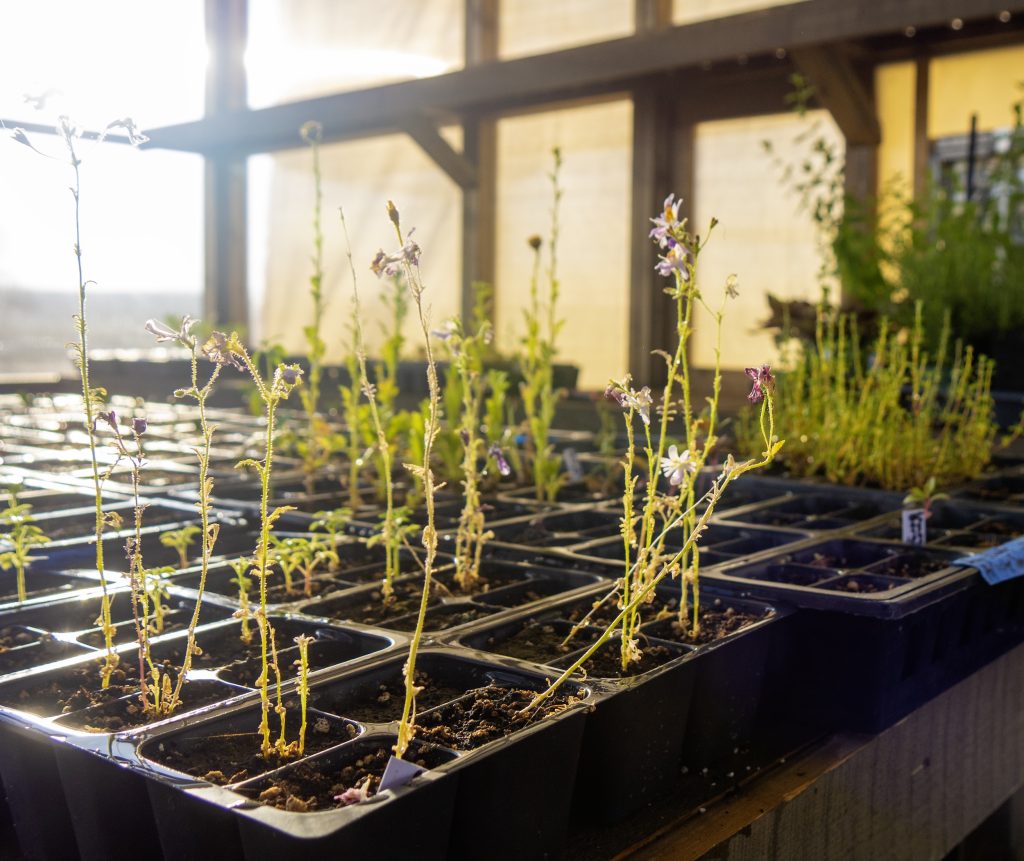
Compared to cattle ranching, flower farming is a niche industry in Wyoming. But it’s growing, in part thanks to what’s known as the “slow flower” movement.
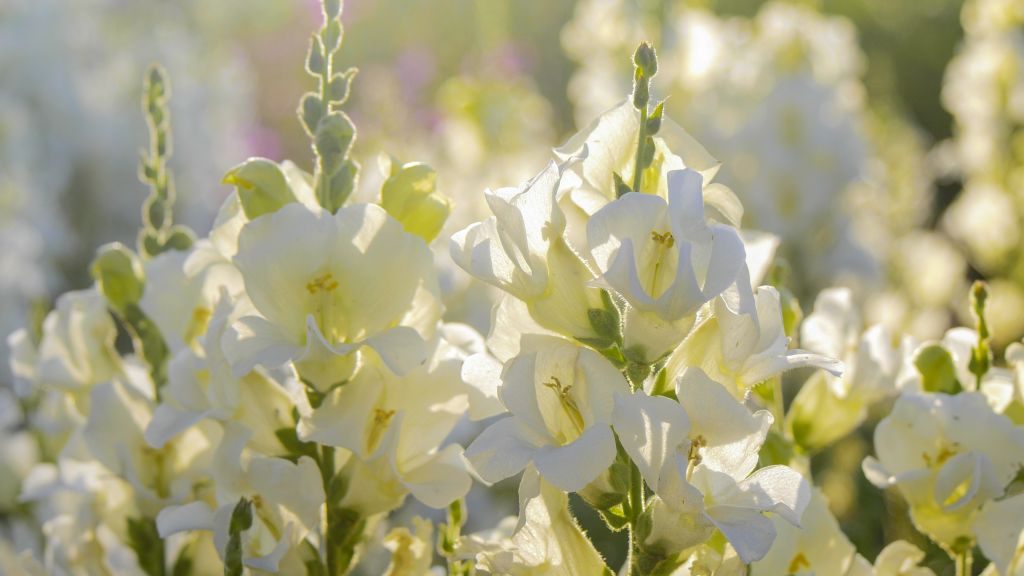
Currently, most cut flowers available for purchase in the U.S. are imported from Central or South America. But as demand for local products—both edible and floral—increases, Wyoming producers are finding opportunities to tap into a new market.
Some decorative flowers, like the drought-resistant peony, even thrive in Wyoming’s arid climate, Orchard notes.
Location is key in more than one way, though, she acknowledges. Cut-flower producers in Fremont County benefit from relative proximity to locations like Jackson Hole, a popular wedding and event destination.
“Specialty cut flowers are a niche market in Wyoming. But there is a lot of opportunity to expand,” says Teresa Tibbets, a Lander-based producer. “They are a crop that provides a lot of value per square foot…Just like the local food movement has been slowly growing, also the local flower movement is growing.”
From intern to farm manager
Tibbets, a former UW research scientist, owns and operates Dandelion Farm & Floral, a flower farm and floral design studio serving clients in Jackson Hole and across Wyoming. She connected with Coop in summer 2024 when Orchard arranged for the three of them to visit a Colorado flower farm together.
Recognizing the intern’s passion for cut-flower production, Tibbets later reached out to see if Coop was interested in working as a farm manager for Dandelion Farm & Floral during the 2025 season.
“I knew [Emzie] had the experience of being on the flower farm…and I knew she had the motivation because she really wants to be a farmer,” Tibbets explains. “I wanted to be in the position where I could be teaching someone who really wants to learn.”
For Coop, working for Tibbets was a great learning experience, building on the skills she’d learned at Mae Orchard Blooms as well as providing new leadership opportunities. In addition to weeding, processing flowers, and performing other day-to-day tasks, she also supervised three high school students and helped implement new infrastructure projects, such as installing electric fencing.
Both her GrowinG internship and job at Dandelion Farm & Floral helped solidify Coop’s interest in pursuing a career in agriculture. “These past two summers, I’ve really enjoyed the work I’ve done, I’m proud of the work I’ve done here, and I would like to just continue that,” she comments.
After graduation, Coop plans to find a job in the agricultural industry, preferably in horticulture, and then slowly begin building her own operation.
GrowinG a multi-operation internship
Meanwhile, Orchard and Tibbets have piloted a joint GrowinG internship. In 2025, intern Courtney Robb worked at Mae Orchard Blooms for five weeks, then moved on to work with Tibbets and Coop at Dandelion Farm & Floral for the second half of her internship.
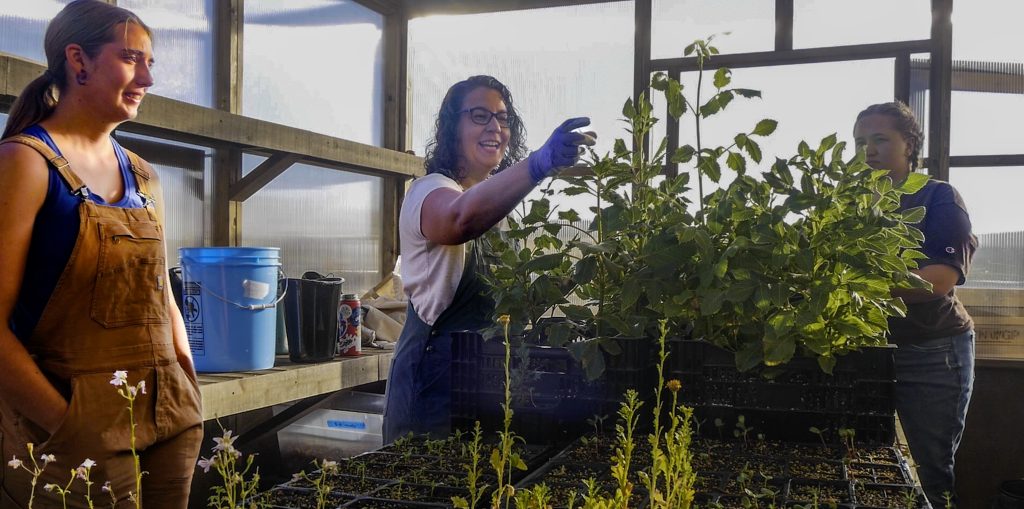
The two businesses complement each other well, with Orchard’s busy season concentrated in June and Tibbets’s business picking up in July.
“I think it’s awesome,” Coop comments. “The seasons really do bump off of each other and also every flower operation is so different…it’s also very helpful to see two different operations.”
Like Coop, Robb is a UW senior studying plant production and protection at UW. While she’s ultimately hoping to focus on vegetable production, Robb says her internship provided invaluable work experience.
“I would highly recommend this internship,” she comments. “Even if cut flowers aren’t your thing, it really just opens your eyes to see that side of agriculture.”
Finding a future in farming
Just as interns gain new insights through the GrowinG program, many hosts cite the value of fresh perspectives.
“I think both Courtney and Emzie…have brought a lot of their botanical knowledge and things that they’ve learned from class,” says Tibbets. “They’re bringing their classroom into the farm, which is great. And I think it’s good for them to see that what they’re learning is actually applicable to real-world farming.”
For both Tibbets and Orchard, hosting interns is about giving back and supporting the next generation. “It feels really good knowing that you’re teaching students about agriculture and Wyoming,” Orchard comments. “Hopefully they can take that with them whether they decide to do that as a career or not.”
In post-internship surveys, 95% of GrowinG interns have reported increased confidence in their ability to pursue a career in ag. More than two-thirds indicated increased interest in returning to work in Wyoming agriculture or operating their own farm or ranch.
“I think the future of agriculture involves young farmers who are motivated, who know about the challenges, but they’re going into farming anyway,” says Tibbets. “If they’re able to…get through a season and see what it’s like and still go after it, then we need them in Wyoming to farm.”
To learn more about the GrowinG Internship Program, visit growing-wy.org.