


Chase Markel, a University of Wyoming Ph.D. student from Wheatland, is harnessing artificial intelligence to transform how animal scientists study risk factors for congestive heart failure in cattle.
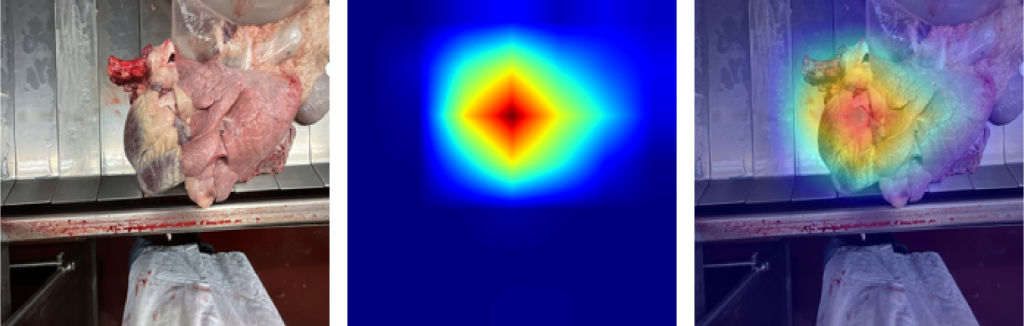
His AI model, the first of its kind, has been trained to predict the risk of congestive heart failure based on images of a cow’s heart.

Markel, who grew up in the cattle industry, hopes that this new tool can ultimately help alleviate financial losses associated with the condition.
Markel completed both his undergraduate and master’s degrees in the UW Department of Animal Science. He is currently pursuing a doctorate in the same department under the guidance of faculty advisers Hannah Cunningham-Hollinger and Cody Gifford.
As a master’s student, Markel studied pulmonary hypertension, also known as high-altitude disease or brisket disease, in cattle. He didn’t anticipate that this animal science research would eventually lead to a fellowship in the UW School of Computing and the development of a “computer vision” model with the potential to revolutionize his field.
“I’m not a computer scientist, I’m not an AI guy,” Markel says. “I’m someone who is studying heart failure [in cattle] and just happened to have the right conversation and made the connection in order to build something that I think can be useful. It all started with just trying to better understand pulmonary hypertension and heart failure.”
His master’s research indicated that subclinical cases of pulmonary hypertension, in which an animal is affected by high-altitude disease but survives, may have larger economic impacts than direct profit losses incurred when an animal dies before harvest.
Pulmonary hypertension has been linked to congestive heart failure, the focus of Markel’s doctoral research. The size and shape of a cow’s right ventricle are key risk indicators for both conditions. As pressure builds in the right ventricle, the heart becomes thick and misshapen, increasing the severity of pulmonary hypertension and risk of congestive heart failure.
Markel knew that detecting these abnormalities, especially in subclinical cases of congestive heart failure, could potentially provide valuable data for plants and producers.