


The University of Wyoming Extension welcomes Hannah Rodgers as a research scientist in the Department of Agricultural and Applied Economics.
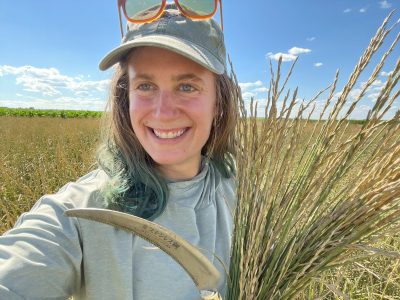
As a research scientist, Rodgers will help producers navigate Wyoming’s harsh environmental conditions and access tools and resources to understand weather and climate-related issues. Rodgers will research drought-adaptation strategies for Wyoming and create educational materials on these practices.
Rodgers will also work with technical service providers (TSPs) that regularly assist Wyoming producers with extreme weather. These TSPs include staff from state and federal land management agencies, conservation districts, and the Farm Services Agency.
“I’m excited about the opportunity to work directly with Wyoming technical service providers and farmers on strategies to adapt to drought and other forms of extreme weather,” says Rodgers.
Rodgers graduated from UW in 2024 with a doctorate in soil sciences. After her graduation, Rodgers worked at the U.S. Department of Agriculture (USDA) Northern Plains Climate Hub, where she helped farmers across the Northern Plains region create economically secure, resilient agricultural systems. Rodgers looks forward to translating her experience with the Northern Plains Climate Hub to Wyoming producers.
Rodgers’ position is funded by a USDA National Institute of Food and Agriculture grant.
Rodgers started her new role with UW Extension on Tuesday, April 1. She can be reached at Hrodger3@uwyo.edu.