

The Institute for Managing Annual Grasses Invading Natural Ecosystems (IMAGINE) is hosting a free virtual workshop Wednesday, April 3, from 9 a.m. to 4 p.m. MDT. The workshop, titled “Defending and Growing the Core by Breaking the Cycle of Annual Grass Invasion,” will cover the current invasive grass landscape in the West and give participants strategies and resources for proactive management.
“This workshop sets the stage for success with strategy and tools anchored to high value sagebrush areas,” says Lindy Garner, invasive species coordinator with the U.S. Fish and Wildlife Service. Its focus is on protecting and expanding intact native plant communities rather than starting with the most degraded areas.
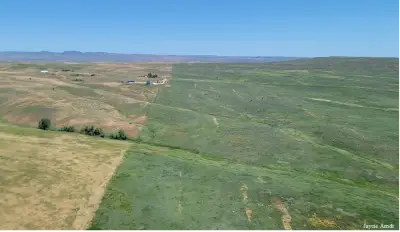
Speakers at the workshop represent a breadth of expertise from Wyoming, Colorado, Montana, Nevada, and Oregon. They include Brian Mealor, director of IMAGINE, Jaycie Arndt, Chad Boyd, Erika Fitzpatrick, Reese Irvine, Jeremy Maestas, Paul Meiman, Andrew Olsen, Petar Simic, Claire Visconti, and others. To participate in the event, attendees must register online at https://www.invasivegrasses.com/events before March 27.
The Invasive Annual Grass Tech Transfer Partnership is led by UW’s IMAGINE with collaboration from core partners in land management organizations across the West, including the USDA-NRCS Working Lands for Wildlife, U.S. Fish and Wildlife Service, Bureau of Land Management, Intermountain West Joint Venture, National Park Service, Montana State University, and University of Nevada-Reno Extension.
Jeremy Maestas, national sagebrush ecosystem specialist with the Natural Resources Conservation Service, says, “This event is timely and desperately needed to get communities talking about how they can be part of the solution to annual grass invasion. We have a generational opportunity to act now to save the sagebrush biome before it’s too late.”
The free workshop has only 1,000 slots, but recordings will be available to the public after the event. IMAGINE also plans to host additional workshops to empower land managers with scientific knowledge.
Future workshops will offer hands-on experience in invasive annual grass (IAG) management plans, including examples of the results of different management treatments. Other workshops will help local working groups examine their specific landscape and define their core native plant ecosystems. “I find meeting with local working groups and seeing them use a combination of the tools that we have provided them as well bringing their own local knowledge to start creating a management plan is very rewarding,” comments Claire Visconti, outreach program coordinator for IMAGINE.
For questions about IMAGINE or the virtual workshop, contact Claire Visconti at cviscont@uwyo.edu.