


Are you pesticide-averse or an over-avenger?
I have gone on yard calls for a weed or pest issue, only to find the homeowner has already applied chemicals to no avail.
Often it is because they misidentified the pest or misused the product.
On the flip side, I often receive questions from homeowners who are concerned about using pesticides around their home, yard or garden. Their concerns usually center on the safety of the chemicals and potential environmental contamination.
Whether you are hesitant to use pesticides or might be misusing them, you can take steps to use pesticides safely and protect yourself, your family and the environment.
Know Your Pest
Is the pest hurting your garden production, or is it simply an aesthetic issue that will go away on its own? You may find no action is needed, or other avenues of control may work better or enhance the effectiveness of the pesticide you choose.
Proper use of pesticides begins with proper identification of the pest. This will help you determine if you need to take action or what action to take. Some pests, such as fungal leaf spot on cottonwoods, aren’t really harmful and require no action.
Knowing when to do nothing is especially important in light of recent Wyoming Department of Environmental Quality groundwater quality findings. Testing results from across Wyoming show pesticide contamination in wells within municipalities is increasing, while contamination in rural wells across the state is declining.
Wear Your PPE
A study by the Minnesota School of Public Health that looked at farm family exposure to pesticides found those applicators who did not follow proper safety measures not only put themselves at risk but also their spouse and children.
The safety measures that helped farmers most were not allowing children to handle pesticides or application equipment, wearing proper personal protective equipment (PPE) during application and when working on application equipment, removing contaminated clothing before entering the home, and washing contaminated clothing separately. These safety measures are worth adopting for pesticide use around the home and in the garden as well.
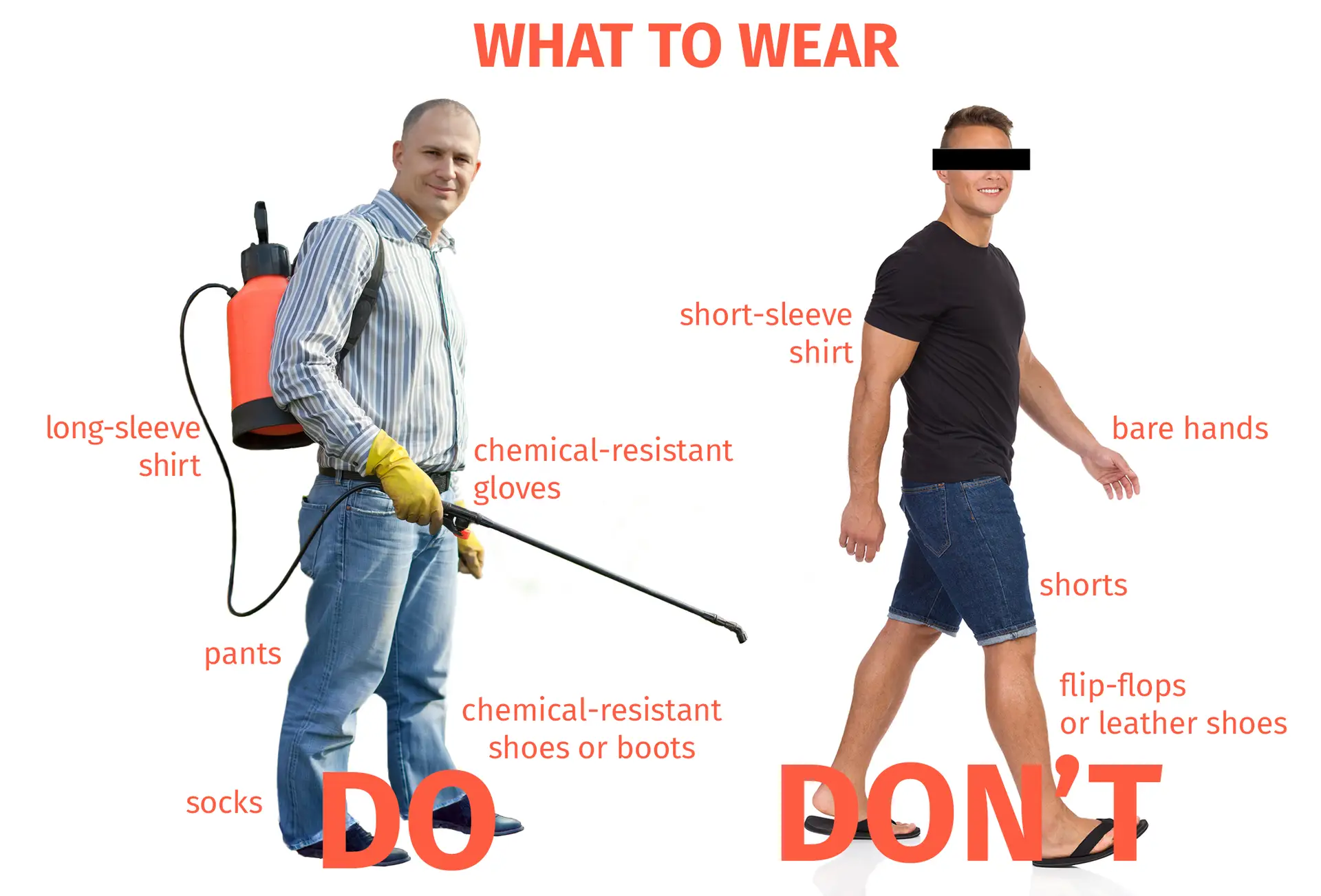
Read the pesticide label to learn what PPE to wear while mixing and applying a particular pesticide. The minimum is long sleeve shirt, pants, shoes, socks, and chemical-resistant gloves and boots. Depending on the product, additional PPE may be indicated on the label.
Read the Label
The label also tells you how much pesticide to use. Not only is the label recommendation the law, but applying the correct amount minimizes risk to people and water sources.
How to Buy and Store
Keep yourself and your family safe by storing pesticides safely. Choose a secure location out of the reach of children. Keep containers clean and organized. Never put pesticides in a separate container, especially one used for food or drink. Serious injury and death have resulted from consuming pesticides from unmarked containers.
Reprinted from the March 2017 University of Wyoming Barnyards & Backyards newspaper insert.