
Serving families with limited resources, the University of Wyoming Extension’s Cent$ible Nutrition Program (CNP) helps Wyomingites stretch precious dollars to obtain more nutritious food.
CNP offers nutrition education classes and community intervention to help families in every Wyoming county and the Wind River Indian Reservation. CNP classes are free to anyone who meets household monthly and yearly income guidelines, and classes help participants manage budgets and make buying nutritious foods easier, said Mindy Meuli, CNP state director.
Adults can take an eight-lesson series focused on food resource management, general nutrition and food preparation. Children grades K-2 can participate in a lesson series, called Happy, Healthy Me; grades 3-5 participate in Grazing with Marty Moose, a five-lesson series; and the most recent curriculum, Real Kids, Real Skills, Real Meals, is for grades 5-8.
Participants of all ages get a lot out of the classes, said Meuli.
“We do an activity in the adult curriculum where we figure out how much sugar you consume in a year, just by drinking things like soda or coffee,” said Kali McCrackin Goodenough, CNP marketing coordinator. “That’s a huge eye-opener for participants.”
Helping participants focus on their spending habits is one of the more challenging activities CNP does during the adult education series, but it is also one of the biggest positive changes participants see, said McCrackin Goodenough.
“People end up saving $30-40 a month, and they have more money for fruits or vegetables,” said McCrackin Goodenough. “That is the biggest outcome for participants – learning they can save money and eat healthy while doing it.”
Participants saved an average of $50 a month in 2019. This past year, with COVID, savings were not as high, but participants still saved around $14 a month, according to Meuli.
“The COVID-19 pandemic is really challenging for our participants,” said McCrackin Goodenough. “They are really at risk during the pandemic.”
One participant who took the class two years ago shared that CNP classes helped her remain financially secure during the onset of the pandemic. The classes helped her stretch food dollars and make sure everyone in her family had food all month, said McCrackin Goodenough.
COVID changed classes from in-person to online, but it also allowed CNP to gain new and strengthen old partnerships and increase its presence online, said Meuli. The CNP website and Facebook were essential tools during the start of the COVID-19 pandemic.
CNP connected with the Food Bank of the Rockies and strengthened their relationship with the Wyoming First Lady’s Wyoming Hunger Initiative. They also strengthened their partnership with the Women, Infants, and Children (WIC) program to help provide education, according to Meuli.
“Nutrition classes are just part of what we do,” said McCrackin Goodenough. “The other part is community level interventions that work to make the healthy choice the easy choice.”
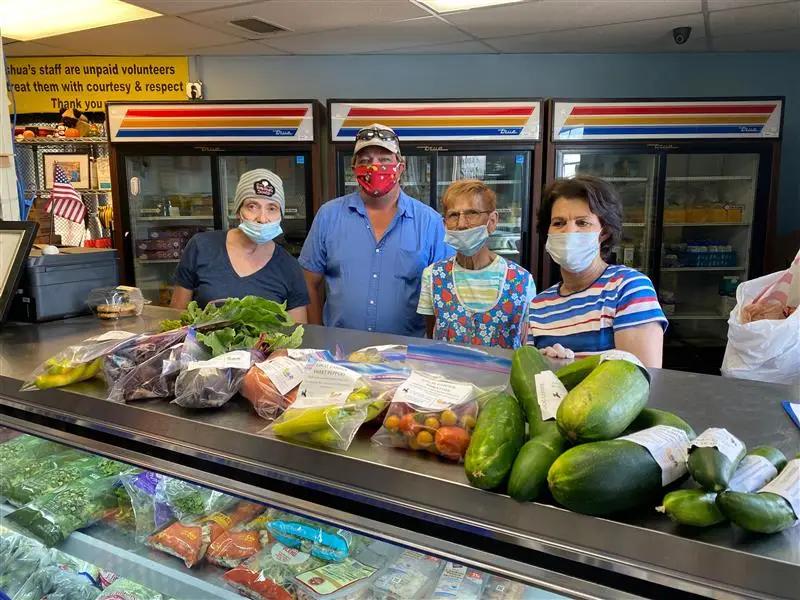
CNP uses four focus areas to help create community-level changes to assist community members and families make the healthier choice. They utilize Marty Moose at the school setting to help schools make their classrooms and lunchrooms healthier. In Wyoming communities, CNP educators work with local partners on projects focused on local food, like community gardens and farmers markets; food pantries; and early childhood education centers.
“We work with food pantries and identify ways we can work together to make changes that support healthier choices,” said McCrackin Goodenough. “Some of that is as simple as what’s on the shelves so healthier choices are more at eye level, and some of it is a bit more complicated like rearranging the pantry to better facilitate a shopping style.”
Some bigger CNP projects included helping connect some food pantries to gardens and providing refrigeration to help preserve and provide fresh produce and dairy products, said McCrackin Goodenough.
“Nutrition classes really hit an individual level of influencing healthy choices,” she said. “But if people go to the food pantry and they can’t find whole wheat bread or low-sodium beans, that’s kind of limiting, so if we work in that environment, we can influence the availability of healthy choices.”
For more information about CNP or to get involved in classes, reach out to your local CNP educator at your county extension office or call the state office at 1-877-219-4646 or 307-766-5375 or visit the website at www.uwyocnp.org.