
Stories from innovative producers who have increased their resilience to weather and climate extremes are available for reading and viewing at the Learning From Your Neighbor: Climate Resiliency in Agriculture website https://bit.ly/ClimateResiliencyAg.
The project has multiple storytelling components. There is video content that can be accessed from YouTube, printed factsheets and the online story map that integrates the images, video and text all in one.
The project goal is multifaceted, shared Windy Kelley, University of Wyoming Extension regional program coordinator.
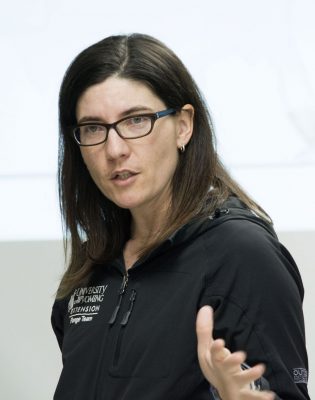
“It connects farmers and ranchers to one another to provide them with a network they can tap into as they consider changing management practices – sharing what worked, what didn’t work and what they might do differently ‘next time’,” said Kelley. “It also serves to share and document what practices are available for agricultural producers and working land managers to increase resiliency to weather and climate extremes, and the third purpose is to increase the knowledge and awareness of the general public about challenges and decisions ag producers face day-to-day and year-to-year.”
The project was inspired by a challenge eXtension had on innovation a few years ago, said Kelley.
“Myself, a few others at the UW Extension, Montana State University Extension and University of Nebraska-Lincoln Extension partnered to get out on the ground and document ag producers sharing about innovative practices they adopted, which increased their operation’s resiliency to weather and climate extremes,” said Kelley. The project was later expanded to include partners with North Dakota State University Extension, South Dakota State University Extension and the Colorado Water Center.
eXtension is a national hub for learning and professional development for those in extension programs in the nation’s land-grant universities.
Working across six states, the project has six producer stories: one in Montana, two in North Dakota, two in South Dakota and one in Nebraska. Two more stories in North Dakota will be added soon.
“As we have funding, as well as interest by producers who are willing to share their stories, we hope to continue to build and populate the map by adding videos and additional content,” said Kelley. “We do have gaps in Wyoming and Colorado right now, and we would love to have producers share their stories with us.”
The story map provides clickable resources and views across six states.
“Producers, the public, extension or other service providers can look at the map and say, “Okay, I’m in Montana and there is a farmer doing no-till or reduce till, and it actually can work here,’” said Kelley.
The project was funded in part by the USDA Northern Plains Climate Hub, which is a part of the Agricultural Research Service (ARS) in Fort Collins, CO.