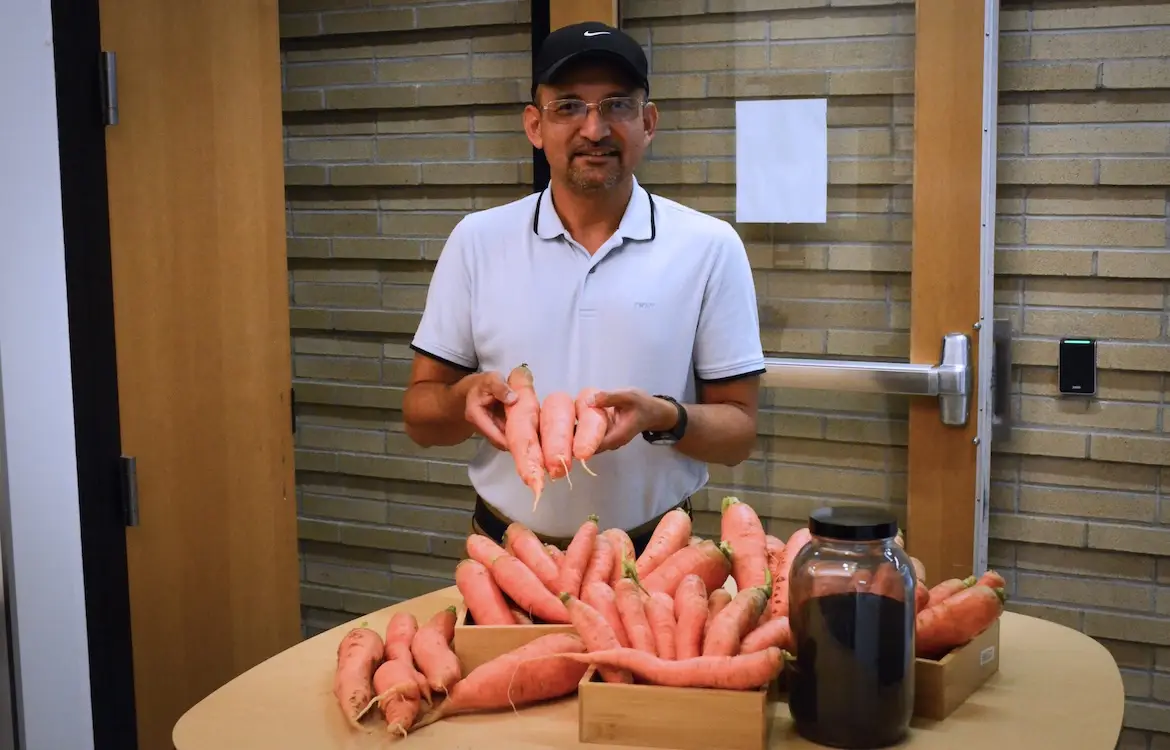



Food shortages and panic at the grocery stores in response to the COVID‑19 pandemic have begun to change the way average grocery consumers think about sourcing their food.
As small ag producers know, there isn’t really a shortage of food, just a disconnect between how a small farm’s food reaches the average consumer’s table. Here’s the crucial question, “How do you let consumers know our thriving ag‑businesses can serve their needs where grocery stores fall short?”
To connect with these hungry consumers you must inform them small ag‑businesses exist and can fulfill their food demands. You have lots of great tools to do this, with social media being one of the most powerful (and free!) options.
Social media is an important marketing tool all small businesses can use to spread information about their products and mission. Facebook and Instagram are the most useful social media platforms for small businesses. Facebook owns Instagram, and you can link these two platforms so you can post from just one channel to create new posts on both accounts.
Include a photo or video
Posts with visual components get more attention than just text. You don’t need to be a professional photographer to take great photos nor do you need an amazing camera. Use what you have and practice capturing moments. Here are some examples:
- If you are a food producer of any kind, try posting recipes using your product along with an image of that dish.
- If you produce an improved product from your goods like soaps or textiles, post photos of these things in action.
Experiment with live videos of you performing daily tasks! Take your followers out to feed the chickens with you, give them a virtual tour of your farm, introduce them to your employees. If a live video is too much pressure, explore the stories feature on Facebook and Instagram where you can post lifestyle videos but still have the opportunity to edit it before it goes out to the public.
Technical considerations
Be consistent. Try making a content schedule for your business to make things easy! For example, commit to posting once a day on Mondays, Wednesdays, and Fridays. Then plan what kind of posts you’ll make so when the day comes, coming up with ideas is easy.
- Monday — a recipe using your product along with a picture of the dish or someone making the dish
- Wednesday — a picture of the farm or a task your business is focusing on that day
- Friday — post about the farmers market you are attending this weekend or about the products you are taking to a retail store
Use industry‑related hashtags. Tags help non‑customers find your posts if they are interested in the topic you hashtagged. The best way to organize your tags is be sure one‑third of them relate to a broad audience, one‑third relate to a more specific audience, and one‑third relate specifically to your business. For example, a small producer that sells pasture‑raised chicken, eggs, and goat milk to their local community —
- Broad audience: #smallfarm #chickens #goatsmilk.
- Specific audience: #farmfresheggs #nubiangoatmilk #pasturedpoultry.
- Relates to you: #yourbusinessname #thelocalmarketyousellat #productname.
Include a call to action encouraging customers to engage with your post or your business:
- Share this post with a friend who would like this product.
- Find this product at your local food co‑op or visit us at the farmers market this Friday.
- Check out our website for more information about us.
Content is king in the social media world, so take some time to think of how you would like to share your business with your audience. Think about the values you want your customer to know about and decide how much of the process you want to share with your followers.
If you need assistance developing your content strategy or deciphering your mission, contact the Wyoming Small Business Development Center Network for marketing advice and coaching. The Wyoming SBDC Network’s team of regional advisers are ready to assist in creating a plan that grows your follower count and, in turn, your sales.
About the Wyoming SBDC Network
The Wyoming SBDC Network offers no‑cost advising and technical assistance to help Wyoming entrepreneurs think about, launch, grow, reinvent, or exit their businesses. In 2019, the Wyoming SBDC Network:
- Helped Wyoming entrepreneurs start 108 new businesses,
- Created or saved 3,402 jobs, and
- Brought a capital impact of more than
$24 million to the state.The Wyoming SBDC Network is hosted by the University of Wyoming with state funds from the Wyoming Business Council and is funded in part through a cooperative agreement with the U.S. Small Business Administration.
Maureen Johnson is the Coronavirus Aid, Relief, and Economic Security Act (CARES) marketing coordinator with the WSBDC and can be contacted at (307) 343‑0925 or at mjohn125@uwyo.edu.