

UW’s First-grains Project makes first sale

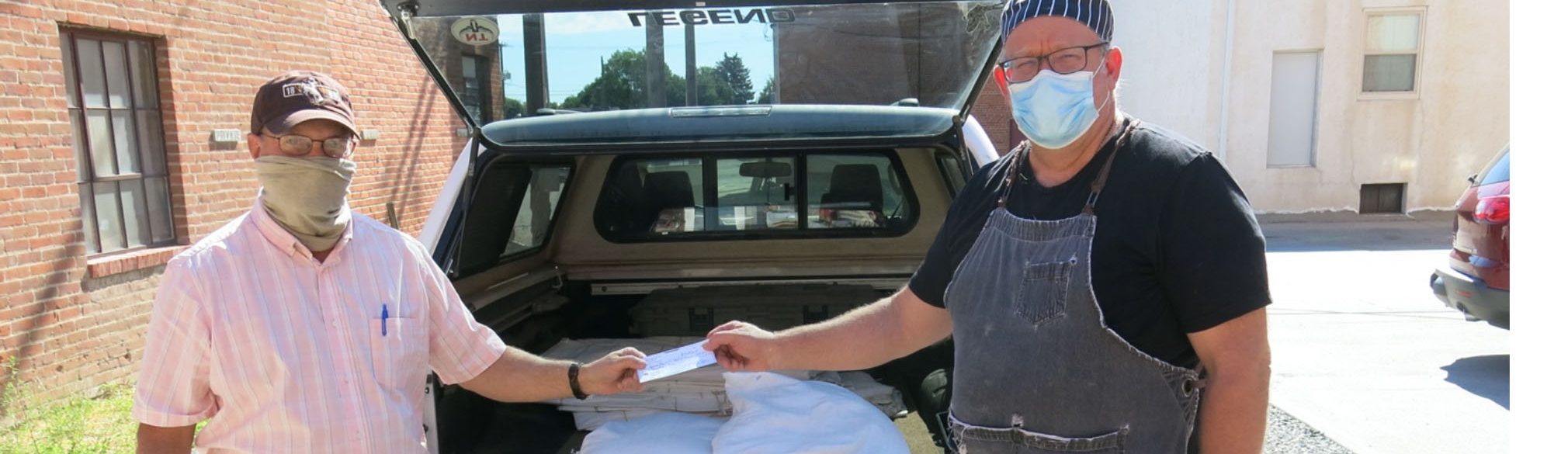
Two people shown in front of a sack of grain handing over a check.
Tom Foulke, left, receives a check from Ezdan Fluckiger, owner of The Bread Doctor in Torrington, for Neolithic Brand spelt. (Photo Tom Foulke)

The Wyoming First-grains Project hit a milestone Wednesday making its first sale of Neolithic Brand spelt when The Bread Doctor in Torrington bought 200 pounds.

“It’s been a long road, but we are finally able to deliver the high-quality product we have been working toward,” said Tom Foulke, the project director.

The Bread Doctor owner Ezdan Fluckiger said his customers like the rustic, nutty flavor of spelt loaves, and he sells out every time he makes them. When asked about what he likes about the Neolithic Brand grain, he said, “I like that it is local. And my customers appreciate it, too.”

Fluckiger founded The Bread Doctor in 2013. He said he is especially glad to now have a reliable source of locally grown spelt for his business.

Foulke, a research scientist in the Department of Agricultural and Applied Economics, said the First-grains Project is a novel research and economic development project from the University of Wyoming College of Agriculture and Natural Resources. The goal is to create a profitable niche industry around first-grains, sometimes called ancient grains, and in the process create jobs and enhance incomes in Wyoming’s agricultural sector, he said.

Neolithic Brands will eventually be spun off as a standalone business.

Spelt has been cultivated in Europe and the Middle East for about 8,000 years but is just becoming more popular in the U.S, said Foulke.

“Americans are just waking up from a hundred-year slumber where we ate mostly just wheat and white sandwich bread,” he said. “People are now asking more of their bread in terms of taste and texture.”

Foulke made a special trip to The Bread Doctor to close the first sale but said there is plenty more spelt where that came from.

“The 2020 crop is almost in, and then we have the de-hulling and sacking operations to complete,” said Foulke.

The First-grains Project is targeting the wholesale market with 50-pound sacks of whole grain, or “berries” as they are called, said Foulke.

Artisanal bakers like The Bread Doctor have their own small mills and grind their own flour.

More about the project is at www.uwagec.org/neolithicbrand.
Share the Post:

Related Posts

Artist booth at an Ag & Art Tour event, where a local artist displays watercolor paintings and handmade prints while engaging with a visitor; set outdoors with rural landscape, showcasing the connection between agriculture, creativity, and community.

UW Extension to Host Ag & Art Tour in Natrona County

For those interested in connecting with local artists and agriculturalists, the University of Wyoming Extension will lead a series of free self-guided Ag & Art tours from May through September.
The first Ag & Art event takes place in Natrona County Saturday, May 16, from 10 a.m. to 2 p.m.
“We had a great season last year and are excited to bring this event to five counties this summer, kicking things off [in] Natrona County,” says Hailey Sorg, Wyoming’s Jay Kemmerer Outdoor Recreation, Tourism and Hospitality (WORTH) Institute extension educator.

Read More
Amy Storey, a University of Wyoming third-year master’s student in zoology and physiology, completes a field survey for a collection site in Grand Teton National Park. This included taking habitat measurements about the floral and bee community as well as collecting environmental data, such as wind speed and land use. Storey’s presentation, titled “Parasites and Bumble Bee Decline in Wyoming,” was named the winning entry for a master’s student at the Wyoming Chapter of the Wildlife Society meeting in Sheridan April 8. (Rebecca Armentrout Photo)

UW’s Storey Makes Winning Presentation at Wyoming Chapter of Wildlife Society Meeting

Wild bumble bees are in decline, and various parasites may be a major cause. But there hasn’t been any data on whether Wyoming bees have parasites and to what degree—until now.
Amy Storey, a University of Wyoming third-year master’s student in zoology and physiology, shed light on her research when she took center stage at the recent Wyoming Chapter of the Wildlife Society meeting in Sheridan.

Read More

Help us improve this website!

We’re working to make AgNews easier to use and more useful for you. This quick survey takes about 1–2 minutes.