


Lettuce is a cool-season vegetable, which means it does well in spring and late summer when temperatures are cooler. Unlike some other plants, such as zucchini and squash, lettuce can handle a little frost and still live. This makes it a great vegetable to grow many parts of Wyoming, especially places at high elevation with a short growing season.
There are four types of lettuce: head, Bibb, romaine or cos, and leaf. Head is the most common for grocery store sales. Bibb is often grown in structures like greenhouses. Romain or cos lettuce is a very nutritious and forms a tall, long head. Leaf lettuce is the most common for home gardens and has green or red-tinged leaves.
Planting
- Lettuce does best in shaded areas. Pick a cool area of the garden, or plant it on the shady side of tall crops like sweet corn, tomatoes, and pole beans.
- Start lettuce seeds or set seedlings in the ground two weeks before the last average frost date.
- Plant leaf lettuce in rows 8-12 inches apart with 10-20 seeds per foot. You can also sprinkle the lettuce seeds evenly over an area of soil and gently scratch it into the soil.
- Leaf lettuce grows quickly and can be planted between or in rows of slower growing crops like tomatoes, broccoli, and Brussels sprouts.
- Head lettuce is often started inside and transplanted outside. When transplanting, space seedlings 12-18 inches apart in rows 24-30 inches apart.
- It is best to avoid planting lettuce in the hottest part of summer. Leafy greens tend to struggle to grow in the heat, but can make a comeback in the fall.
Harvesting
- Leaf lettuce is ready to harvest when the plants are five to six inches tall. Harvest the largest plants first to give the other plants more room to grow.
- Bibb lettuce is ready to harvest when the leaves begin to cup inward and form a loose head.
- Romaine lettuce is ready to harvest when the leaves are long and overlap to form a tight head about 4 inches wide at the base and 6-8 inches tall.
- Head lettuce is ready to harvest when the leaves overlap to form a firm head similar to those found in a grocery store.
Suggested varieties
- Head types: Butter Crunch, Ithaca, Mini Green, Summertime
- Leaf types: Black Seeded Simpson, Crispy Frills, Prizeleaf, Red Sails, Royal Oak, Simpson Elite
Happy gardening!
Information summarized from UW Extension publications by Katie Shockley, Writer/Editor, University of Wyoming Extension Communications & Technology.
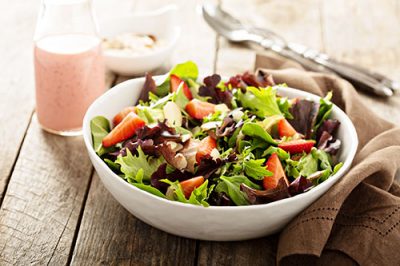
Summer Sunshine Garden Salad
Bursting with flavor and full of veggies you can pull from the garden, like lettuce and other leafy greens, this salad is the perfect addition to dinner. Hop over to the Cent$ible Nutrition Program website for the recipe.
Additional Resources
Learn more about growing and harvesting lettuce with these resources from the University of Wyoming Extension:
- Video: Growing Leafy Greens
- UW Extension bulletin: Vegetable Gardening, p. 12-13
- Barnyards & Backyards article: Some Veggies like it hot and some like it not
- UW’s Lawn and Garden Podcast: “Vegetable Varieties”
Next up: All Things Spinach [Coming August 7]
Previous Issue: Managing Plant Diseases
If you know someone who might enjoy this newsletter, please share it with them! They can subscribe here.
Find us on Facebook, Pinterest, and the Cent$ible Nutrition Program website.
This newsletter is a collaboration of the following programs: