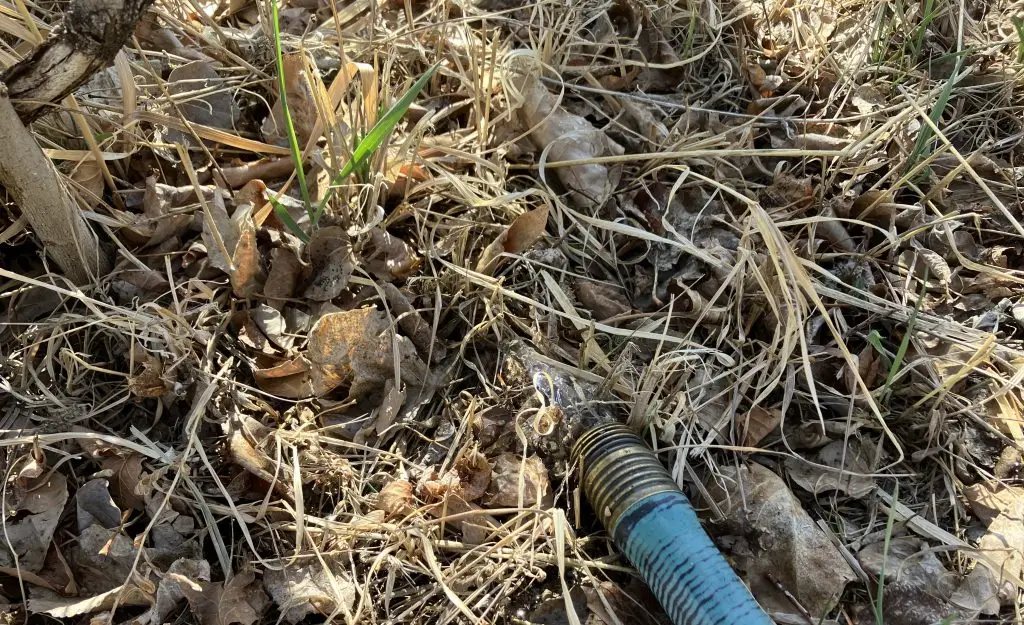



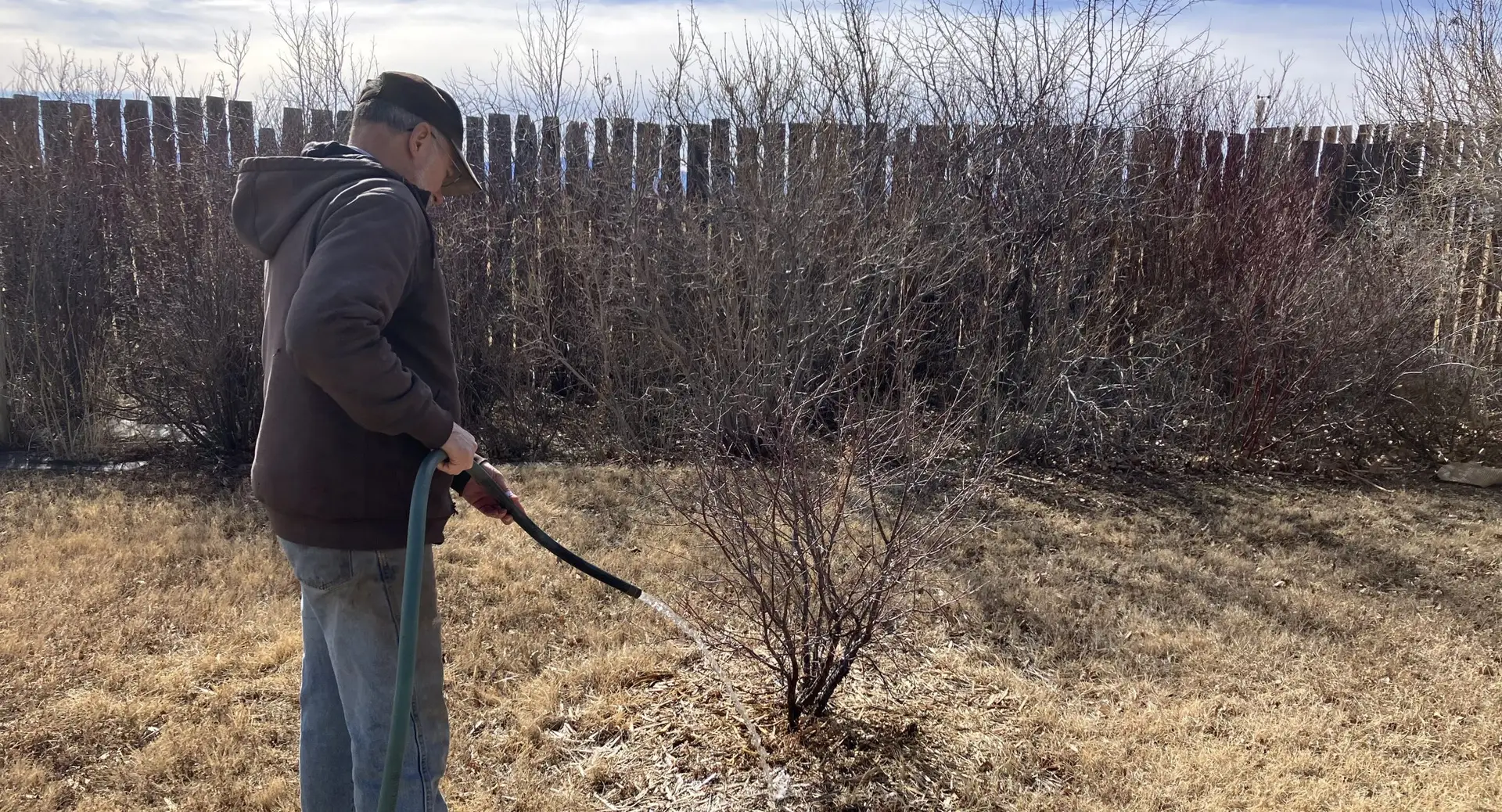
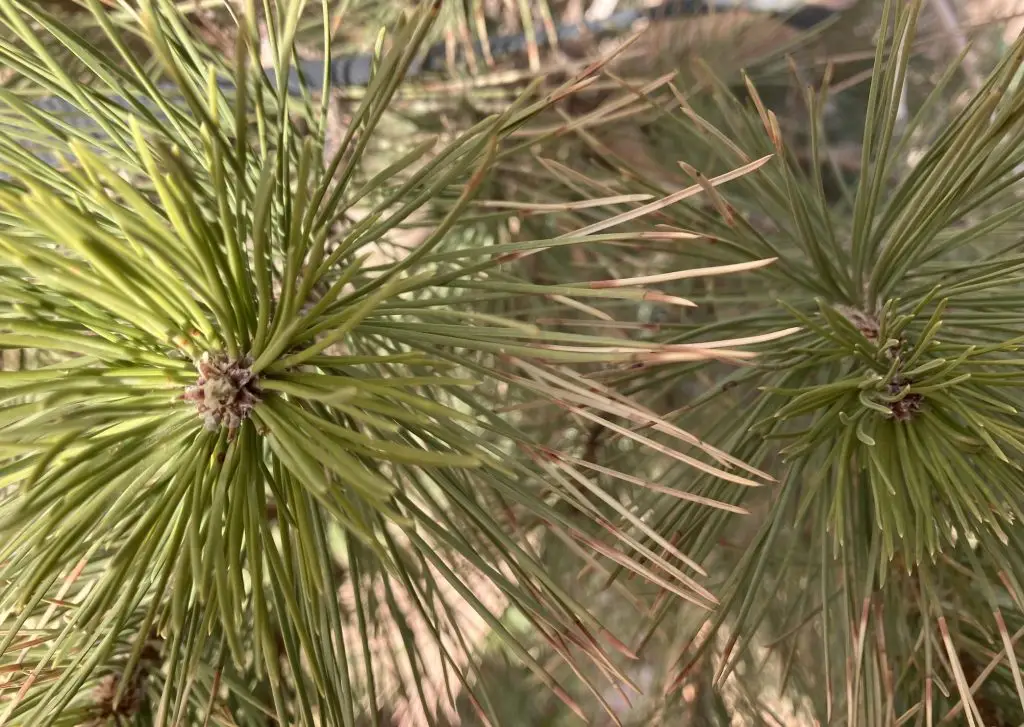
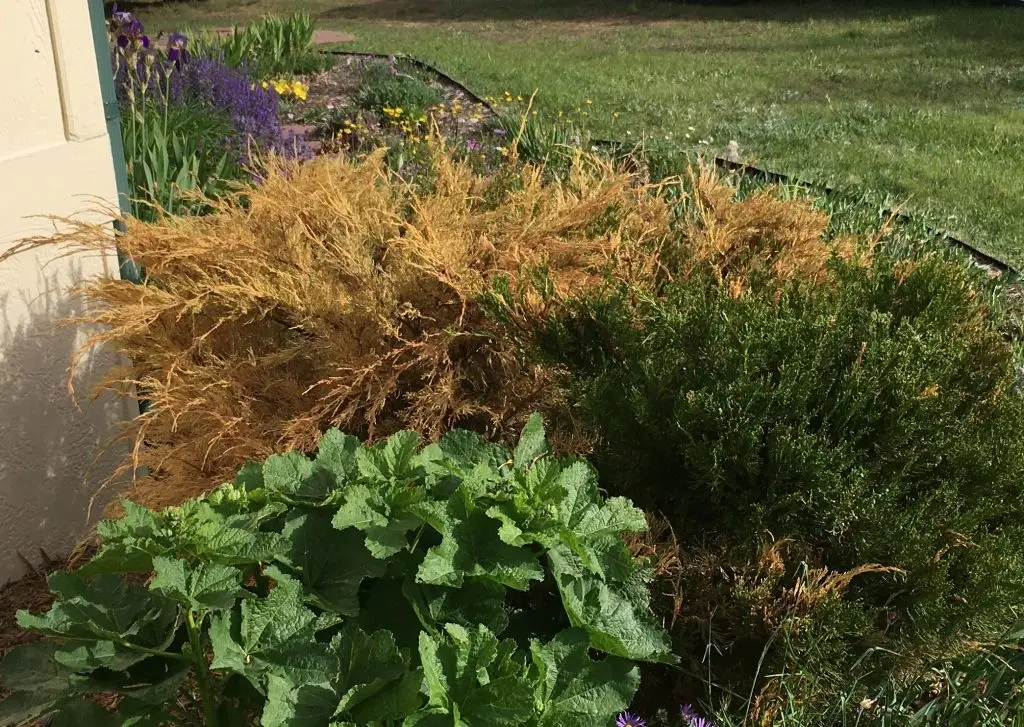
This type of damage is often unevenly distributed around the tree or shrub, with the sides facing the sun or prevailing winds exhibiting more damage. Damage can be reduced by watering unfrozen bare (not covered with snow) ground during extended warm spells or using temporary windbreaks to protect small trees. When planting new trees, damage can be reduced by choosing appropriate species for the site.
Sunscald
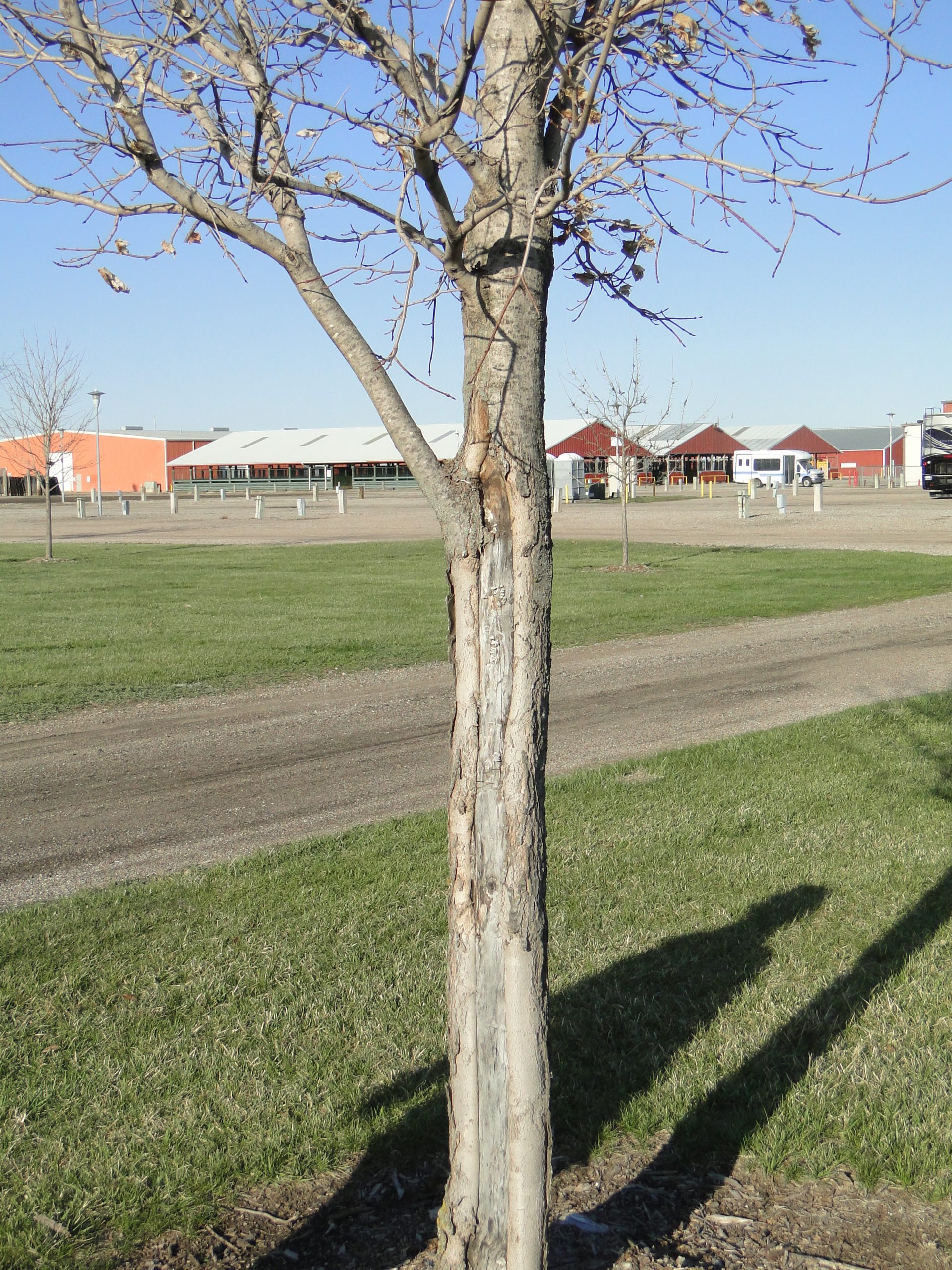
Sunscald is a condition where tissue on tree trunks becomes damaged. It often appears as an area of shrunken, cracked dead bark on a tree trunk. Sunscald appears to be caused by warm sun shining on the bark, which causes the cells to become more active. As the temperature drops again at night or during a cold spell, these active cells can freeze, causing tissue damage and death. The damage will be found on the side of the tree facing the sun (usually south to southwest).
This condition is more common in young trees or trees with thin bark (young cherry trees, etc.). Trees will try to partition off this type of damage and may continue to grow reasonably well, or they may die from severe damage. Sunscald can be prevented by not pruning off too many lower branches, wrapping thin-barked younger tree trunks in fall with white tree wrap or using types of white paint on tree trunks to reflect the sunlight.
General cold damage
During fall and winter, perennial plants are in a condition called dormancy. The factors controlling plant dormancy can be complicated and vary amongst different kinds of plants. For many species, cold temperatures are not the only factors that drive plant dormancy. In many of our deciduous trees, dormancy is driven by both day length and temperature, among other variables.
As plants emerge from dormancy and start putting on new growth, they may experience cold damage. Cold tolerance varies depending on the kind of plant (species or even variety) and its stage of growth.
Different parts of plants also have varying degrees of resistance to cold damage. Cold damage can express itself in the following ways.
- Flowers – In general, damage becomes more likely if flowers are closer to blooming and temperatures are colder. Flowers tend to be most susceptible to cold just before, during, and just after bloom. However, a flower’s cold tolerance is greatly dependent on plant type. Many daffodil flowers can take significantly more cold without injury than apricot blossoms, for example. If damaged, flowers may become limp, change color, turn brown, and fall off.
- Leaves – If leaves are injured due to severe cold, they will eventually turn brown or black and possibly fall off. If it is early enough in the season, the plant will expend extra energy reserves to replace them. The same goes with many herbaceous stems.
- Woody stems/branches – If severe cold after warm spells damages a branch, it may die back partially or completely, or wounds may be created in the branch’s tissue. If a branch dies back partially, dormant buds in the surviving tissue may become active and start to grow. Wounds make the plant more susceptible to infection by other organisms. If the plant is in reasonable shape, it will try to repair or partition off these wounds before an infection occurs.
Perennial flowers and foliage plants
Many healthy perennials that sustain cold damage early in the season will outgrow it as the season progresses, replacing damaged leaves and stems.
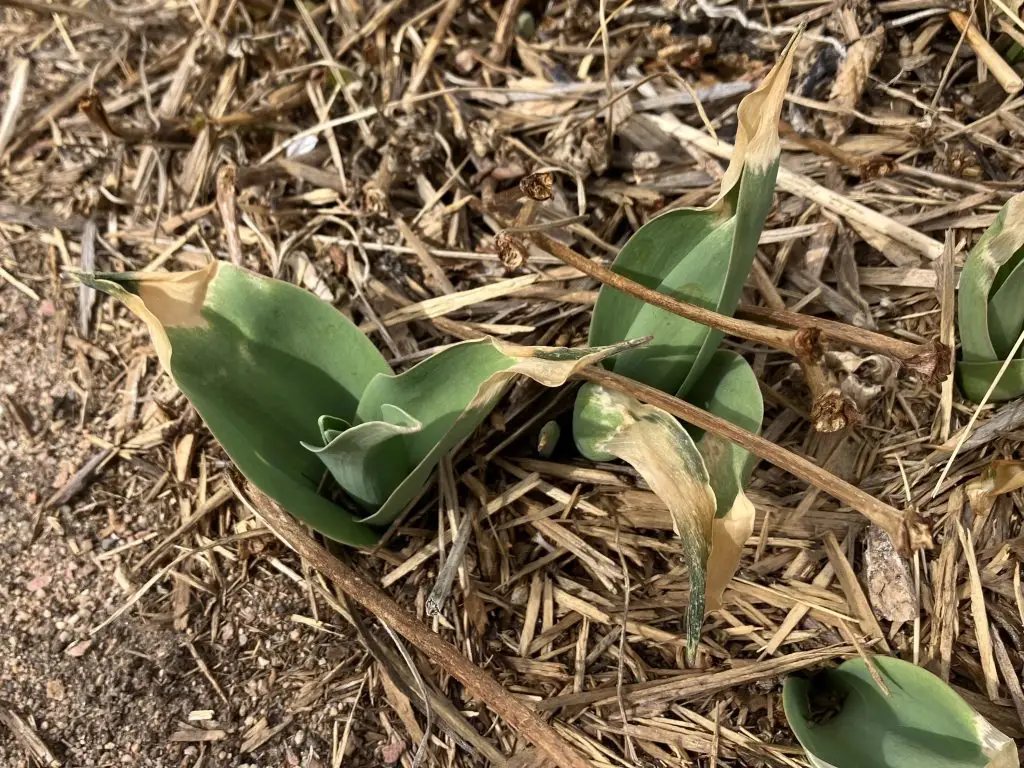
People often become concerned when they see spring bulbs emerging from the soil earlier than normal. In general, many spring-blooming bulbs are adapted to quite cold temperatures. However, cold tolerance varies amongst species.
My daffodils regularly go through freezing temperatures most nights in spring. I have watched them weather 13°F with no apparent problem. They gradually freeze and droop down each night and then slowly defrost in the morning as the sun comes out, raising their heads and leaves again to greet another day in Wyoming with no signs of damage. If cold damage occurs, the extent will vary by plant type, stage of development, amount of snow cover (it can act as an insulator), how low the temperature drops, and length of the cold spell.
If your bulb flowers and foliage are damaged by cold, do not cut them off. Leave them in place until you see the full extent of the damage (by early summer) or they turn fully brown and crispy. Any green foliage left that survives will photosynthesize, providing the bulb with the energy it needs to survive and hopefully recover, grow, and bloom again next year.
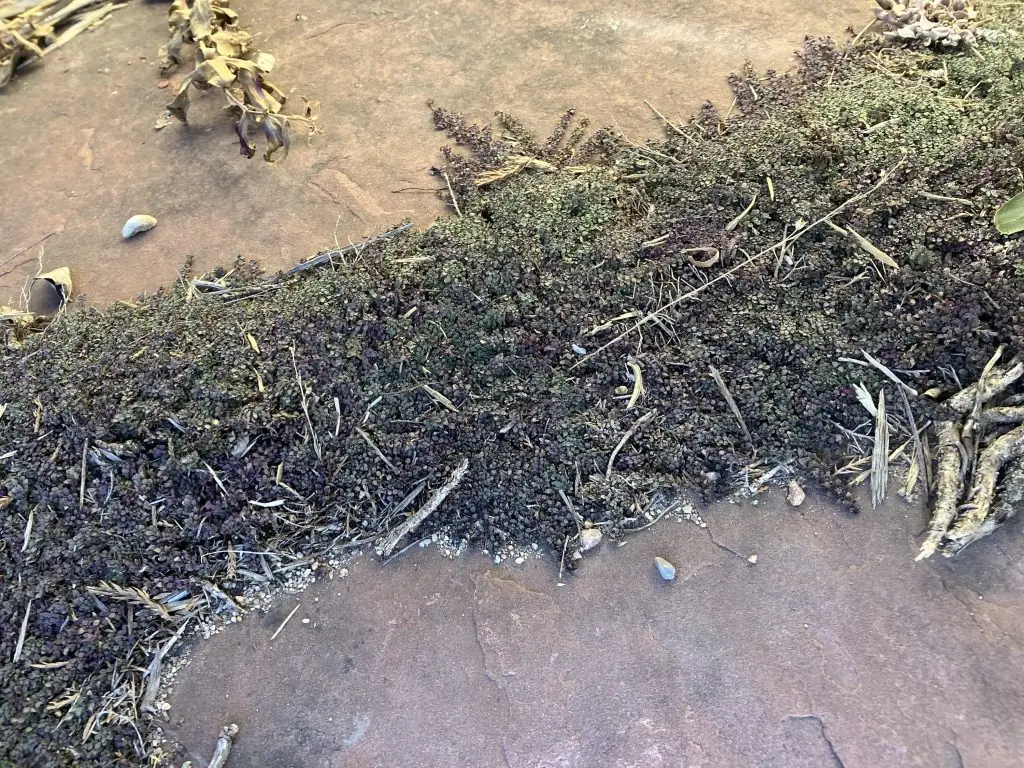
Newly emerged foliage of other perennial plants is often more cold-hardy than older foliage. In addition, crowns and roots are often insulated by the soil. If perennial leaves do sustain damage, they will change color and eventually brown. When new foliage grows out, it can sometimes hide this damage.
Trees & shrubs
As mentioned previously, cold damage depends on the species/variety of tree or shrub, its stage of plant growth, the low temperatures reached, and how long those temperatures persist. Most trees and shrubs in our state weather temperature swings reasonably well.
In some circumstances, emerged deciduous tree leaves will sustain enough damage that they will drop, and the tree will expend reserves to replace them. If trees are stressed from drought (especially multiple years of drought) or other reasons, they have fewer reserves to call upon for this purpose.
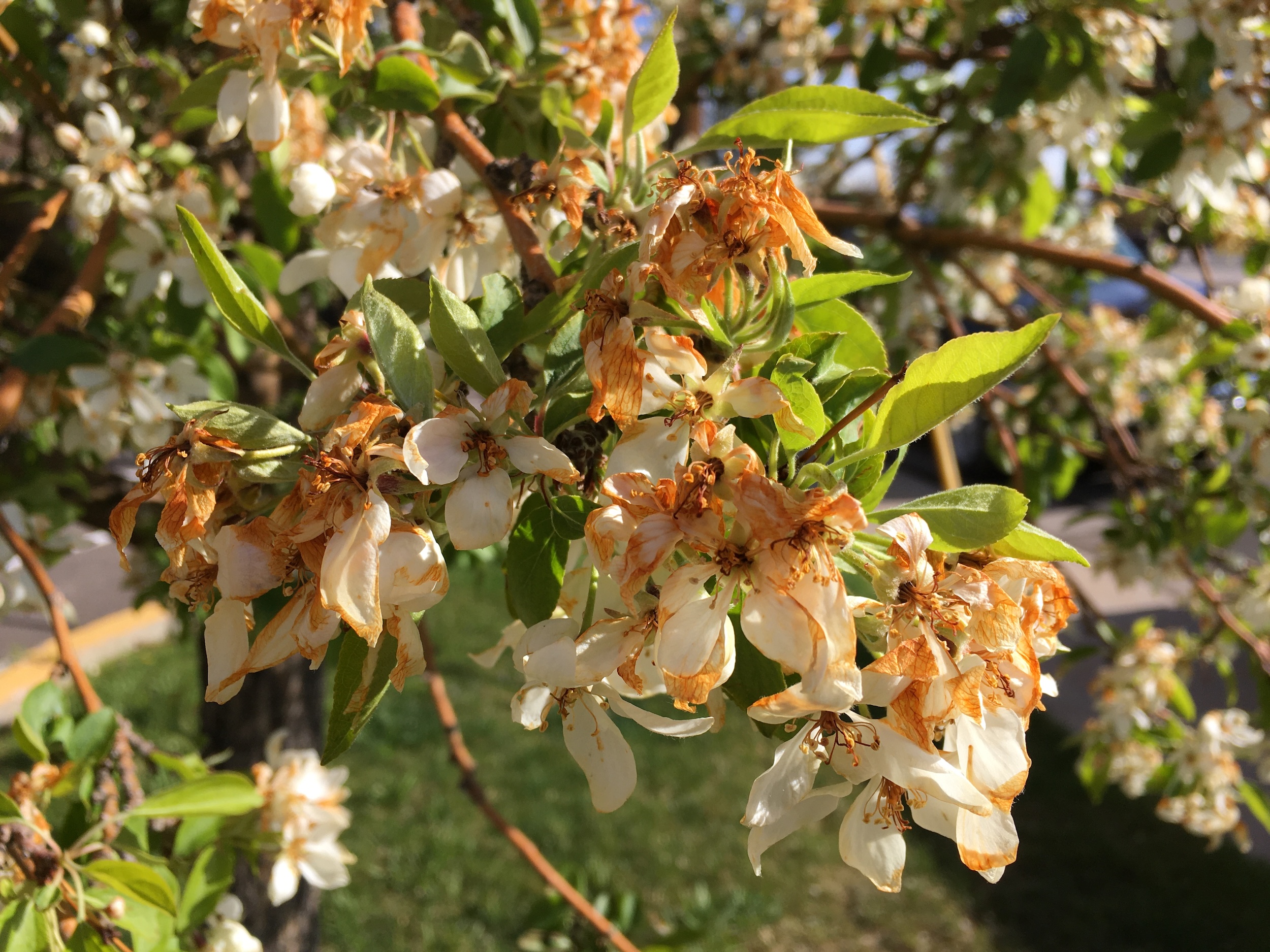
The flowers of certain early-blooming trees and shrubs (some crabapples, lilacs, etc.) may sustain freeze damage that will cause them to turn brown and become limp and mushy.
Cold damage is fairly common in fruit trees in Wyoming and will cause the fruit blossoms to abort and fall off, resulting in little or no fruit set for that growing season. This phenomenon has been studied on commercial fruit crops and various charts exist that show the likely effects of different temperatures during particular stages of flower development. (See the Summer 2026 issue of Barnyards & Backyards magazine for more details on this subject.) Losing this year’s blossoms will not harm the tree’s ability to set fruit in following years. It just affects the yield for this year.
Branches or stems can also suffer cold injury. If you think this kind of damage has occurred, wait and see how the plant responds (mid to late summer at the earliest, waiting a year is often better) before you get out the pruners. Trees and shrubs often have reserve buds that will start to activate if a primary bud has been damaged. Trees can be slow to show certain types of damage, so patience and observation may be needed before all damage is apparent. Unless you have safety concerns, it’s best to monitor trees and shrubs as spring and summer progress to see what the true damage is.
Some trees and shrubs are not well adapted to many parts of Wyoming. Trees such as some varieties of peach trees may survive for a number of years before a bad winter or untimely cold spell severely damages or kills them. Keep this in mind as you select tree/shrubs for planting or replanting. Choose trees that are rated at or below your area’s USDA hardiness zone; below is preferable. If you live in an area rated as USDA Zone 5, select trees that have at least a Zone 5 rating— Zones 4 or 3 are preferable.
What can you do to assist your plants?
In general, plants can recover from quite a bit of this kind of damage when they have the resources they need. Once temperatures are above freezing, make sure to provide enough water and nutrients to sustain the plants during their recovery period.
During warm dry spells in fall/winter, consider watering your trees and shrubs (giving evergreens and newly planted trees priority) when temps are above 40°F and the soil is dry. If it has been very dry, warm, and/or windy, consider watering other plants as well.