



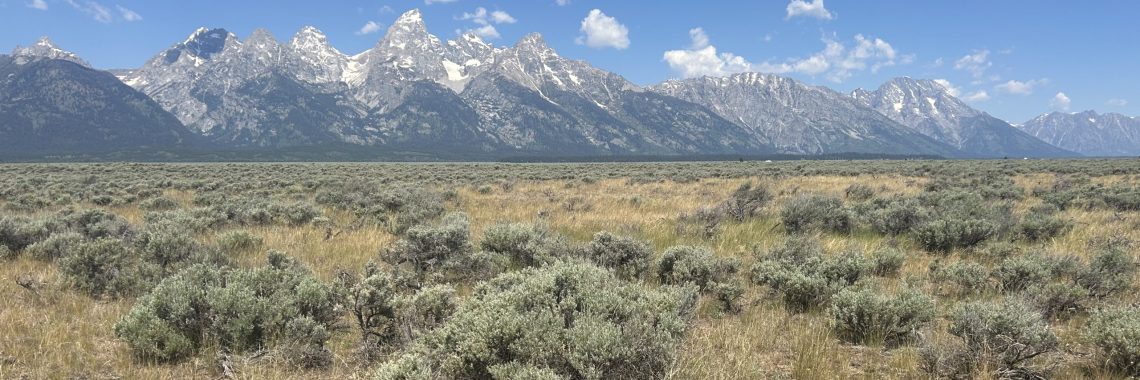
Driving down Wyoming highways, the landscape often seems vast and empty, nothing but sky and a few scattered bushes.
But those scattered bushes are more vital than they appear at first glance. Wyoming is one of the largest remaining strongholds of the sagebrush steppe ecosystem. Many of the state’s iconic animals, including sage-grouse and pronghorn, require sagebrush steppe to survive.
While sagebrush steppe is important, there’s less of it today than there used to be.
Anne Beeman, a graduate student in Daniel Laughlin’s research lab in the Department of Botany, collaborated with Grand Teton National Park managers Laura Jones and Erik Kramer to investigate the most effective ways to restore lost acreage of sagebrush steppe.
Wildlife havens
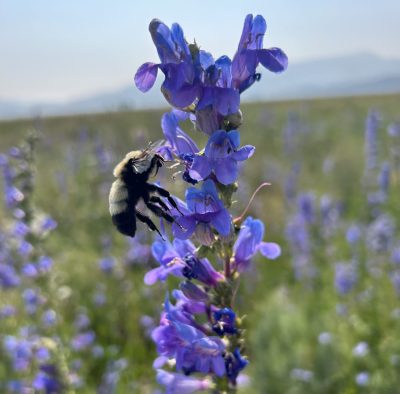
Sagebrush steppe ecosystems receive most of their moisture as snowfall and are typically flat with few trees. Though shrubs are a key component of these systems, they also contain grasses, wildflowers, and even mosses and lichens.
These surprisingly complex ecosystems are vital for the survival of many animals, including large hooved mammals, or ungulates. Pronghorn subsist primarily on sagebrush foliage throughout the year. Other ungulates, including deer and elk, rely on sagebrush in the winter, when grasses and other forage plants are dead. Bitterbrush, another common shrub in this system, also serves as critical winter forage for ungulates and a resource for many insect species.
“It’s really easy for people, especially in Wyoming, to take [sagebrush steppe] for granted, but there are some studies that identify sagebrush as one of the most imperiled ecosystems in the western U.S.,” says Beeman.
Wildlife tourism and hunting are a huge part of Wyoming’s economy. Without sagebrush steppe ecosystems, the large mammals that support these industries would disappear.
Restoring Grand Teton’s valleys
Grand Teton National Park is famous for its mountain peaks and evergreen forests, but the park is home to significant swathes of sagebrush steppe as well.
But there used to be more. In the mid-1800s, much of the park’s steppe ecosystem was converted to acres of smooth brome, a non-native grass used for livestock forage.
In 2009, National Park Service managers began working on restoring 4,500 acres of these pastures back to sagebrush steppe. Over the past 16 years, park managers have observed that some restoration methods have been more successful than others. Some restored areas now boast many sagebrush plants and other shrubs, but others have more native grasses than managers prefer or contain more invasive plants.
Several years ago, park managers reached out to the Laughlin lab to determine the most effective techniques to restore the sagebrush steppe ecosystem in Grand Teton National Park.
-
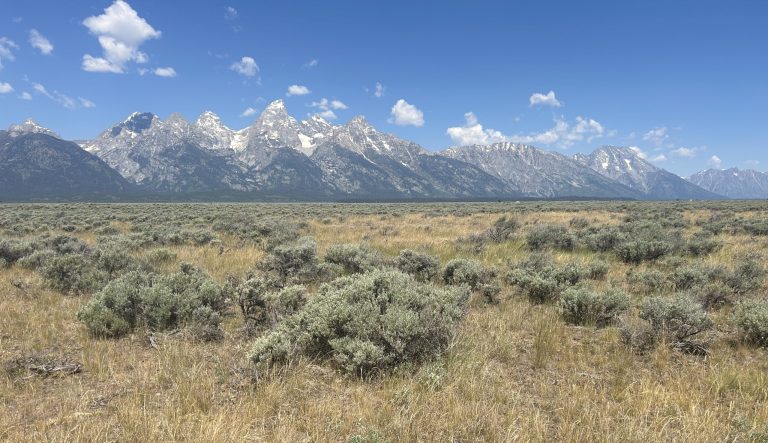
- Intact sagebrush steppe. Photo by Anne Beeman.
-
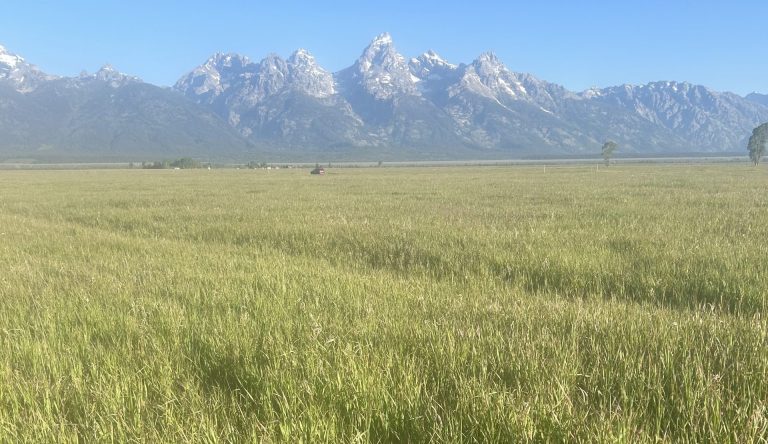
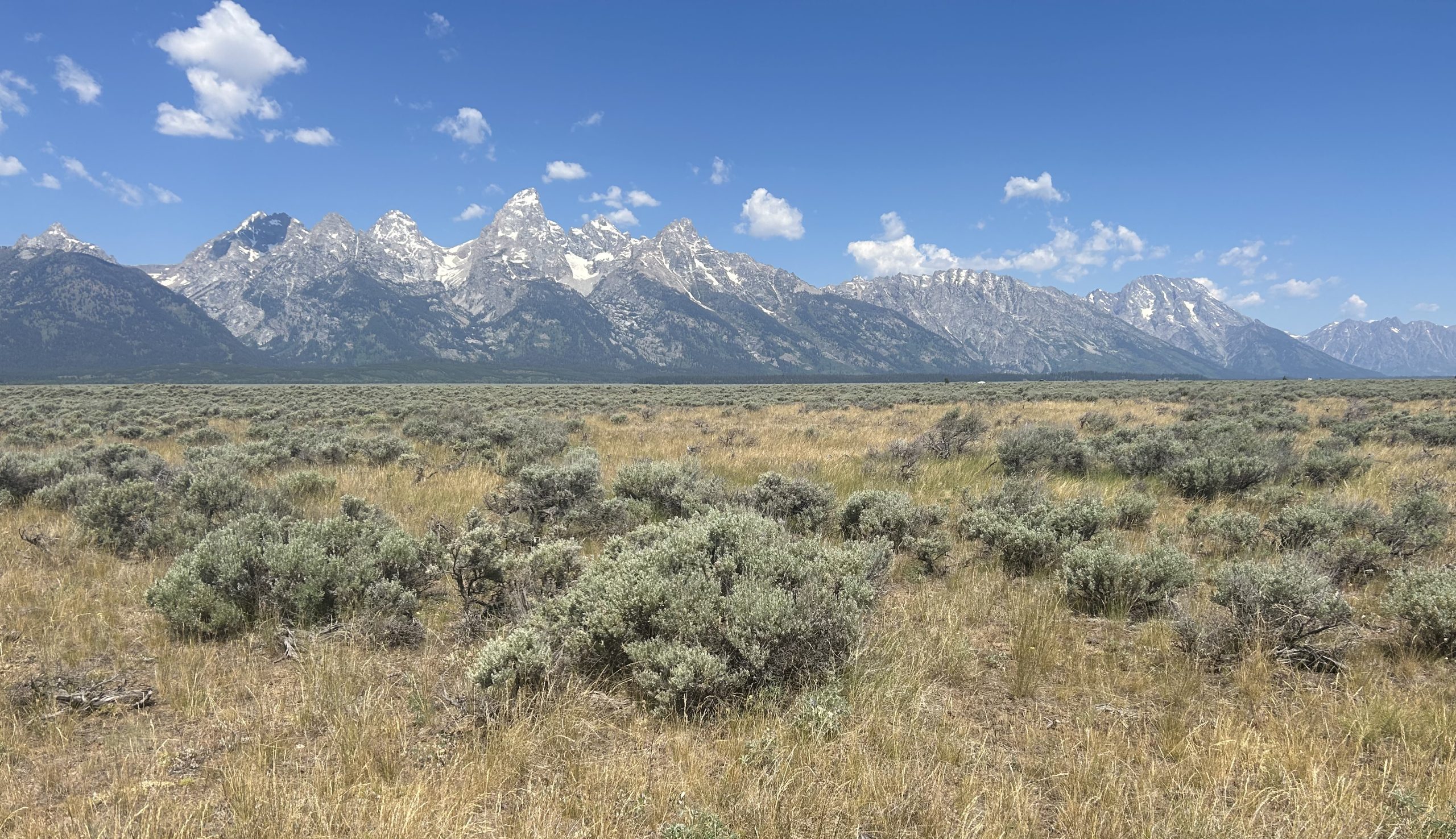
- Smooth brome monoculture still in need of restoration. Photo by Anne Beeman.

Selecting seeds
Beeman’s project investigated the impacts of different native seed mixes, ways of planting seeds, and soil characteristics.
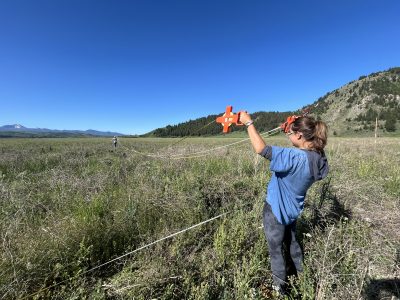
She wanted to understand how these factors influenced how many shrub seeds took root in the first few years of restoration (early succession).
In 2022, park managers removed smooth brome from an area and established 38 different plots, each 30 square meters in size. Some plots were tilled, and some were not. Untilled plots were seeded using a broadcast seeding method, which spreads seeds evenly over the soil and then mechanically presses them into the soil with rollers. Tilled plots used a drill seeding method, which relies on a machine that inserts each seed into the soil at the preferred depth for that plant species.
Park managers then planted two different native seed mixes. One contained a higher percentage of grass seeds, while the other had a higher percentage of forb (broad-leaved, non-woody flowering plant) seeds. In both mixes, about 10% of the seeds were shrub seeds. Each of the mixes included exactly the same grass, forb, and shrub species; only the proportion of grasses to forbs changed.
Managers didn’t just seed sagebrush. They also included other shrub species—antelope bitterbrush and several kinds of rabbitbrush—in the seed mixes. Sagebrush and bitterbrush both shape the structure, resilience, and biodiversity of the sagebrush steppe. Unfortunately, both of these shrubs can be difficult to establish during restoration.
Early successional success
Beeman collected data on the area different species covered in each plot, the total number of shrubs, the size of the shrubs, and the soil properties of each plot after two years of growth.
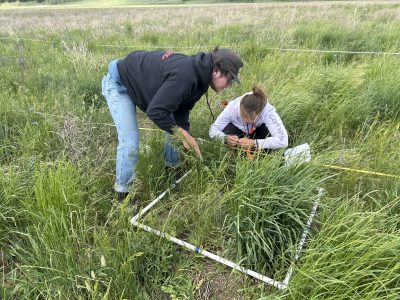
Overall, more shrubs grew in untilled plots planted with grass- dominant seed mixes than in all other treatment combinations. Plots with heavier clay content tended to contain fewer sagebrush plants, but also contained larger bitterbrush individuals. More bitterbrush plants took root in tilled plots than untilled plots. On the other hand, more sagebrush grew in untilled soils.
Beeman’s research suggests that particular restoration methods were slightly more effective at some restoration objectives than others, though all of the restoration methods she assessed in the study resulted in some shrub establishment. Additionally, none of her plots had significantly more non-native or invasive plants than any of the others. These results may help park staff decide which restoration techniques to use in certain areas of the park going forward.
“This is only the beginning of the story,” says Beeman. “Now we have a really good understanding of the establishment and seedling growth of these important shrubs across treatments in early succession, but it’ll be really important to continue monitoring and see what happens in these plots in five, ten years.”
This article was originally published in the 2025 issue of Reflections, the annual research magazine published by the UW College of Agriculture, Life Sciences and Natural Resources.