

Twelve University of Wyoming projects have been selected for seed funding for the application of artificial intelligence (AI) technologies to various areas of investigation, including two projects associated with the College of Agriculture, Life Sciences and Natural Resources.
Support for these projects is geared to help UW achieve and sustain a high level of competitiveness for both private and public funding of faculty-led research in the burgeoning field of AI and its applications.
“The use of AI has clearly skyrocketed in just the past couple of years,” UW President Ed Seidel says. “UW is now well-positioned to accelerate research to support the practical applications of AI. This program will help our faculty generate and execute competitive proposals for projects that will ultimately unlock benefits of AI for Wyoming and beyond.”
The UW Board of Trustees created the Research Excellence Reserve Account in 2022 for the purpose of expanding the research enterprise through seed grants, specifically those that support areas of strategic importance to UW. The fund is designed to provide current UW faculty members with financial support to conduct research and scholarly activities. Those activities are determined by multiple factors, including input by UW faculty, the board, and emerging opportunities for external funding.
In the past fiscal year, the focus was on the application of AI in research. These current seed grants are expected to lead to competitive proposals to federal funding agencies and private sources. About $337,000 was made available for seed grants of up to $30,000 each. Faculty members from three colleges and two schools at UW are involved in these interdisciplinary projects.
The seed-funded AI research projects associated with the College of Agriculture, Life Sciences and Natural Resources and the UW faculty members involved with them are:
“Migration Connectivity Analysis and Design with Topology and AI,” Dane Taylor, School of Computing; Guram Mikaberidze, School of Computing; Jerod Merkle, College of Agriculture, Life Sciences and Natural Resources; Drew Bennett, Haub School of Environment and Natural Resources.
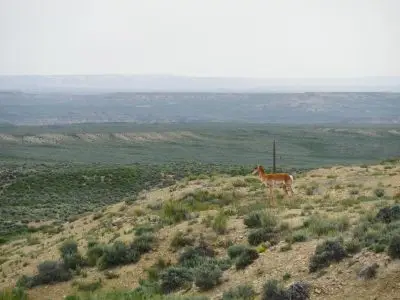
“Statewide AI-Driven Pronghorn Monitoring,” Benjamin Koger, School of Computing/College of Agriculture, Life Sciences and Natural Resources.
For a complete list of all projects, see the original version of this article published on UW News.