


To address growing concerns about insecticide resistance across the West, the University of Wyoming Extension has released new recommendations for alfalfa weevil management.
In a free digital publication, university researchers share results from a study conducted in Sheridan and provide suggestions on how to maximize alfalfa weevil control while minimizing the risk of developing insecticide-resistant populations.
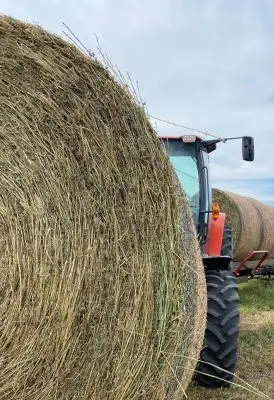
The report, titled “Considerations for Managing Alfalfa Hay in the Face of Insecticide Resistance,” assesses the effectiveness of different weevil control strategies, including early harvest and various pyrethroid insecticides. The authors also discuss monitoring techniques and treatment costs.
“Insecticide resistance is when insecticide products of a defined mode of action—how it kills—no longer provides economic control of the targeted pest,” explains Scott Schell, UW Extension entomologist and co-author of the new publication. To keep low-cost insecticides effective going forward, it may be necessary to switch modes of actions annually or consider using cultural control methods, such as early harvest.
Even within the same chemical grouping, populations can be resistant to one active ingredient and not others. “It is important for alfalfa growers to be aware that if they apply an insecticide to pests that are already highly resistant to it, they have wasted their money and increased resistance in that population,” Schell notes.
Before choosing a control method, the researchers recommend using sweep nets and visual assessment to monitor weevil populations. In addition to considering population size and previous control methods, different approaches may be required in irrigated versus dryland settings.
The researchers recommend tracking harvest quality as well as quantity. Economic analysis suggests that higher-quality forage may offset lower yield in some cases—but only if quality is tracked and the product is marketed accordingly.
As a final note of caution, Schell points out that although new products may become available, continual use of any one mode of action will ultimately result in resistance. “To manage alfalfa weevil, we need to only treat when pest populations warrant it, alternate insecticide modes of action, and/or use the cultural control of early harvest when possible,” he says.
To view the publication, visit https://bit.ly/alfalfa-weevil-control-wy. Contact Schell at sschell@uwyo.edu or (307) 766-2508 with questions.