Berit Bangoura, an associate professor in the University of Wyoming Department of Veterinary Sciences, has been appointed interim director of the Wyoming State Veterinary Laboratory, effective July 1.

According to Jonathan Fox, head of the veterinary sciences department, the search for a permanent director is ongoing. Bangoura will serve as interim director for up to one year.
Since joining the department in 2017, she has distinguished herself as an outstanding parasitologist, researcher, and educator, Fox notes.
“Dr. Bangoura’s role as interim WSVL director will be to provide continuity in WSVL leadership and operations, and at the same time pursue continued improvement in service to the state,” he says. “We appreciate her willingness to step up into this important role for the state.”
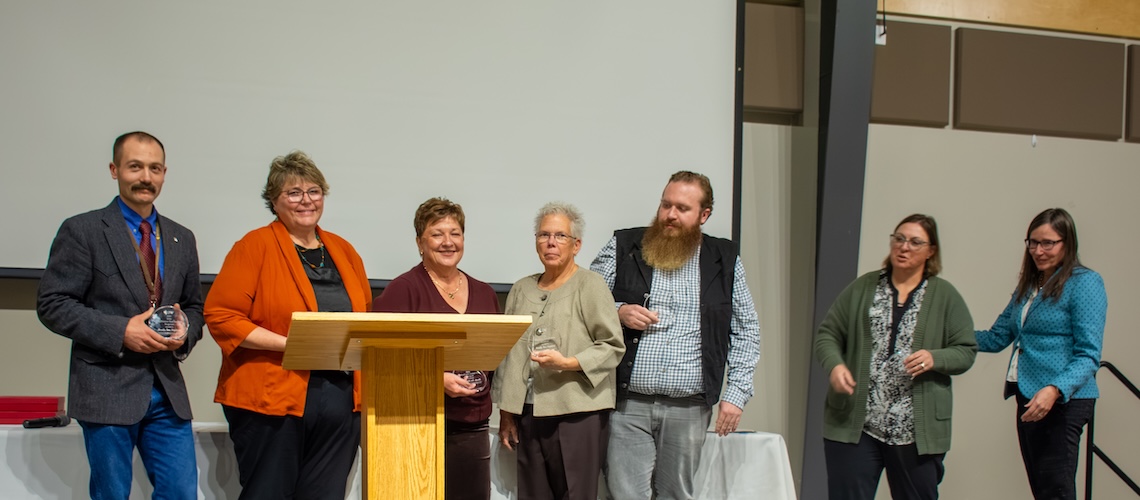
Bangoura specializes in coccidiosis, a disease that affects livestock and birds. In addition to her research expertise, she is known for excellence in the classroom, recently receiving an outstanding educator award from the UW College of Agriculture, Life Sciences and Natural Resources.
Bangoura completed her DVM in 2003 and Ph.D. in 2008, both from the University of Leipzig, Germany. From 2010–2017, she served as the head of the laboratory of molecular biology and genetic engineering at Leipzig University’s Institute of Parasitology.
Bangoura can be contacted at bbangour@uwyo.edu. To learn more about the Wyoming State Vet Lab, visit www.uwyo.edu/wyovet or call (307) 766-9925.