


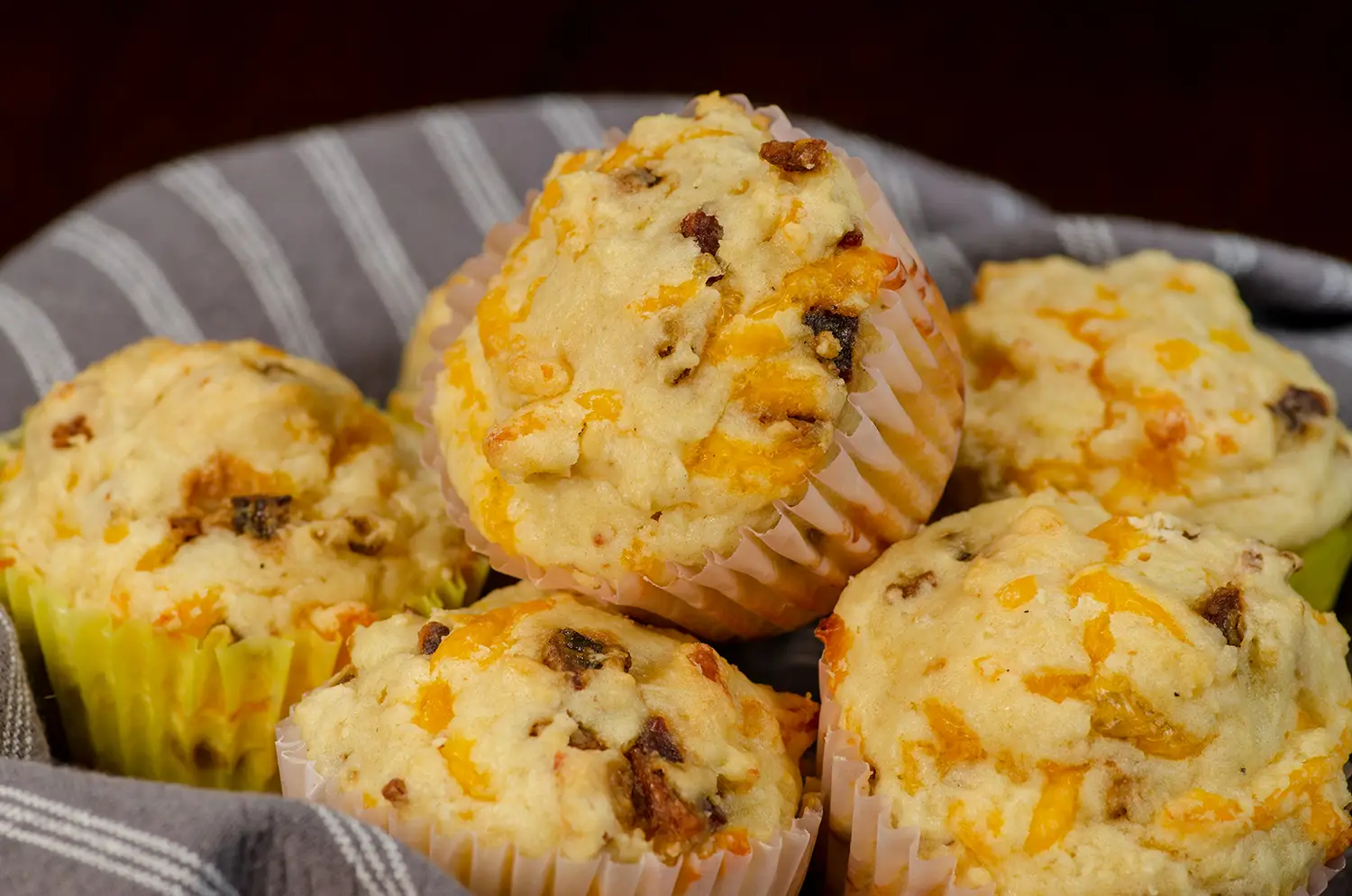
 Prep: 30 minutes
- Bake: 38–45 minutes
- Total: 1 hour 45 minutes
- Servings: 12–16 muffins
Ingredients – Caramelized Bacon
- 8 ounces bacon, thick-cut
- ½ cup (107 g) light or dark brown sugar, packed
- Optional: ⅛ teaspoon black pepper, fresh cracked
Ingredients – Muffins
- 6 slices caramelized bacon, broken in ¼-inch pieces (made in advance)
- 2 cups (240 g) all-purpose flour (spoon and level to measure)
- 1 tablespoon sugar
- 1 tablespoon baking powder
- ½ teaspoon baking soda
- ½ teaspoon salt
- Optional: ⅛ teaspoon black pepper, fresh cracked
- 6 ounces (1½ cups) smoked Cheddar cheese, grated (or other favorite cheese)
- 1 cup (227 g) buttermilk, room temperature
- 2 eggs, room temperature
- ¼ cup (57 g) unsalted butter, melted
- Nonstick spray or oil
- Muffin paper liners or nonstick spray
Directions – Caramelized Bacon
- Preheat the oven to 375°F using the convection setting if available option. Place a wire rack on a foil-lined rimmed baking sheet. Spray the wire rack with nonstick spray or oil the rack.
- Separate the bacon strips and place them in a single layer on the wire rack. They can touch but should not overlap. Gently pat the sugar on the bacon, so it is evenly coated. If desired, grind black pepper over the bacon.
- Bake for 20–25 minutes, or until the bacon is crisp. The sugar will melt and spread, so you do not have to turn the bacon over during cooking. The bacon is done when the sugar is melted and the bacon is crispy, dark brown but not burned.
- Remove the pan from the oven. Allow to cool for 10 minutes. Using tongs, transfer the bacon to a parchment lined baking sheet and allow it to cool to room temperature. When the bacon cools, the sugar will harden to a thin, hard‑candy coating.
- Use the bacon in the recipe immediately, or store it in the refrigerator in a resealable plastic bag between layers of parchment paper.
Direction – Muffins
- Preheat an oven to 350°F. Line a muffin tin with paper liners or spray muffin tin cups with nonstick spray.
- In a large bowl, combine the flour, sugar, baking powder, baking soda, salt, and pepper. Add the cheese and bacon and toss to coat evenly; set aside.
- In a medium bowl, whisk the buttermilk, eggs, and butter. Pour over the flour mixture and stir until just blended. The batter will be thick.
- Using a ¼ measuring cup or muffin scoop, portion the batter in the prepared tin, filling each liner at least ¾ full.
- Bake the muffins for 18–20 minutes, or until tops are beginning to turn golden brown and a toothpick inserted in the center of the muffin comes out clean or with a few moist crumbs. The internal temperature of the muffins should be 200°F.
- Remove muffins from the oven, and as soon as you can handle them, transfer them to a wire rack to cool. Make sure you do not leave them in the pan, or they will become soggy.
- These muffins are best eaten when they are fresh and warm.
- Place the cooled muffins in an airtight container. To stack, separate layers with a sheet of parchment or wax paper and store them in the refrigerator.
- Freeze for longer storage.
Excerpted from UW Extension’s High-Altitude Baking book, p. 128.