
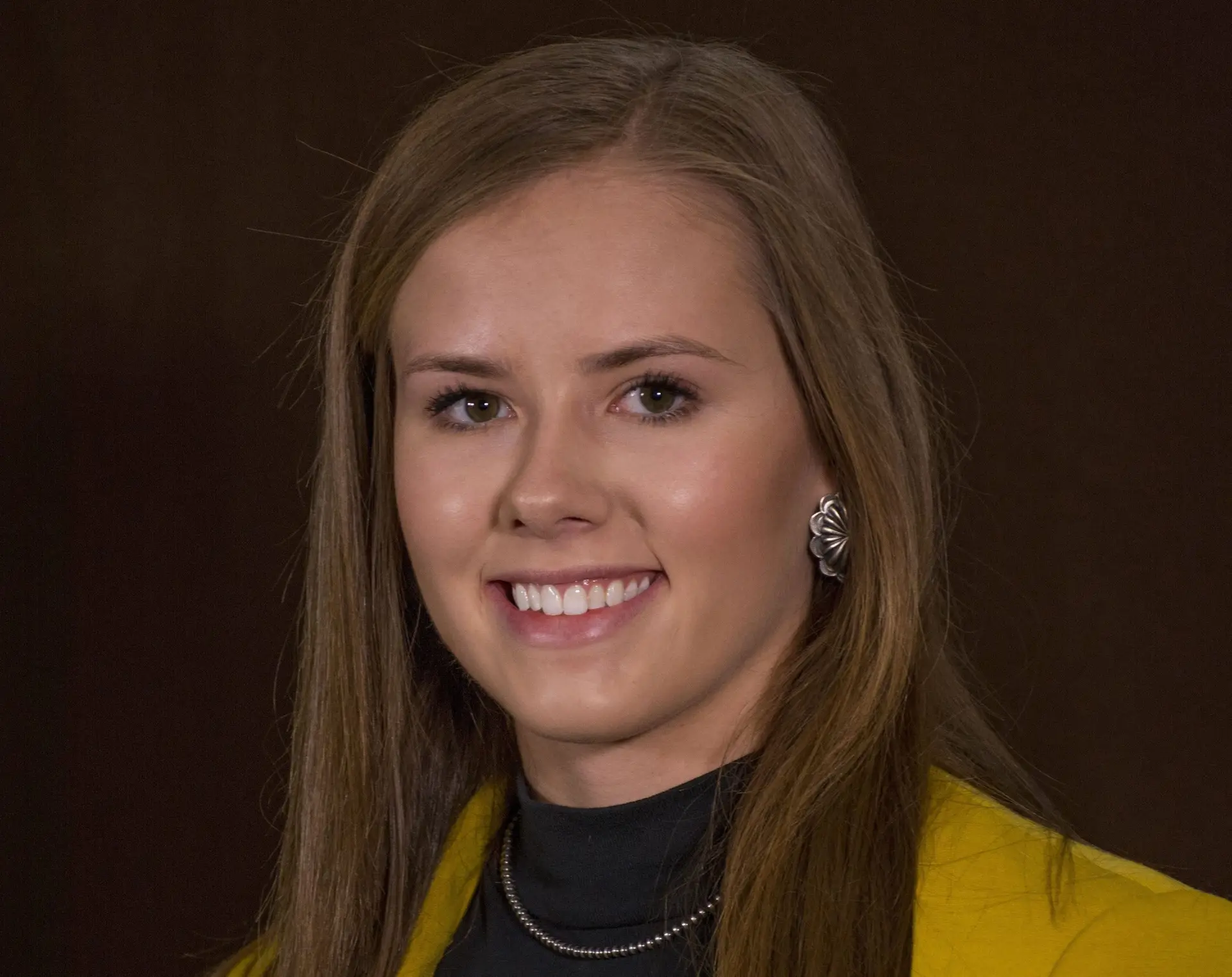
University of Wyoming graduate student Courtney Newman was recently awarded the prestigious 2022 American Sheep Industry Association Sheep Heritage Foundation Scholarship.
The $3,000 scholarship is awarded to an outstanding student pursuing an advanced degree in an area of study that supports the advancement of the U.S. sheep industry.
Whit Stewart, sheep specialist for the UW Extension, recommended Newman for the scholarship, writing that “She’s the type that reassures me that our industry will be in good hands amidst the challenges the future will bring.”
In the past five years, three graduate students in UW’s sheep program have earned Heritage Memorial Scholarships from the American Sheep Association (ASI).
Newman, originally from Fort Collins, Colorado, is currently leading a project focused on applying blockchain technology to the sheep industry. Blockchain is a digitized database that is shared and modified cryptographically, with the goal of improving product traceability, she explains.
“We began this project with the goal of bringing more value back to the farmgate so that producers can see the return on all their hard working raising American lamb and wool,” says Newman, who has an interdisciplinary background in economics and animal science.
Blockchain technology has the potential to increase transparency between producers, processors, and consumers in the supply chain. Newman’s project focuses on identifying where and how blockchain can add value—and whether it is cost effective for producers to utilize this new tool.
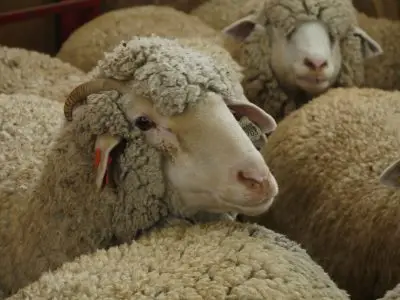
She is currently working on three proof-of-concept studies focused on wool, small- and medium-sized meat processors, and live animals. Through surveys, she is investigating what kinds of information producers are willing to share and what information consumers seek when purchasing.
In collaboration with the Wyoming Wool Initiative, Newman is implementing a blockchain-based traceability framework to document different production steps along the supply chain for wool blankets produced in the state. It’s the nonprofit’s first complete transparency loop from sheep to finished blanket, she notes.
She was also instrumental in certifying UW’s sheep flock, located in Laramie, through ASI’s American Wool Assurance Program. The UW flock was the first in the U.S. to achieve Level III – Certified status, ASI reports.
For more information on UW’s sheep program or the Wyoming Wool Initiative, contact Whit Stewart at Whit.Stewart@uwyo.edu. Visit sheepchain.org to learn about traceability efforts in Wyoming’s sheep industry.