
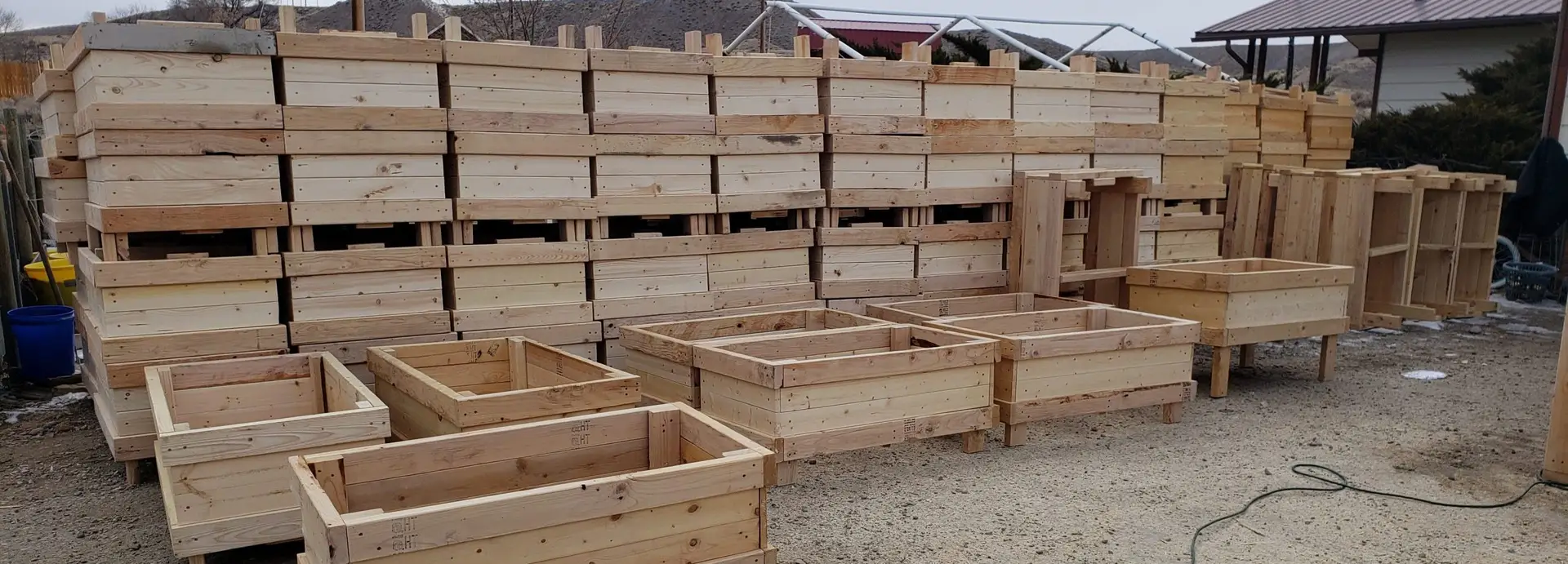
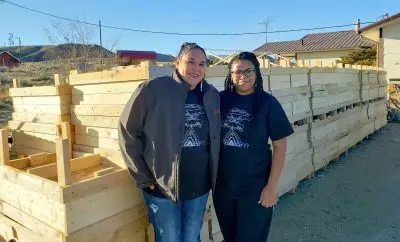
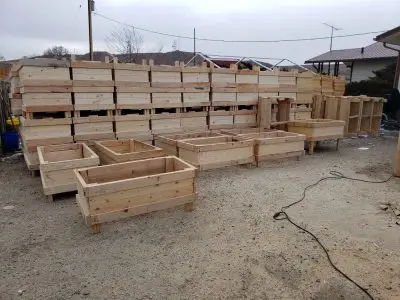
One hundred and fifty Wind River Grow Our Own garden boxes have been built and made available to Wind River Indian Reservation members in a collaborative effort with the University of Wyoming Extension (UWE), Cent$ible Nutrition Program (CNP) and Fremont County Master Gardeners.
Wind River Grow Our Own was developed last year by Darrah Perez-Good Voice Elk and Deneica Barrett.
“I saw COVID-19 as a wake-up call,” said Perez-Good Voice Elk. “I said to Deneica, ‘We need to start growing our own food.’”
Wind River Grow Our Own started as a way for Perez-Good Voice Elk and Barrett to address the COVID-19 crisis by helping family, friends and neighbors learn skills to become more self-sufficient.
“The really important aspect about our program is that we bring in a bunch of different people who have different mindsets and who have different ways of doing things,” Perez-Good Voice Elk said. “By learning from different people, we find things that stick for us, and work for us, and so that’s kind of interesting and it keeps it fun, because you always are learning something that you didn’t know.”
Perez-Good Voice Elk, Barrett, Billie Spoonhunter, CNP educator on the Wind River Indian Reservation, and nine volunteers built the boxes by hand. Joseph Myers, Perez-Good Voice Elk’s brother, and Jared Mosqueda, her cousin, work for Northern Arapaho Housing, and taught them how to build the boxes.
Perez-Good Voice Elk had some experience with gardening from past projects on the Wind River Indian Reservation. What Perez-Good Voice Elk and Barrett didn’t know they learned through research and trial and error. They used Zoom to teach and learn about gardening, as well as how to make kombucha and salsa.
Zoom classes will continue April 25.
Mindy Meuli, UWE CNP director said growing one’s own food is a great way to increase access to healthy foods and physical activity.
“It helps get people connected to nature and improves mental and physical health,” she said. “This is a great partnership, and CNP is looking forward to helping community members work toward self-sufficiency.”
UWE, Fremont County Master Gardeners and CNP have volunteered to be involved in some of the educational aspects of the program by providing expertise, seeds and other supplies.
“The Fremont County Master Gardeners and UWE are always excited to work and contribute toward efforts like Grow Our Own that encourage more people in the community to become involved in gardening and producing their own food,” said Chance Marshall, Fremont County extension educator.
The Fremont County Master Gardeners and UWE will also be available to answer questions and help mentor new gardeners, shared Marshall.
UW Extension Fremont County Master Gardener volunteers will support the Grow Our Own program by providing plants, seeds and soil to help fill the garden boxes, said Chris Hilgert, UW Extension master gardener program statewide coordinator and horticulture specialist.
Getting soil to fill the boxes has been a challenge.
CNP, UWE Master Gardeners program and Wind River Indian Reservation Extension are contributing funds to purchase bags of soil for each box. The Master Gardener program will also provide seedlings for the garden boxes, which will help new gardeners get their plants off to a strong start.
“The transplants are a little more forgiving than planting from seeds, especially in Wyoming when you never know when it’s going to snow again,” said Hilgert.
The Master Gardener greenhouse in Riverton will help provide seedlings.
“Food sovereignty and fighting food scarcity is a really big thing, especially for the native people,” said Perez-Good Voice Elk. “It’s a really big project here [Wind River Indian Reservation] and we can’t do it alone, and so we’re finding that we have to have all these programs and people on the same page for the goal to be met.”
CNP will provide recipes to go along with the vegetables families are growing and help them enjoy their harvest.
“That’s one of the things that’s going on, is how to use your vegetables, because a lot of people don’t eat squash and it grows like crazy out here,” said Spoonhunter. “I didn’t know how to use it, and last year I was given squash at the farmers market and I got some recipes from Kelly Pingree [a past CNP educator].”
Some of the recipes from the CNP cookbook will be passed on to families at harvest time. Spoonhunter also contributed seeds for some garden starter kits, which went out with the first garden boxes the beginning of March.
Funding for the boxes is from private donors, a grant from the Wyoming Hunger Initiative, the Riverton Peace Mission, the Wyoming Interfaith Network and the Presbyterian Church of Laramie.