




UW scientist joins worldwide broadcast from International Space Station

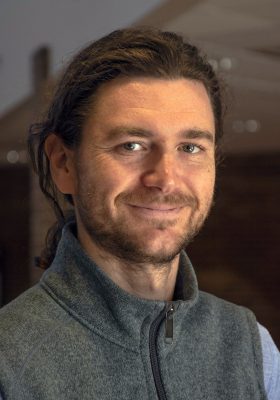
Photograph of man
Thomas Boothby

A University of Wyoming molecular biologist whose research focus is tardigrades will participate in the first Story Time from Space live program Tuesday beamed from the International Space Station.

Thomas Boothby is joining a live downlink for children featuring a story about tardigrades, also known as water bears.

The program is 10:30 a.m.-noon Mountain time. Go to  www.storytimefromspace.com/live. Technical issues prevented the event from happening during its original date last September, said Boothby.

Astronaut Shannon Walker on the ISS will read “Willow the Water Bear” by Houston Kidd and then answer questions from children around the world.

Boothby, in the College of Agriculture and Natural Resources, will help answer questions about tardigrades and his research at UW. He and Kidd will join astronauts Alvin Drew, Bjarni Tryggvason and author and astrophysicist Jeffrey Bennett.

Boothby and his colleagues at UW are studying how the diminutive, less than half a millimeter long, creatures can survive being completely dried out, being frozen to just above absolute zero (about -458 degrees F, when all molecular motion stops), heated to more than 300 degrees Fahrenheit, irradiated several thousand times beyond what a human could withstand and survive the vacuum of outer space.

Information about Boothby’s laboratory, personnel and research is at https://tboothby.weebly.com.
Share the Post:

Related Posts

In a fenced-in grassy space, a gardener with a sunhat sprays water from a garden hose onto an area of ground covered in flattened pieces of cardboard

UW Extension to Host Water-Wise Garden Workshop in Buffalo

A water-wise gardening workshop will be held by University of Wyoming Extension and the Johnson County Master Gardeners on Saturday, June 20, from 9 a.m. to 12:30 p.m. at the Buffalo Community Garden (across from 30 Fairgrounds Rd).

Participants will learn the principles of water-wise gardening, sometimes called xeriscaping, and will help install native perennial plants in a new demonstration garden bed.

Read More
two mice sit together under the reddish glow of a heat lamp

The Science of Snuggling: What Huddling Mice Can Teach Us About Body Temperature Regulation

If you’ve ever stayed home sick, you’ve probably experienced the unpleasant temperature swings that accompany a fever. You may remember feeling chilled, then warming up as your fever spiked—a well-established process governed by the autonomic nervous system.

But maybe you also wrapped up in a blanket to keep warm. The science behind this kind of behavioral response is less well understood.

Read More

Help us improve this website!

We’re working to make AgNews easier to use and more useful for you. This quick survey takes about 1–2 minutes.