



Group to provide update on Shoshone River Watershed plan

A map
Google Maps
A map
Google Maps

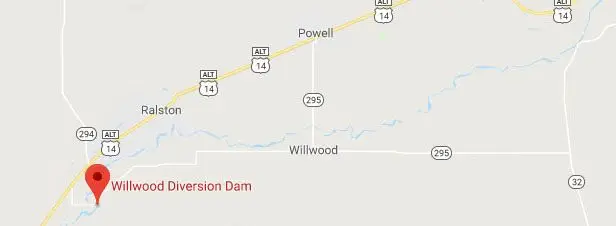
The Willwood Working Group No. 3 will provide an update on the Shoshone River Watershed plan during a public seminar 5:30-8 p.m. Thursday, Sept. 26, in the Grizzly Room at the Park County Library in Cody.

The group has been working for the last two years to understand the origin of the sediment collecting behind Willwood Dam.

“This is a great opportunity for the public to see the efforts of this work group and see proposed monitoring efforts to better understand the sediment load in the Shoshone River,” said Jeremiah Vardiman, University of Wyoming Extension agriculture and horticulture educator in Park County.

This event will highlight the completed Shoshone River Watershed Plan, the overview story map and feature monitoring plans and efforts.

For more information, contact Ann Trosper at the Powell Clark’s Fork Conservation District at 307-754-9301.

Share the Post:

Related Posts

Jennifer Bell.

UW Works with Wyoming DEQ-AML, UR Energy on Soil Reclamation Project Using Coal Char

The Wyoming Department of Environmental Quality Abandoned Mine Lands Division (WDEQ-AML), UR Energy USA, and the University of Wyoming have formed a collaborative five-year research partnership to advance soil health and mine reclamation technologies. The project evaluates innovative soil amendments, including state-produced coal char, to accelerate the restoration of disturbed lands to productive native rangelands across Wyoming.

Read More

UW Researchers Use Graph Theory to Study Autism in Mice

Just as a city cannot be understood by studying individual buildings without considering the roads connecting them, the brain cannot be fully comprehended by examining individual neurons without studying how they work together as a network.

This is how Rongsong Liu, a professor in the University of Wyoming Department of Mathematics and Statistics and the Department of Zoology and Physiology, views the work she and other researchers conducted using graph theory to better understand autism spectral disorder (ASD) in mice.

Read More