


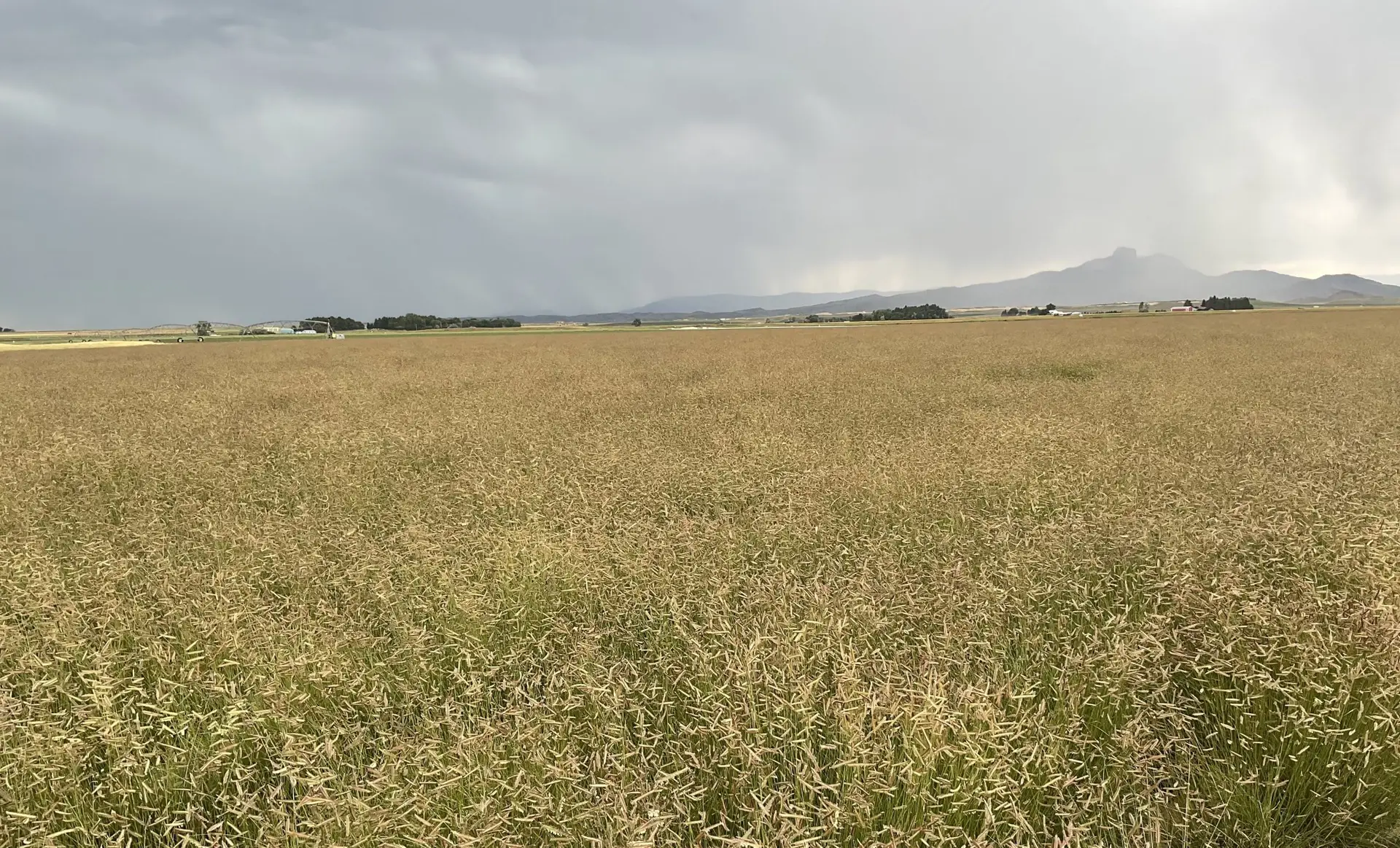
For grass seed producers and others concerned about controlling grass thrip populations, the University of Wyoming Extension has released a new management guide.
The free digital publication, titled “Grass Thrips in Perennial Grasses Grown for Seed,” provides instructions on how to sample grass seed fields for thrips as well as recommendations for cultural and chemical control. The authors also address the efficacy, application rates, and possible advantages and disadvantages of six insecticides labeled for grass thrip control.
These small insects, which feed only on grasses, damage both annual and perennial species. Grass thrips can survive in perennial grass fields year-round, enduring temperatures well below freezing.
“A perennial grass seed field will look perfect and only after harvest will grass thrip damage be revealed,” says Scott Schell, UW Extension entomologist and co-author of the new publication. “Only pest survey and insecticide treatment, if warranted, can prevent crop loss.”
Researchers have determined that grass thrips have an extremely high potential for developing insecticide resistance, which makes informed management even more critical.
Despite the importance of grass thrip control, little research has been conducted on the topic, and Wyoming-specific recommendations are largely absent from scientific literature. The most recent research publication Schell found addressing thrip management in grass species relevant to Wyoming dated back to 1957.
It was about time for an updated publication. “For perennial grass seed producers, preventing the damage the thrips can inflict on the developing seeds can be the difference between profitability or loss,” Schell explains. “Applying insecticide at the correct time in plant development can reduce the grass thrip population and prevent yield losses.”
While perennial grass seed production represents only a small portion of Wyoming’s agricultural economy, specialty crops like perennial grasses may provide supplementary income in years when conventional crops fare poorly, Schell notes. Proper management can help ensure these crops thrive without contributing to potential insecticide resistance.
To view the new grass thrip management guide, visit https://bit.ly/grass-thrips-wy. Contact Schell at sschell@uwyo.edu or (307) 766-2508 with questions.