


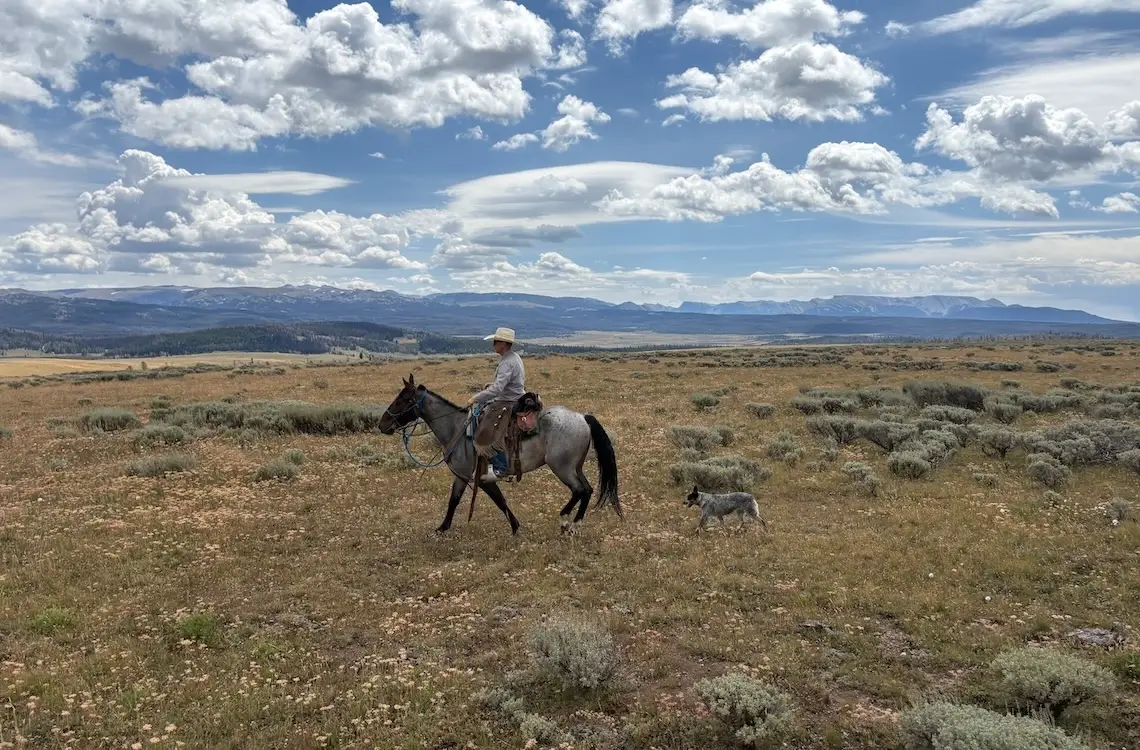
A University of Wyoming Extension range specialist has partnered with producers in northwest Wyoming to test the use of GPS ear tags in tracking cattle movement and monitoring for predation events.
In areas where ranchers regularly suffer losses to predators like grizzlies and wolves, certain movement and behavior patterns can provide clues about whether livestock are responding to predator pressure and if a predation event has occurred.
For example, if a calf’s ear tag indicates a high level of activity, then suddenly none at all, a predation event may have occurred, says Nicki Nimlos, UW Extension state rangeland management specialist. Using ear tag data, a range rider can quickly identify the location of the potential incident and investigate.
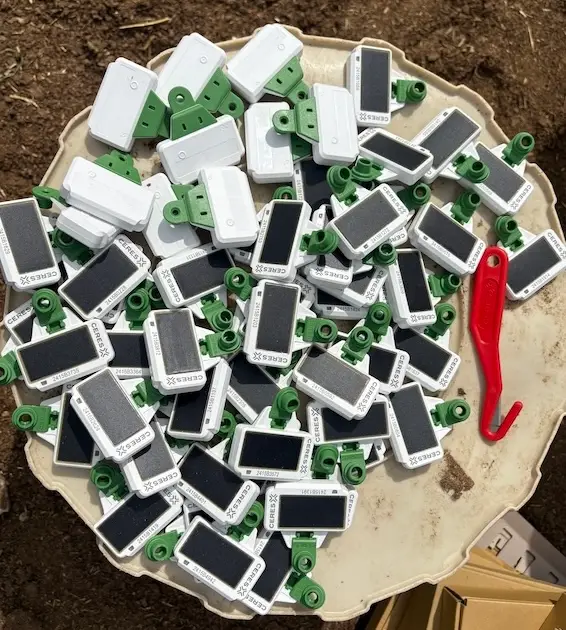
In June 2026, Nimlos worked with Crowheart ranchers Ben Rux, Alicia Rux, and Alex Wheatcroft to tag 350 head of cattle, including calves, heifers, and bulls, with solar-powered GPS ear tags manufactured by CERES TAG. Data was recorded and transmitted via Envu’s RangeView software app.
The Ruxes, who have ranched in the area for more than two decades, run a cow-calf and heifer development operation as well as a sheep enterprise. Under a grazing permit shared with Wheatcroft, the Ruxes graze cattle on a U.S. Forest Service allotment each summer.
Predation significantly impacts their operation, Ben Rux reports. A 10% loss in calves due to predation is not uncommon.
“When they’re on their summer grazing allotment in the mountains is overlapping with when grizzlies and wolves have high activity,” says Nimlos. “We’re trying to think creatively about how we can better manage in this challenging landscape.”
Less than a week into the summer 2026 grazing season, the Ruxes used ear tag data to locate a calf that had moved away from the herd and then stopped moving. The carcass was later confirmed to have been killed by a grizzly.
“Locating and getting confirmation of a calf killed by a predator is sometimes difficult and finding a kill quickly is critical to having the evidence necessary…to confirm the damage was caused by wolves or grizzly bears,” Ben Rux comments.
The Ruxes and their employees found and confirmed at least two kills that they might have missed without the tags. They were also able to respond more quickly when cattle behavior shifted due to predator activity.
“One challenge we have had is the predator pressure causing the cattle to move long distances in really short order, which can happen easily without our range riders knowing for a few days,” Ben Rux explains. “This happened this summer and we knew immediately when the tags updated that the cattle were not where they belonged and were able to remedy the situation nearly immediately.”
Like many new technologies, the ear tags came with both benefits and challenges, including issues with tag retention, waning battery life, and infections around the tagging sites.
Still, the Ruxes found that experimenting with the tags and RangeView software provided a valuable opportunity to gather more data on their livestock’s behavior and explore the opportunities and limitations associated with a new tool.
“We appreciate the opportunity to utilize the technology, and the assistance UW, Envu and CERES contributed on the project,” Ben Rux comments. “I feel like we tested one company’s version of the technology in the real world and came away with some great insights into the interactions between predators and our livestock on our permit, and some recommendations on how the technology can better serve our needs in our environment.”
He looks forward to collaborating with Nimlos on an ongoing rangeland monitoring and grazing utilization project informed by ear tag data.
CERES TAG and RangeView developers collaborated closely with Nimlos throughout the study. CERES provided in-kind support.
To learn more about this project and other rangeland research conducted by Nimlos’ lab, contact her at nnimlos@uwyo.edu.