


A new publication by the University of Wyoming Department of Agricultural and Applied Economics reports that economic activity related to agricultural production contributed $2.526 billion to Wyoming’s economy in 2021.
This total includes direct farm-gate sales from 11 agricultural industries as well as related business-to-business purchases and spending by agricultural households.
“Everyone recognizes that agriculture is big in Wyoming. Now we have a single publication that allows us to support our comments concerning the importance of ag in Wyoming with economic data,” says Eric Webster, director of the Wyoming Agricultural Experiment Station. “I am extremely happy that the Wyoming Agricultural Experiment Station was able to provide the funding to support this project, which highlights the importance of agriculture across the state.”
Roger Coupal, a professor in the UW Department of Agricultural and Applied Economics, and Amy Nagler, a research scientist in the department, co-authored the report, which presents both statewide and county-specific data.
Analysis was completed using IMPLAN economic impact modeling software and the most recent data available from the USDA National Agricultural Statistics Service and US Census Bureau.
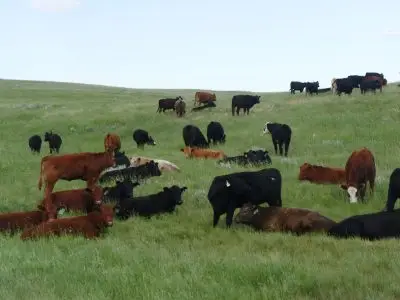
Unsurprisingly, Coupal and Nagler found that cattle, other livestock (including sheep and hogs), and hay production dominated Wyoming’s agricultural production values. In 2021, beef cattle ranching accounted for $1.031 billion in direct output—nearly 60 percent of total direct output from agricultural industries.
Overall, livestock production accounted for 77 percent of Wyoming’s direct economic output from agricultural industries; crop production made up the remaining 23 percent. In total, agricultural production contributed $1.712 billion to the state’s economy in direct farm-gate sales.
Coupal and Nagler also quantified the economic impact of the dollars spent and re-spent in local communities as a result of farm-gate sales. In 2021, for every dollar generated by agricultural production, local purchases supporting agricultural businesses generated an additional $0.28 cents. Local spending by agricultural industry and ag supply-chain workers generated an additional $0.20.
In total, business-to-business ag supply chain purchases, such as feed and fencing, contributed an additional $476 million to the state’s economy. Household spending of agricultural industry labor income in local restaurants, retail stores, and other establishments added another $338 million.
“This report from Dr. Coupal and Ms. Nagler clearly shows the importance of agriculture to the economy of Wyoming and the vibrancy of rural economies anchored by our ranching families,” says Barbara Rasco, dean of the College of Agriculture, Life Sciences and Natural Resources.
To view a free, downloadable copy of the publication, visit https://bit.ly/WYEconImpactAg2021.