
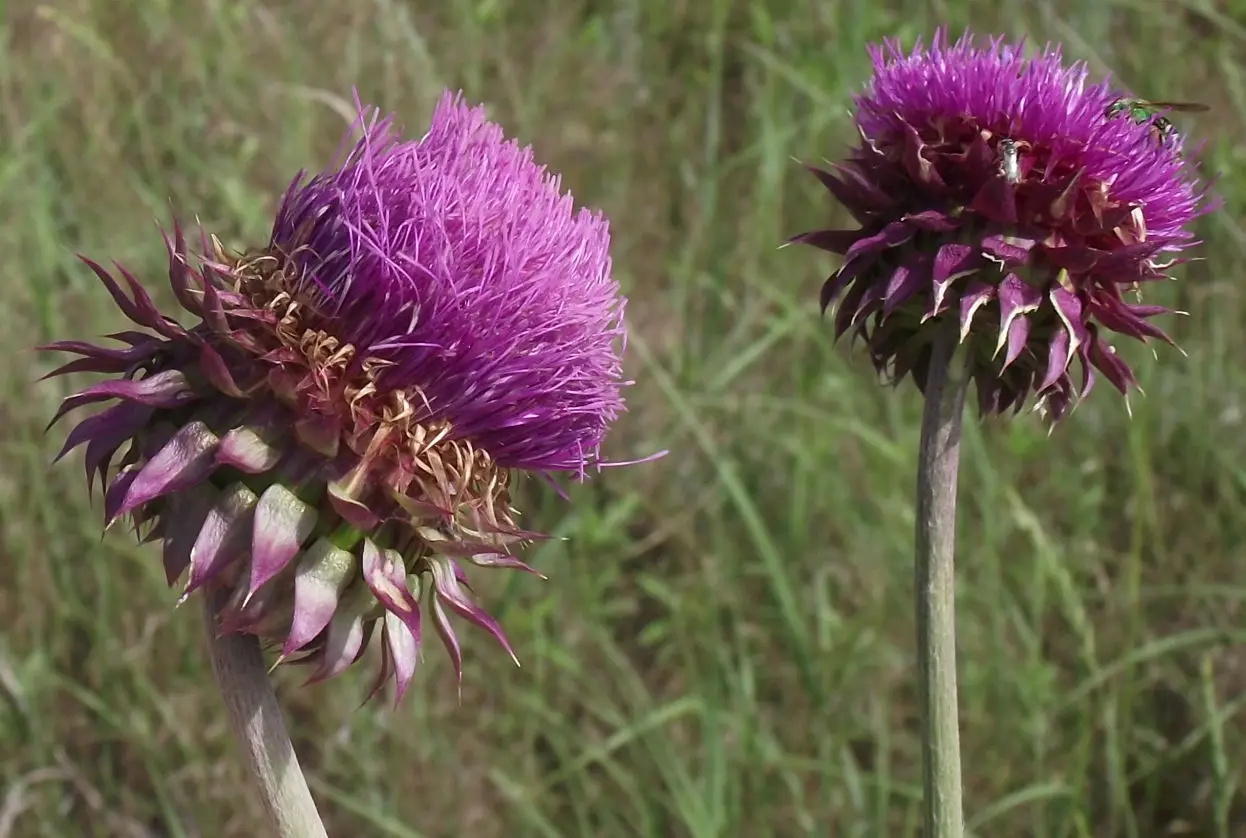
This month, the Wyoming Natural Diversity Database released a new field guide on Wyoming thistles, designed to assist those who work or recreate outdoors in identifying native and non-native thistles. Titled Wyoming Thistle Field Guide and published in partnership with the University of Wyoming Extension, the pocket-sized guide features photos and descriptions of all 24 thistles found in the state, including the five noxious invasives.
Author Bonnie Heidel, lead botanist for the Wyoming Natural Diversity Database, says that the purpose of the new publication is to “bring attention to the bane and benefits of thistles.”
The guide is intended for statewide use by weed crews, landowners, educators, land managers, and botanists. The keys, designed to guide users through the identification process step by step, are written for non-experts.
“Some of the most pervasive noxious weeds in the state are invasive thistles,” Heidel says. If not identified and treated accordingly, invasive thistles can displace native species, degrade habitat quality, impact agriculture, and reduce land value.
Native thistles, on the other hand, “provide benefits for wildlife, pollinators, and for rangeland health in general.” Bird species and large herbivores, such as elk, also rely on native thistles as a food source.
The big takeaway? Know the difference, says Heidel.
Print copies of the publication can be purchased online for $4.50 plus shipping at the University of Wyoming Biodiversity Institute at wyobiodiversity.net or the Wyoming Weed and Pest Council (WWPC) at wyoweed.org. Designed for convenience in the field, the pocket-sized book features a ruler on the inside cover and sturdy spiral binding.
A free digital copy of the guide is available online at bit.ly/wy-thistle-guide.
For additional assistance with plant identification, please visit www.uwyo.edu/uwe/county to contact a local University of Wyoming Extension educator.