

On Wednesday, July 1, the University of Wyoming’s Sheridan Research and Extension Center (ShREC) will host its annual field day at 663 Wyarno Road.
The event, which is free and open to the public, begins at 8:30 a.m.
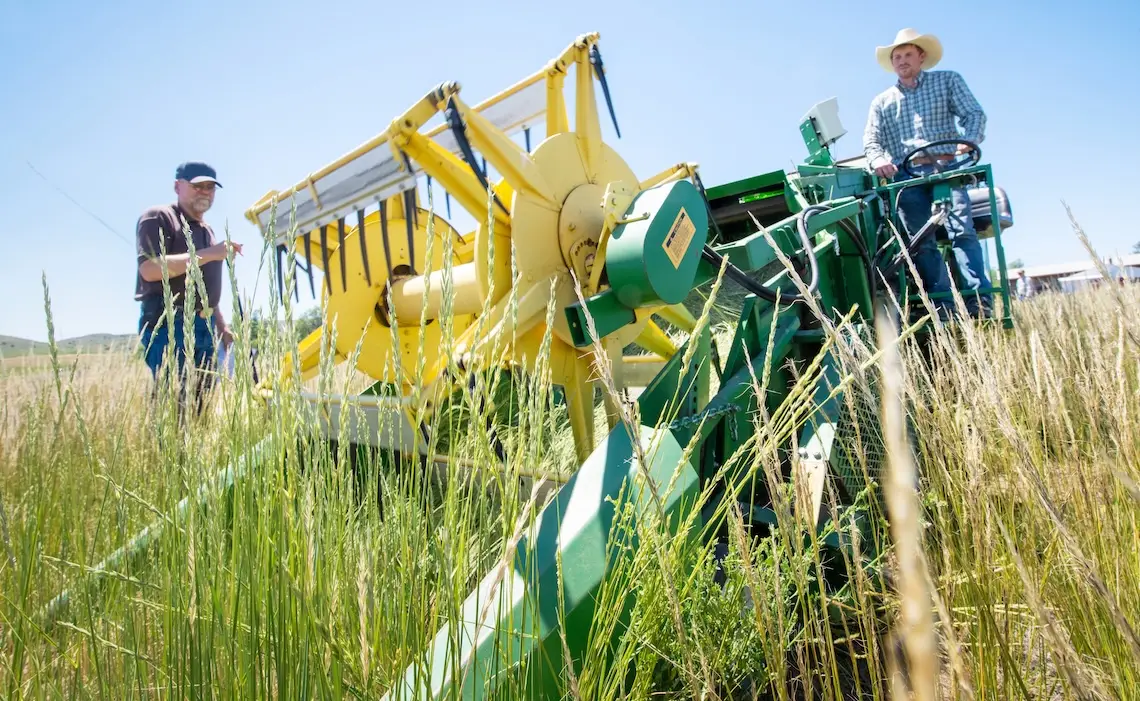
The field day will celebrate the 110th anniversary of the center’s Wyarno R&E location. ShREC maintains the historic Wyarno location as a dryland research farm, in addition to conducting research at the irrigated Adams Ranch location.
“Much of the work at the station in recent years has come full circle,” says Tyler Jones, interim assistant director of ShREC. “A hundred and ten years ago, crop introductions and [variety] selection were a primary function of the station’s existence, answering the simple question: ‘What will grow in our environment?’” This year, he says, the field day will answer that question by showcasing successful varieties of crops like alfalfa, perennial grasses, cowpeas, and soybeans.
Presentations will also provide information about topics like hay production and weed and insect management.
Posters and videos will highlight rangeland research and research conducted at ShREC’s Adams Ranch location as well.
A ribbon-cutting ceremony for the Upper Mississippi River Basin (UMRB) Climate Station Network will take place at 12 p.m.
The UMRB Climate Station Network provides real-time climate data to improve detailed weather forecasting throughout the U.S. Wyarno was the first site in Wyoming to host a UMRB weather station.
Lunch will be served at 12:30 p.m. After lunch, participants can explore a trade show with agricultural equipment vendors.
Attendees are encouraged to RSVP by contacting the Sheridan R&E Center at shrec@uwyo.edu or (307) 673-2856.