

UW undergrad conducts oral health research, helps found company
Few undergraduate students can say they’ve been the lead author on a research paper in a peer-reviewed scientific journal. Even fewer can claim they’ve helped found a business. But pre-dental student Lucas Wall has done both.
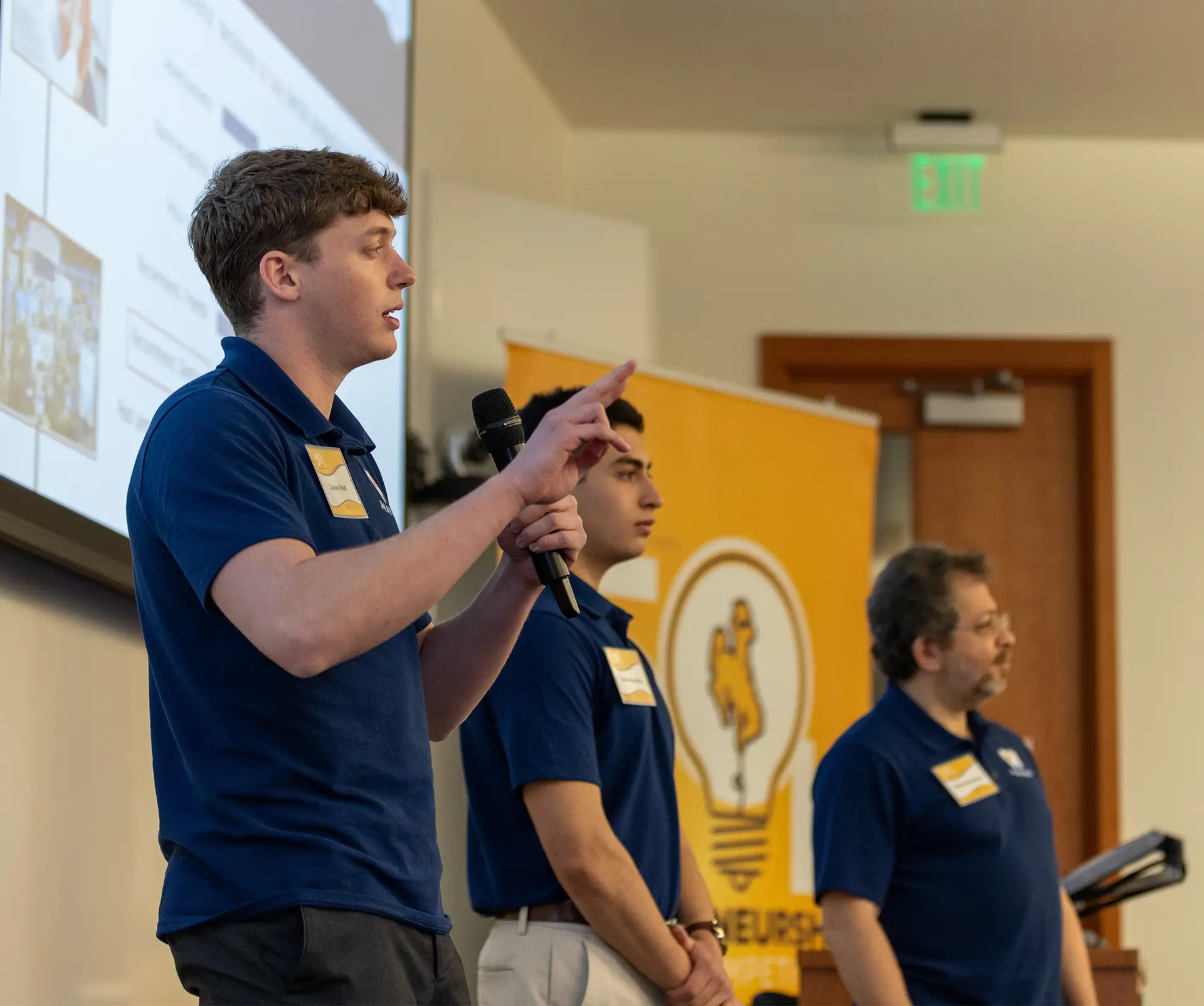
Wall, who recently graduated from UW’s molecular biology department, has received regional accolades for his research on cavity-causing bacteria. He also collaborated with molecular biologist Mark Gomelsky, business management student Leo Gomelsky, and postdoctoral researcher Ahmed Elbakush to launch MayPall, a company that helps consumers fight cavities using a unique maple-based mouthwash.
Wall’s accomplishments may help pave the way for novel strategies to protect teeth from cavities.
Targeted treatments
Cavities are caused by the bacteria Streptococcus mutans, which clings to teeth surfaces. When you consume sugar products, Strep. mutans eats that sugar too, and creates lactic acid as a byproduct. Lactic acid forms cavities by eroding teeth enamel.
Right out of high school, Wall wanted to study a subject related to oral health. He decided to examine the relationship between Strep. mutans and bacteriophages, which are viruses that attack bacteria. Specifically, he studied how Strep. mutans defends itself against these viruses.
Most anti-cavity products use chemicals like fluoride, alcohol, or peroxide to wipe out bacteria. But these chemicals do not discriminate between harmful and beneficial oral microbes.
In contrast, bacteriophages are viruses that can specifically target Strep. mutans with laser-like precision. In principle, these viruses could allow humans to destroy Strep. mutans and the cavities they cause without collateral damage.
Although bacteriophages offer a promising targeted approach to preventing cavities, scientists must understand how Strep. mutans responds to these viruses before such treatments could become available on the market.
Understanding bacterial defenses
To get inside bacterial cells, viruses first bind to receptors on the cell’s surface. Each strain of virus has a specific “key” for a particular bacteria’s receptor “lock,” allowing these bacteriophages to target certain bacteria without harming others.
Bacteria can prevent viruses from infecting them by changing the receptors on their cell surface. Once the bacterial cell has changed its receptors, the virus can no longer fit the “lock” unless it adapts and changes its “key.”
The receptors are crucial for Strep. mutans’ ability to stick to teeth and other oral bacteria. Wall found that receptors are also essential for the bacteria to properly replicate itself and grow. Changing the “locks” can keep viruses out, but this change can also hinder the bacteria’s ability carry out basic life functions.
Strep. mutans also has another way of resisting viruses. Bacteria have evolved an adaptive immune system, analogous to the human immune system, that they use to recognize and destroy specific viruses that they have previously encountered. Wall’s research examined how and when Strep. mutans uses this system, called CRISPR.
Wall found that, in some cases, a Strep. mutans bacterium changing its receptors to escape viruses prevented that bacterium from being able to effectively form cavities. On the other hand, Strep. mutans cells that used their adaptive immunity system instead of changing receptors were still able escape viral infection and form cavities.
Wall’s research is an important first step in understanding how Strep. mutans defends against viruses.
Opportunities for undergrads
Wall co-authored his Strep. mutans research with Dan Wall, chair of the Department of Molecular Biology. Their research was published in the journal Microbiology.
As a junior in college, becoming the lead researcher of a paper published in a leading journal is an almost unheard-of honor.
“I feel like at a lot of other large institutes, it can be difficult to get involved in interesting research, let alone research that you want to do and are passionate about,” says Wall. “UW is really unique because it’s super easy to get involved in these type[s] of opportunities.”
Wall has taken advantage of multiple opportunities. He took part in a Wyoming IDeA Networks of Biomedical Research Excellence (INBRE) research fellowship and the Wyoming Research Scholars Program fellowship, both of which offer mentorship and financial support for exceptional student researchers.
Wall won first place for his undergraduate oral presentation at the American Society for Microbiology’s 2025 Rocky Mountain Branch Conference.
¹ The IDeA, or Institutional Development Award, program was established in 1993 by the National Institutes of Health to support biomedical research. The IDeA Networks of Biomedical Research Excellence (INBRE) Program supports statewide biomedical research development in IDeA-eligible states, including Wyoming.
From cantaloupe to cavities
Wall isn’t the only person who’s conducted groundbreaking research in UW’s molecular biology department.
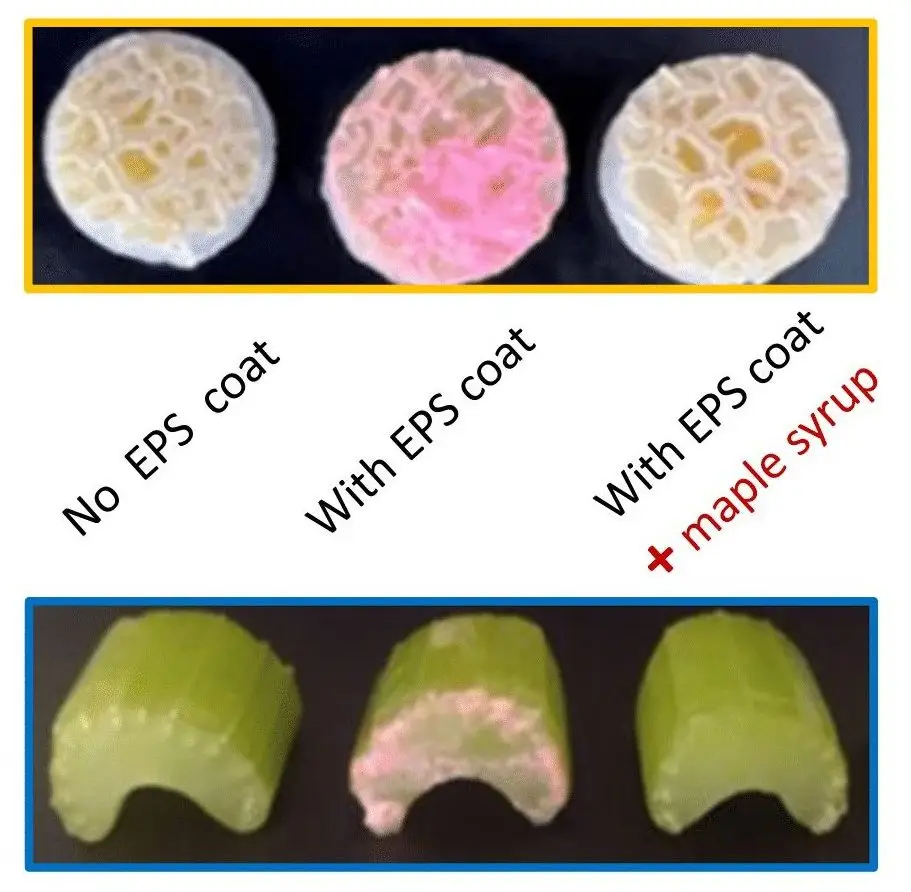
Bacteria sticking to a cantaloupe rind shipped from California to Wyoming would ordinarily perish from dehydration during transportation. But with the help of a polysaccharide “coat” made of specialized sugars, bacteria can survive dehydration and even treatment with disinfectants.
The coat protects bacteria from their surroundings and helps them cling to surfaces and other bacteria. Bacteria and the coat they produce are called a biofilm.
A decade ago, Mark Gomelsky’s laboratory at UW discovered that Listeria, a deadly foodborne pathogen, forms protective biofilms, especially on fresh produce. Ahmed Elbakush, a postdoctoral fellow in the Gomelsky laboratory, later stumbled upon compounds found in maple sap that prevent Listeria from forming biofilms.
Listeria is genetically related to Strep. mutans, and both form biofilms that help them cling to surfaces. Mark Gomelsky wondered, “What if the same maple compounds work on the polysaccharide coat that helps cavity-causing bacteria, Strep. mutans, attach to tooth surfaces and keeps them protected?”
Mark Gomelsky wasn’t an expert on Strep. mutans, but he knew Wall was studying these bacteria. He also knew Leo Gomelsky, an undergraduate in the management and marketing department, was searching for a business project.
Mark Gomelsky and Elbakush’s recent discovery, Leo Gomelsky’s business acumen, and Wall’s experience with Strep. mutans aligned. They began working together to develop an anti-biofilm mouthwash designed to keep Strep. mutans off teeth.
Creating the company
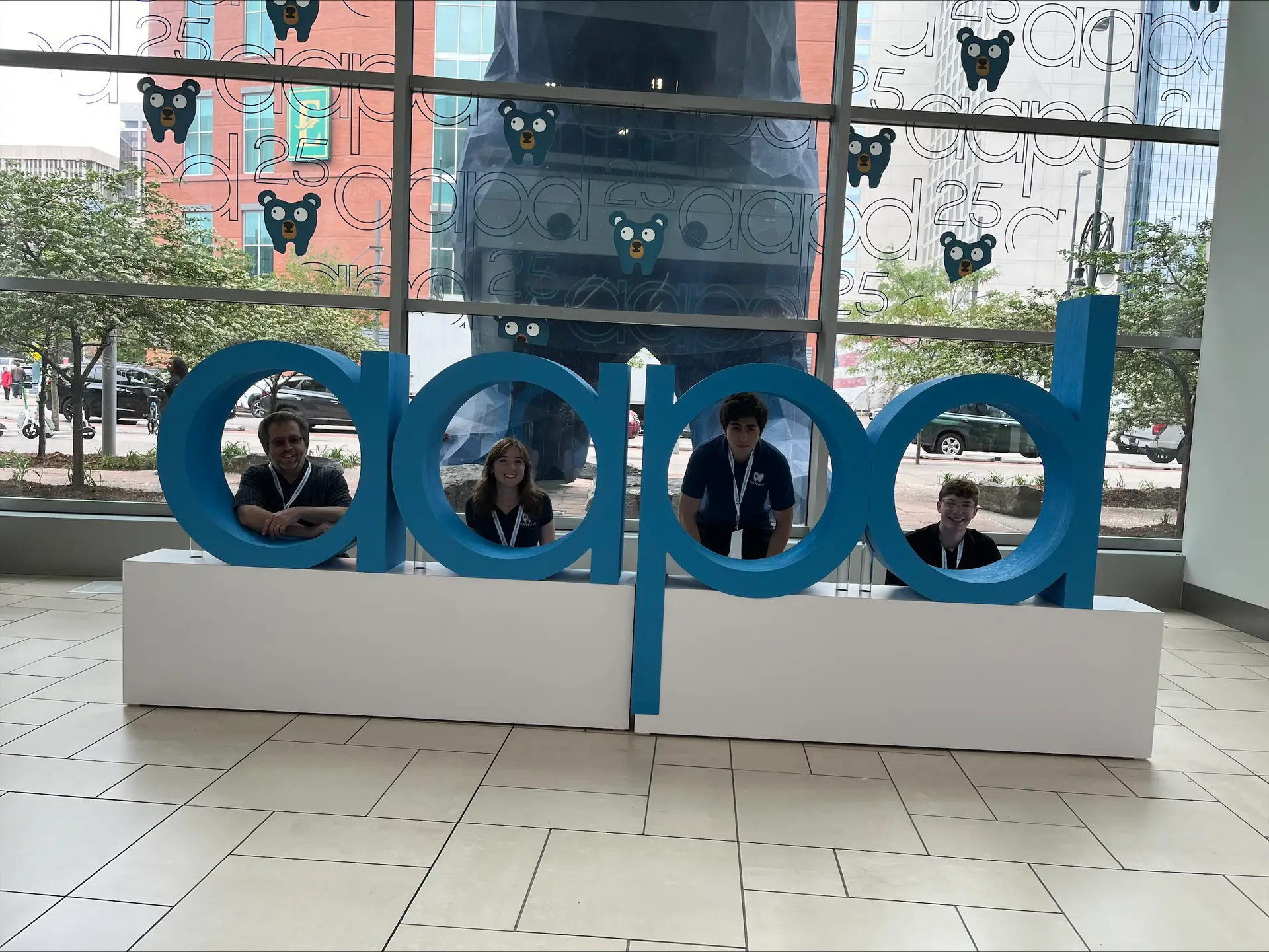
In 2024, Mark and Leo Gomelsky, Elbakush, and Wall won second place in the John P. Ellbogen $50K Entrepreneurship Competition, receiving about $17,000 to launch their company, MayPall.
MayPall mouthwash is safe to swallow, since the natural compounds in it have been consumed for centuries in foods like maple syrup. It offers an alternative to products containing toxic antimicrobial chemicals or alcohol. It’s especially useful for young children—the American Dental Association recommends that children under the age of six should not use traditional mouthwashes due to the risk of swallowing.
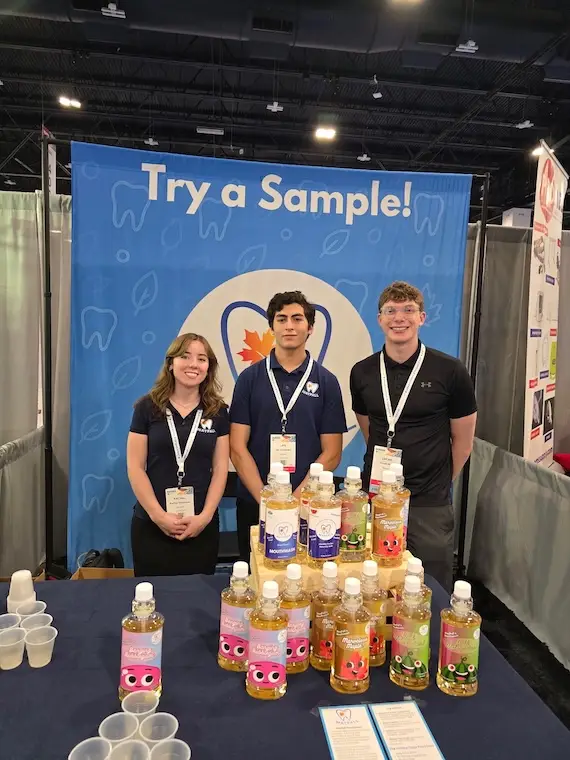
“Surprisingly, what we’ve realized is more than anything what [parents] needed is something that their kids are willing to use,” Wall says. “Parents always say that their kids love how [MayPall mouthwash] tastes, and they have no problems getting their kids to use it. It’s actually something their kids can look forward to in their oral health routine.”
“According to national statistics, about half of American kids by age eight or nine have developed cavities,” adds Mark Gomelsky. “We hope to make a difference for the oral health of our kids and also save their parents money and anguish associated with extra visits to dental offices.”
MayPall mouthwash can be purchased online from MayPall, Walmart, and Amazon. It’s found in some grocery stores in Laramie and Fort Collins, and over 1,000 samples have been distributed to dental offices in Wyoming, Colorado, and Utah.
MayPall is a unique, research-based company that developed in Wyoming because of the opportunities that UW offers. “Smart and entrepreneurial people live everywhere. They just need a little bit of help and training and a little bit of money to get their ideas off the ground,” says Mark Gomelsky.
In the near future, he hopes that Leo Gomelsky and Wall will take full leadership of the company, allowing him and Elbakush to focus on new research discoveries.
Wall plans to stay involved with MayPall, even as he moves on to dental school and, eventually, his own dental practice.
This article was originally published in the 2025 issue of Roots & Ranges, an annual magazine published by the UW College of Agriculture, Life Sciences and Natural Resources.