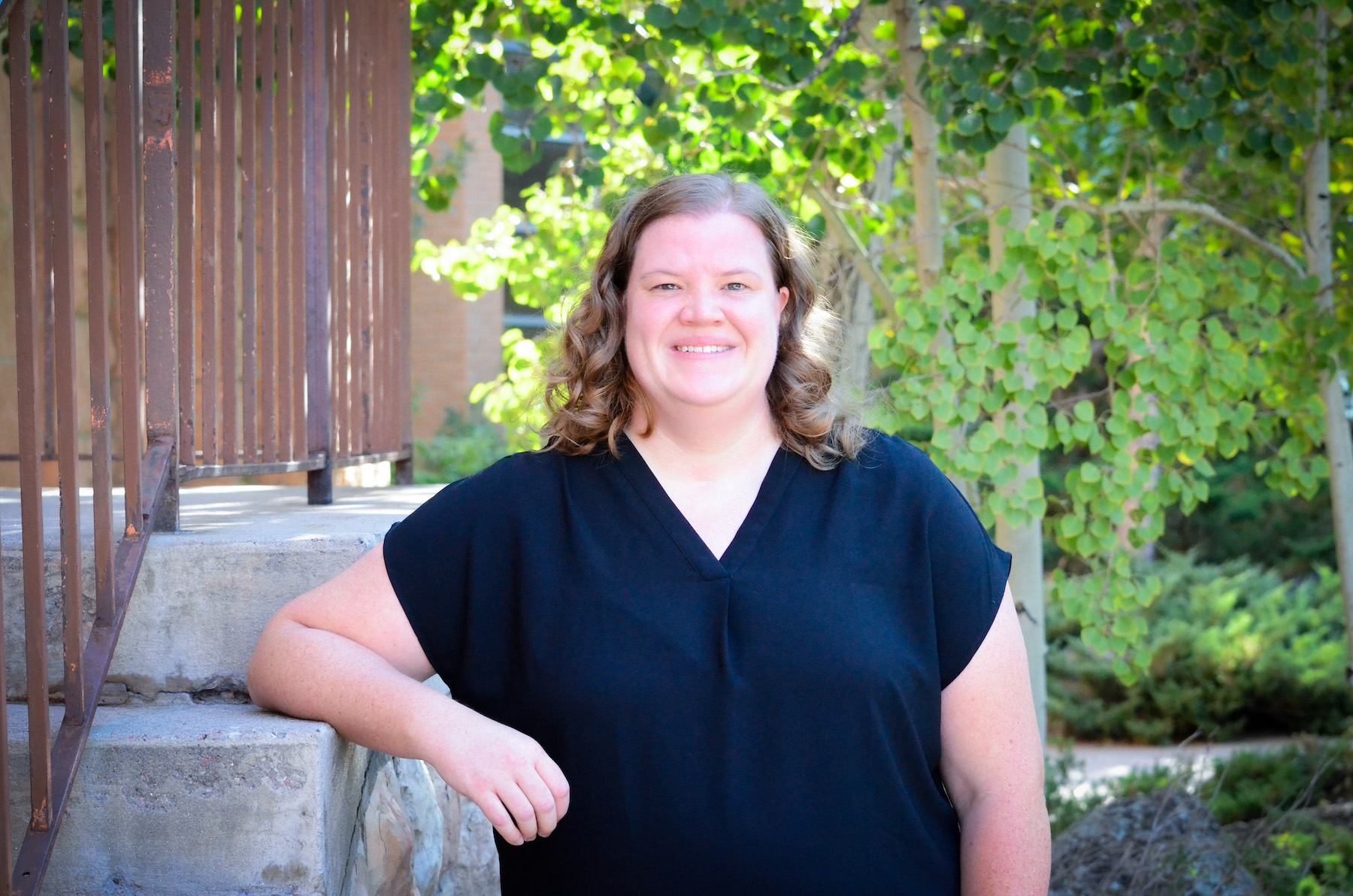

Longtime University of Wyoming faculty member Scott Shaw has achieved international distinction in the field of entomology, including seeing 16 insect species named for him and writing an acclaimed book, “Planet of the Bugs: Evolution and the Rise of Insects,” which tells how insects shaped life on Earth.

But it is Shaw’s work with students in classrooms, laboratories, and the field that has earned him his latest honor from the university.
Shaw is the 2025 recipient of the John P. Ellbogen Lifetime Teaching Award, an accolade that recognizes the long, distinguished, and exemplary career of one senior faculty member who has excelled as a teacher at UW.
“Many people are good at teaching science; many scientists excel at doing research. The scientist that is a gifted researcher, an extraordinary teacher, and frequently takes time out of his busy day to engage the public is rare. That defines Dr. Scott R. Shaw,” wrote Western (Ontario) University faculty member Nina Zitani, one of his former students. “Whether he is teaching in the classroom, the UW Insect Gallery, or an ‘outdoor classroom’ in the tropical rainforest, Dr. Shaw bridges the gap between science and the student.”
Shaw, a professor in the Department of Ecosystem Science and Management in the College of Agriculture, Life Sciences and Natural Resources, began teaching at UW in 1989 after helping manage Harvard University’s Museum of Comparative Zoology insect collections for five years. His career in entomology has included more than 200 scientific publications; discovering and naming more than 200 insect species from 29 different countries; and creating and curating UW’s Insect Gallery, which draws about 3,000 visitors annually.
“His passion and enthusiasm for working with students, from third graders to graduate students, in Wyoming K-12 schools to the UW campus to the Andes of Ecuador, is truly extraordinary and distinguishes him as a professor who impacts Wyoming students and Wyoming’s university immensely,” wrote Anne Alexander, assistant dean of UW’s College of Business.
Shaw has taught a variety of courses during his 36 years at UW, ranging from “Insect Biology” to “The Biodiversity Crisis” to “Cosmology of Life.” He consistently receives positive evaluations from students.
“While lecturing, Dr. Shaw found creative ways to make the subject of entomology fun, either through passing around items made from insect byproducts or by doing things like lecturing for an entire period with an insect puppet on his hand,” wrote former student Judith Herreid, now a postdoctoral researcher with the U.S. Department of Agriculture.
“Dr. Shaw’s dynamic teaching style, profound command of the subject matter, and infectious sense of humor transformed each class session into an engaging and enriching experience that ensured student attendance,” wrote another former student, Samin Dadelahi, president and CEO of the Wyoming Community Foundation.
Timothy Collier, head of UW’s Department of Ecosystem Science and Management, says Shaw also emphasizes hands-on learning.
“In the laboratory, he is known for patient guidance and a sense of humor, often testing students for extra credit and fun with insect chimeras consisting of the body parts of different insects,” Collier wrote. “Moreover, his long career of scholarship in entomology has produced an incredible depth and breadth of knowledge that Scott draws upon in all of his classes, laboratories and in mentorship of his students.”
Shaw has mentored 21 graduate students and established an undergraduate honors course in tropical ecology that included opportunities to conduct research in the high-altitude cloud forest surrounding the Yanayacu Biological Station in Ecuador, where he has surveyed caterpillars and their associated parasitoid wasps and flies.
Shaw received his undergraduate degree from Michigan State University and his master’s and doctorate at the University of Maryland-College Park.
This story was originally published on UW News.