
A significant gift from the estate of the late John Hines, a former state legislator from Gillette, will boost support to University of Wyoming students and programs.
Hines’ generous gift will support the Hines Family Scholarship, contribute to the Wildlife Livestock Health Center Endowment, and support the Cowboy Joe Club.
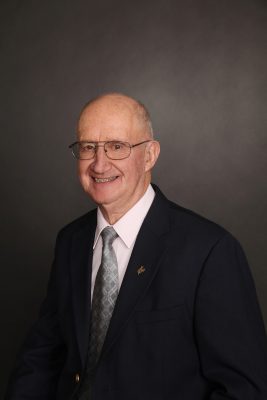
Hines established the Hines Family Scholarship in 2005 to honor his family’s long-standing legacy in Wyoming agriculture. The scholarship supports UW students in financial need who are enrolled in the College of Agriculture, Life Sciences and Natural Resources, and gives first preference to students from Wyoming. Funding from Hines’ estate will further strengthen and sustain this scholarship for future generations.
“John Hines devoted his life to serving Wyoming’s agriculture, education, and rural communities,” says Kelly Crane, the Farm Credit Services of America Dean of the College of Agriculture, Life Sciences and Natural Resources. “This gift continues John’s legacy of community and industry service in an extraordinary way. This estate gift reflects the enduring commitment of the Hines family to the University of Wyoming and their continued support of UW research, education, and extension programs that serve Wyoming’s sheep industry. This support honors John Hines’ legacy while empowering our students and programs to advance the agricultural industry, which John dearly loved.”
The Wildlife Livestock Health Center Endowment provides significant benefits to the state’s livestock and wildlife industries. The program offers hands-on research opportunities for both undergraduate and graduate students, along with specialized training focused on diseases that impact wildlife and livestock using emerging technologies.
Funding in the wildlife and livestock health fields is scarce, yet essential. The program’s research supports both sportsmen and stock growers, recognizing that the health of wildlife and livestock deeply affect the other. Hines’ gift will further expand opportunities, advance research, and promote deeper understanding of animal health issues across the state.
Hines’ estate also will provide continued support to the fundraising arm of UW Athletics, the Cowboy Joe Club. His gift will create a lasting investment in the lives of Wyoming student-athletes and the future of UW Athletics. This meaningful commitment will directly enhance scholarship support, strengthen competitive resources, and fuel program improvements across the department. More importantly, Hines’ legacy will help ensure that generations of Cowboys and Cowgirls have the opportunity to pursue their dreams; compete at the highest level; and proudly represent the Brown and Gold.
Through this enduring gift, Hines’ impact will be felt far beyond today, shaping the future of UW Athletics for years to come.
“John was an amazing supporter of the Cowboys and Cowgirls,” says Tom Burman, UW’s director of athletics. “He loved to travel the country to watch Wyoming football. He was always proud to represent the University of Wyoming when traveling. He was a supportive fan who was always asking what he could do to help the Cowboys. Sen. Hines was a rare breed of fan who cared immensely about the students, staff, and coaches.”
“John Hines’ extraordinary generosity reflects a lifetime of dedication to Wyoming, its people, and the University of Wyoming,” says John Stark, president and CEO of the UW Foundation. “We are deeply grateful to the Hines family for honoring John’s legacy in a way that will benefit agriculture, student success, research, and Cowboy pride.”
The Hines family has lived on and operated a ranch in Campbell County since 1900. Originally a cattle and horse operation, the ranch shifted to running sheep in the 1930s and transitioned back to cattle ranching in 2009.
Hines graduated from Campbell County High School and attended UW, studying in the College of Agriculture, Life Sciences and Natural Resources. After graduating from UW, he served in the U.S. Army.
In 1960, Hines purchased his family’s ranching operation from his mother and committed to improving the state’s agriculture industry. He served as president of the Wyoming Wool Growers Association and was a charter member of the Cowboy Joe Club. The Cowboy Joe Club was near and dear to Hines’ heart, and he contributed donations in support of Wyoming student-athletes for over 50 years. His dedication expanded far beyond his financial contributions, as he also was a longtime football season ticket holder and regularly attended events in Laramie.
Hines served 29 years in the Wyoming Legislature. From 1985-2002, he represented District 31 in the House of Representatives. From 2003 until his retirement in 2015, he represented District 23 in the Senate.
Hines passed away in 2024 at the age of 87.
This story was originally published on UW News.