


The University of Wyoming Extension recently released a free digital publication titled “Kernza® Perennial Grain and Wheat-Fallow Budgets: Comparing a Perennial and Annual Cropping System in Southeastern Wyoming.”
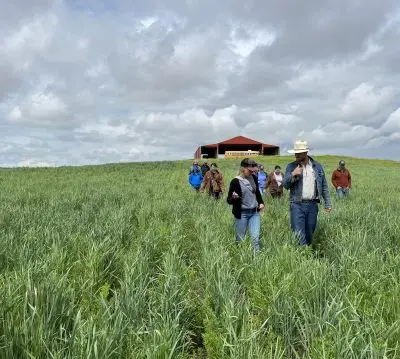
The publication compares the economics of wheat-fallow systems to the economics of a new perennial crop, Kernza®. Kernza is the trademark name for the grain harvested from varieties of intermediate wheatgrass (Thinopyrum intermedium) originally developed by The Land Institute.
The new publication is especially relevant to dryland farmers in southeastern Wyoming. It assesses the potential economics of growing intermediate wheatgrass (IWG) plants bred for grain production in this region.
In southeastern Wyoming, many farmers use a wheat-fallow system, where wheat is grown for a year and then the soil is left fallow the next year to build up soil moisture. This system is not always profitable and is vulnerable to volatile weather events.
IWG bred for grain production can be used as forage in dry years when it does not produce a viable grain harvest. In addition, IWG bred for grain production is a perennial crop. Compared to annual crops, perennial crops can be more resilient to climate stressors like drought and require less soil disturbance, improving soil health.
“Perennial grains are still a new development, but they represent a big shift in how we farm. Perennials can improve the health of our ecosystems, just like the prairie grasses that first built these soils,” says Hannah Rodgers, co-author of the work and research scientist in the Department of Agricultural and Applied Economics. “It’s exciting to see Wyoming farmers being researchers and innovators, figuring out how to grow these new crops in our harsh environment.”
The publication found that if farmers can locate a market to sell Kernza grain, it may be more profitable than wheat-fallow systems in some circumstances.
To view the new publication, visit https://bit.ly/kernza-bulletin. Contact Rodgers at hrodger3@uwyo.edu with questions.