
Nina Zitani has discovered and named 15 insect species previously unknown to science. Fellow entomologists have named another nine newly discovered species in her honor.
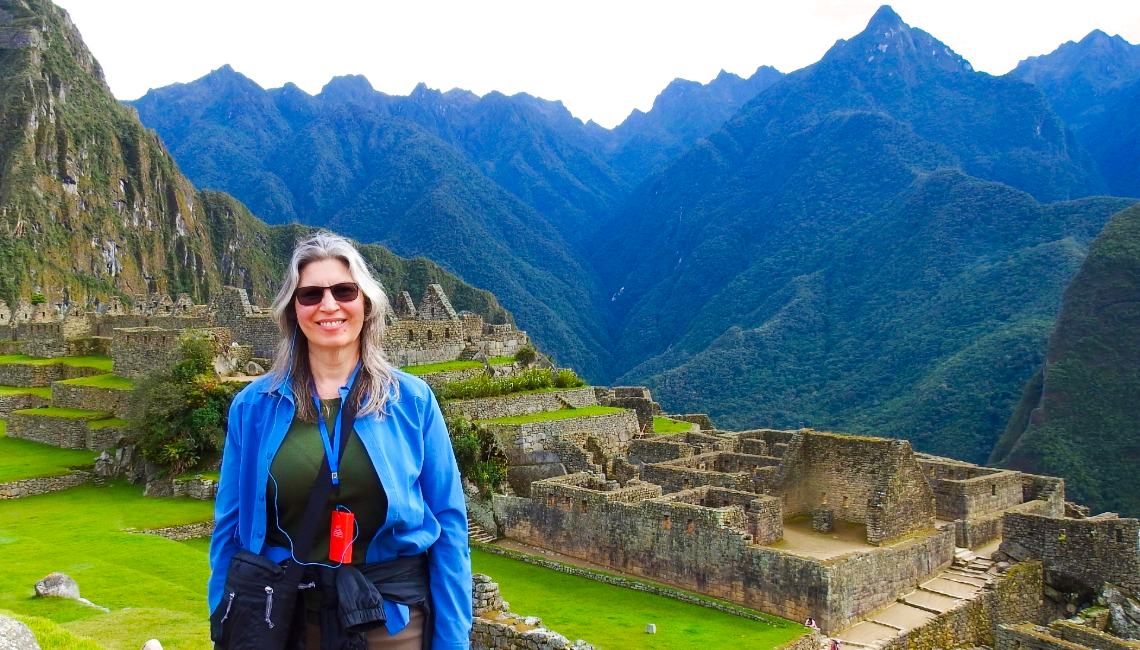
A renowned scientist and educator, Zitani has led or co-led more than 30 expeditions to remote areas of Costa Rica, Ecuador, and Peru. She’s collected and scrutinized thousands of entomological research specimens, led field courses in the Amazon rainforest, and served as a biodiversity expert for 18 Smithsonian Journeys, including an “Around the World by Private Jet” program.
In 2021, Zitani was elected a Fellow International of the Explorers Club in New York City. When not traveling for a Smithsonian Journeys program, she serves as a teaching faculty member and zoological museum curator at Ontario’s Western University.
But her career as an international researcher and educator began at the University of Wyoming. Originally from Moorestown, New Jersey, Zitani moved to Laramie in 1993 to pursue a graduate degree in entomology.
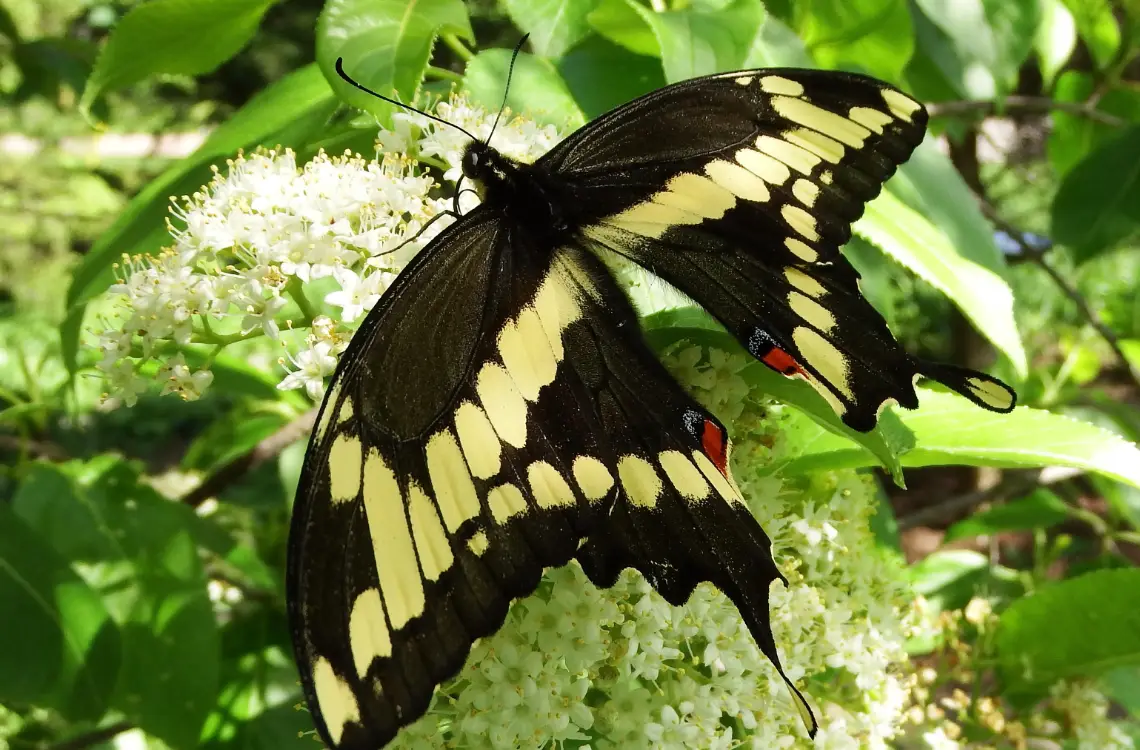
Artist, scientist, educator
Most entomologists don’t start their career with a degree in fine art. But Zitani has always been drawn to both art and science.
Over the years, she’s used her visual arts skills to create scientific illustrations of new insect species, design museum exhibits, and showcase global biodiversity through photography. “I’m the type of person who has multiple interests—when I was a kid, and all throughout my life,” she says.
After earning her bachelor’s degree at the Rhode Island School of Design, Zitani worked at two prominent science museums on the East Coast. As she helped launch the Liberty Science Center’s first insect zoo, the next step in her career path suddenly became clear. She was going to become an entomologist—and she was going to study insects in the rainforest.
“I was looking for an advisor who had funding to send me to do research in the rainforest—anywhere in the world, as long as it was in the rainforest and with insects,” she recalls.
Zitani immediately hit it off with Professor Scott Shaw in the UW College of Ag. “I could tell he was passionate about teaching as well as research,” she says. “He was looking for a graduate student to send to Costa Rica to do field research on parasitic wasps. The rest is history.”
With Shaw as her advisor, Zitani earned her master’s in 1997, followed by a doctorate in entomology in 2003. A member of the first graduating class in UW’s Haub School of Environment and Natural Resources, she also earned a minor in environment and natural resources.
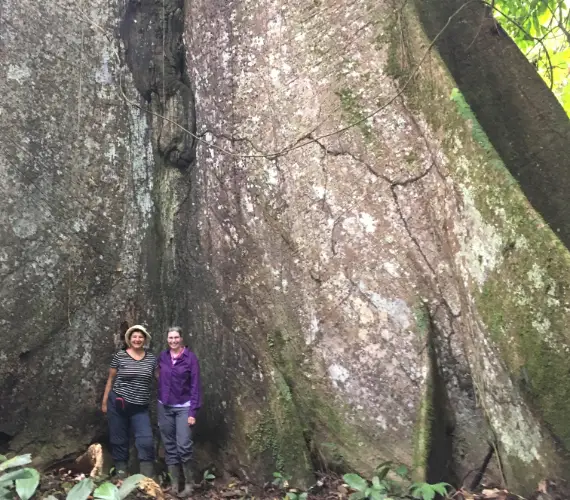
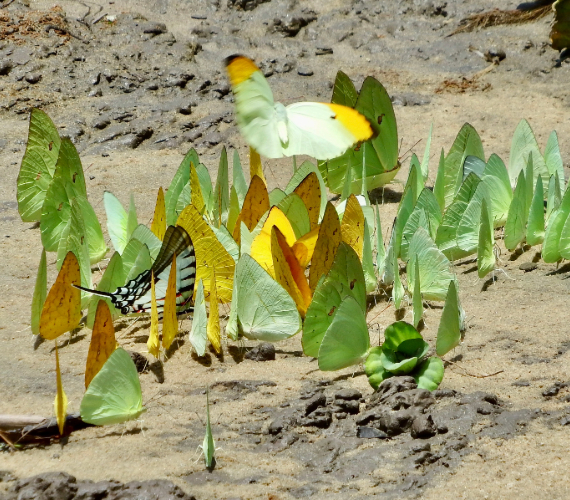
Species unknown to science
Field research biologists like Zitani are most likely to discover previously unidentified species in the incredibly biodiverse regions near Earth’s equator. “So, you go into the tropics and you collect as many specimens as you can of the taxon you’re working on,” Zitani explains. For her, that meant gathering thousands of parasitic wasps in the Braconidae family under official government permits.
Back in Wyoming, Zitani painstakingly examined and compared specimens, searching for new species. “You have to be able to distinguish anatomically a new wasp species from the known, previously described species,” she says. “And you can only get there by training and learning all the highly complex anatomy and life cycle of these tiny insects.”
Zitani excelled at spotting the subtle morphological differences distinguishing one tiny wasp species from another. Soon, she had identified more than 10 new parasitic wasp species.
But her grad school experience wasn’t just about scrutinizing wasp thoraxes and hiking through rainforests. On her research expeditions in Costa Rica, she also supervised several undergraduate students with field projects of their own. Surrounded by eager students and lush tropical forests, her passion for biodiversity education blossomed.
Creating learning opportunities for others
In the field and as a graduate teaching assistant back on campus, Zitani quickly became known for her innovative, enthusiastic approach to education. “My time as a grad student was learning how to be a researcher, and learning how to be a good teacher,” she reflects.
In addition to leading field courses, Zitani prepared lectures, coached students through cockroach dissection, and ran entire lab sections. It was a lot of responsibility, but she enjoyed finding new ways to connect with students and help them learn.
In 2000, Zitani received the John P. Ellbogen Meritorious Classroom Teaching Award. Faculty mentors in UW’s entomology, botany, and zoology departments played a key role in her success, she says. They were “top-notch professors, challenging but also understanding and forgiving at times when I made mistakes.”
While she consistently received positive feedback from UW students, Zitani didn’t limit her on-campus teaching efforts to the college classroom. She also helped Shaw launch the UW Insect Gallery, an on-campus resource that’s still open to students and researchers today.
“We had K-12 students from all over Wyoming come to learn about insects,” she recalls. “It was something we did as a public service…That was part of being a grad student under Dr. Shaw.”
In 2014, Zitani became curator of Western University’s zoological collections. Inspired by her experience at UW and the two museums where she’d worked previously, Zitani created the Western University Biodiversity Gallery. The exhibition, which showcases animal species from around the world at risk of extinction, attracts students and faculty from departments across campus.
In recognition of her efforts to expand access to the zoological collections and raise awareness of the biodiversity crisis, Zitani received the Green Award, Western’s highest sustainability honor, in 2022.
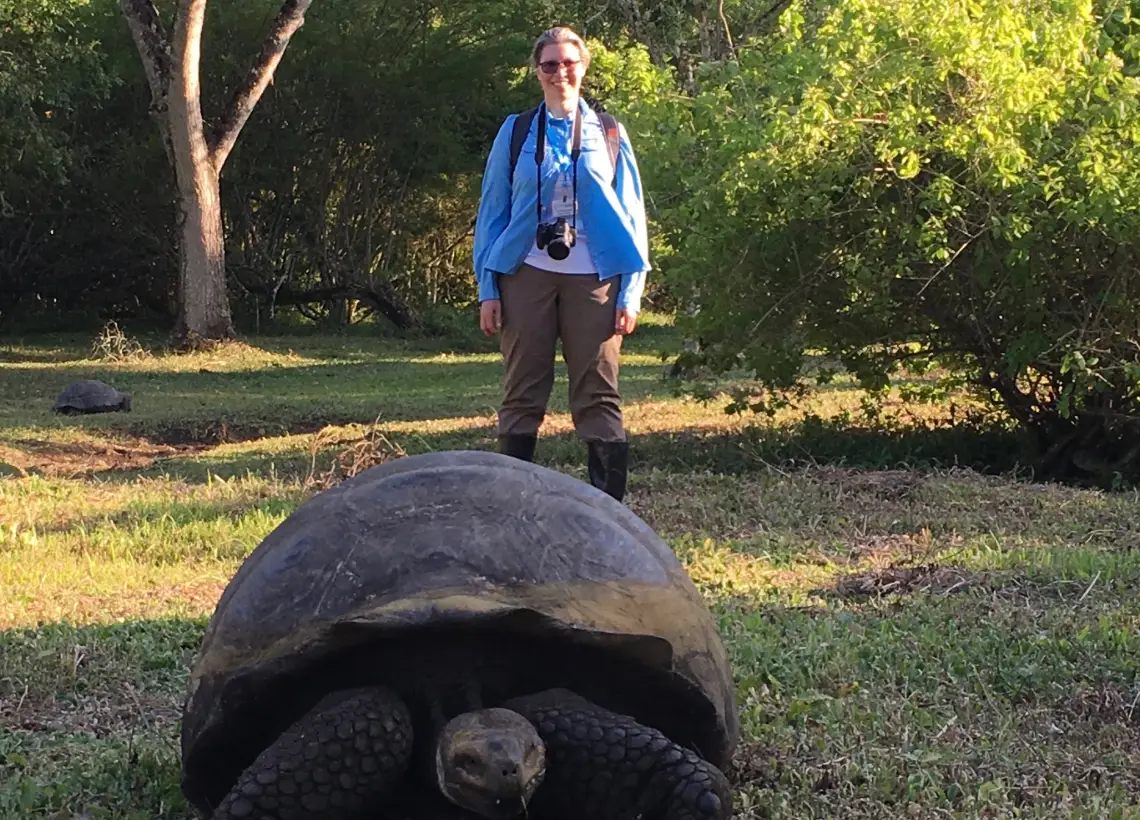
Scientific discoveries with students
Just like at UW, Zitani hasn’t limited her teaching endeavors at Western to the museum or classroom. For six years, she co-taught a tropical biodiversity course in Ecuador, introducing undergraduates to the high-elevation cloud forest and lowland rainforests of the Amazon Basin.
It was a once-in-a-lifetime experience for students, she says, from collecting and examining inspect specimens in an incredibly biodiverse region to interacting with the Waorani people, a local indigenous community of the Yasuni Biosphere Reserve.
Course participants even contributed to new scientific discoveries. Over multiple years, students helped Zitani and her co-instructor, Greg Thorn, document the presence of velvet worms in the arboreal bryosphere, a unique, mossy habitat found only in cool, wet, high-elevation areas of the cloud forest.
These tiny, nocturnal invertebrates, which belong to the phylum Onychophora and are close relatives of arthropods, are difficult to spot and not very abundant. Previously, they were thought to live primarily in leaf litter or dead wood on the ground. But Zitani’s team observed velvet worms thriving in communities of organisms that grow on living tree trunks and branches.
They also discovered a crafty “caterpillar mimic”—an insect larva that has evolved to look like a velvet worm for protection. (Velvet worms are known for their fearsome ability to launch webs of slime that immobilize their prey.)
“There’s always something to see in the rainforest,” Zitani comments. “The more you go, the more you learn.”
Replacing fear with curiosity
When she’s not teaching at Western, Zitani serves as a Smithsonian Journeys biodiversity expert, primarily for travel programs in Central and South America. On these expeditions, she collaborates with local guides to share her passion for biodiversity with students of all ages and backgrounds.
Along the way, she says, “I’ve become skilled at helping people get over their fears, especially of spiders and snakes…If you’re afraid of a certain kind of animal, then your fears inhibit learning.”
Insects and arthropods are the most diverse organisms on Earth; without them, ecosystems falter and collapse. Gaining an appreciation for these tiny creatures is key to grasping the importance and complexity of biodiversity conservation.
Personally, Zitani has never been afraid of “creepy crawly” organisms. “You can’t be scared of them and, you know, teach a course in the Amazon rainforest,” she notes. “You have to love these creatures, you have to find them fascinating and amazing…then you can be an effective teacher.”
Throughout her career, Zitani has worked hard to develop a teaching methodology that helps students overcome their fears and tap into the sense of wonder she feels every day.
“I want people to understand the complexity of global biodiversity, that it is essential for our survival, how incredibly beautiful and wondrous it is, and, importantly, that it is in decline due to various human activities,” she explains.
Biodiversity gardening
On her quest to help others understand and conserve biodiversity, Zitani coined a new term: biodiversity gardening. The concept is simple but powerful—by growing native plants, gardeners all over the world can help support biodiversity right in their backyards.
“It’s all about promoting insects,” Zitani explains. “Native plants are the foundation upon which many of our native insect species feed…That’s the foundation of the food webs of our terrestrial ecosystems.”
In 2011, Zitani launched a website explaining how to transform your backyard—or even just a corner of your backyard—into a haven for native plants and insects. “You don’t have to convert your whole backyard to a native plant garden,” she says. “Even if you just do a small section…that makes a difference.”
Since the website’s initial launch, Zitani has received messages from people around the world thanking her for providing resources and actionable ways to help address the biodiversity crisis.
Providing manageable solutions to an overwhelming problem is a tenet of her approach to education. “When I teach, I always end on a positive note and provide the audience with a simple action they can take to help stop the [biodiversity] loss,” Zitani explains.
Nurturing wonder, hope, and curiosity amidst a global crisis—that’s her life’s work.
“I got to where I am because I was always doing what I truly believed in,” she says. “That is what I recommend, that you find a career that you’re very passionate about, and when you wake up in the morning, you’re just excited to do the work because you love what you do.”
Note: An abbreviated version of this story appeared in the Fall 2025 issue of UWyo magazine.