

Just in time for canning season, the University of Wyoming Extension has updated and expanded its signature food preservation publication, “Preserving Food in Wyoming.” This free downloadable resource is designed to help Wyoming residents safely can or freeze their harvest at home.
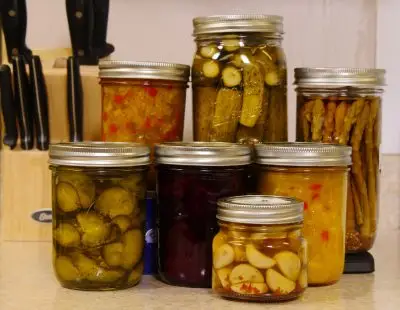
Appropriate for both experienced and aspiring food preservers, the publication provides research-tested recipes and step-by-step instructions for preserving vegetables, fruit, meat, and fish using a boiling water canner or pressure canner.
Unlike many popular canning resources, “Preserving Food in Wyoming” includes a detailed section on how to preserve wild berries and fruit such as chokecherries, buffaloberries, and gooseberries. Tips for properly storing specific fruits and vegetables in the freezer are also included.
For those new to food preservation, the publication provides a thorough introduction specifically tailored to Wyoming’s high-altitude environment. For more experienced home canners, the publication offers an opportunity to try new recipes and review updated food safety guidelines.
Originally published in 1994, “Preserving Food in Wyoming” has undergone multiple revisions over the past three decades to reflect evolving food safety practices. UW Extension educator emeritus Denise Smith, who taught her first food preservation workshop in 1975, served as lead editor of the current iteration.
Smith notes that canning and other forms of home food preservation have recently experienced a resurgence in popularity. While online resources abound, she advises that food preservers stick to research-based recipes, such as those contained in “Preserving Food in Wyoming,” and avoid experimentation. “Improper canning practices can cause foodborne illness and even death,” she cautions.
In addition to steering clear of outdated practices, such as using the open kettle method or sealing jars with paraffin, it’s crucial for Wyoming food preservers to properly account for altitude.
“Making the appropriate altitude adjustments to canning recipes is extremely important during the canning procedure itself and also in how to handle low-acid foods when serving them to your family and friends,” Smith explains.
To view and download a free copy of “Preserving Food in Wyoming,” visit https://bit.ly/wyo-1210.
For questions about home canning and food preservation, contact a local UW Extension office or visit https://bit.ly/uw-nutrition-foodsafety.