



Sheridan R&E Center Donates Nearly 1,600 Pounds of Beans to Food Bank of Wyoming

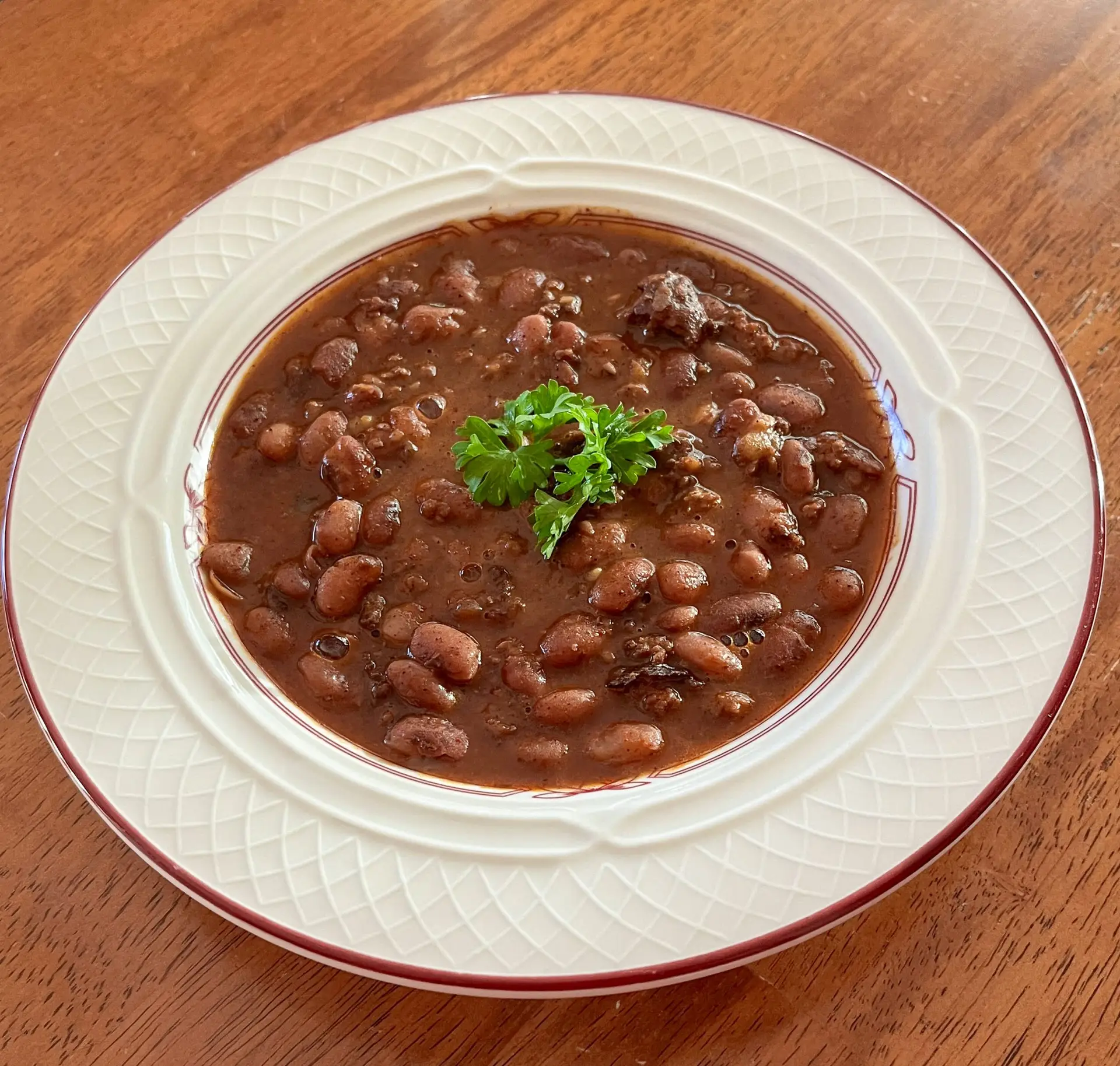
white dish with red rim filled with baked beans and sprig of green herb as garnish
Dry beans can be used to make a variety of dishes, including baked beans (pictured here), soups, chili, casseroles, and more. Photo credit: Mary Evans, Cent$ible Nutrition Educator.

On Nov. 22, Food Bank of Wyoming, based in Casper, received a donation of nearly 1,600 pounds of dry beans from the University of Wyoming Sheridan Research & Extension Center (ShREC).

white dish with red rim filled with baked beans and sprig of green herb as garnish
Dry beans can be used to make a variety of dishes, including baked beans (pictured here), soups, chili, casseroles, and more. Photo credit: Mary Evans, Cent$ible Nutrition Educator.

A research farm like ShREC must maintain flexibility in order to meet new research needs, explains ShREC Director Brian Mealor. Annual crops like dry beans assist with that flexibility and fit well into crop rotation plans.

“They also give us the opportunity to provide a resource such as the beans that were donated,” he comments.

ShREC Farm Manager Daniel Smith and Assistant Farm Manager Michael Albrecht spearheaded the donation. After planting an extra acre or two of beans to test equipment, the farm team found themselves with a surplus of pinto beans, with a few colorful assortments thrown in.

What to do with the extra beans? The answer was obvious, says Smith: give them to someone who could use them. Dry beans, including pinto beans, are a nutritious, protein-rich staple and hold up well during storage and transportation.

In the seed processing facility at ShREC, Albrecht ran the harvested beans through the cleaner and sorted split beans from whole beans, then packaged them into 39 40-pound bags for donation.

These bags will be distributed across the state by Food Bank of Wyoming to their Hunger Relief Partners, including soup kitchens and senior centers where volunteers cook and serve a high volume of hot meals, says Executive Director Rachel Bailey. Local partners, such as food pantries, may also choose to re-package the beans into smaller bags for distribution.

If next year’s projects yield a surplus of beans in addition to research results, Smith and Albrecht say they’d like to continue the donation program.
Share the Post:

Related Posts

A close-up on a hawk.

Rare Broad-Winged Hawk Released at UW After Discovery on Campus in June

At the edge of the University of Wyoming’s Prexy’s Pasture Thursday, July 30, people gathered around a rare sight in Wyoming for this time of year—a broad-winged hawk.

The uncommon bird of prey was found on campus in June with a fractured beak and a significant parasite load. A month later, the young hawk, healed and ready to resume its journey, flew from UW’s lawn to the trees between the S.H. Knight Geology Building and the Engineering Building before heading southeast.

Read More
A woman in a blue jacket stands in front of the stone ruins and steep green mountains of Machu Picchu, Peru.

UW Alum Teaches and Researches Global Biodiversity, Inspiring Curiosity and Conservation

Nina Zitani has discovered and named 15 insect species previously unknown to science. Fellow entomologists have named another nine newly discovered species in her honor.

A renowned scientist and educator, Zitani has led or co-led more than 30 expeditions to remote areas of Costa Rica, Ecuador, and Peru. She’s collected and scrutinized thousands of entomological research specimens, led field courses in the Amazon rainforest, and served as a biodiversity expert for 18 Smithsonian Journeys, including an “Around the World by Private Jet” program.

Read More