


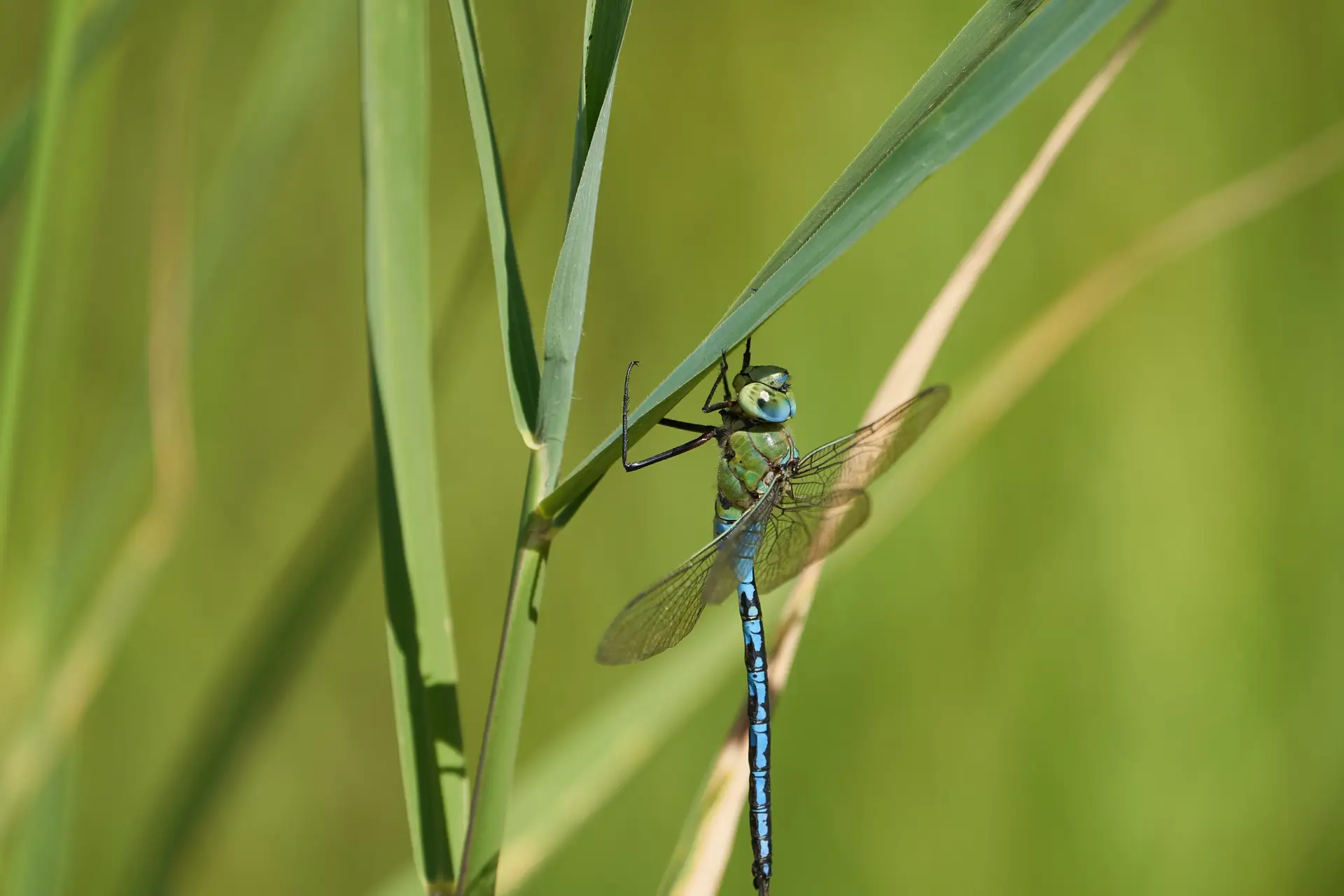
A University of Wyoming scholar is among dozens of scientists from around the world warning of serious environmental consequences due to the decline of insects as a result of climate change.
Department of Zoology and Physiology Professor Michael Dillon, also a faculty member in UW’s Program in Ecology, is one of the co-authors of a manuscript titled “Scientists’ Warning on Climate Change and Insects,” which appeared in the journal Ecological Monographs on Nov. 7. The 70 scientists come from 19 countries.
The scientists say that if no action is taken to better understand and reduce the impact of climate change on insects, the chances of a sustainable future with healthy ecosystems will be drastically limited.
“Insects are ubiquitous and play important but often underappreciated roles just about everywhere on Earth, from Antarctica to the Sahara Desert,” Dillon says. “And they often directly affect people, both positively as, for example, pollinators and decomposers, and negatively as crop pests and disease vectors.”
“Climate change aggravates other human-mediated environmental problems, including habitat loss and fragmentation, various forms of pollution, overharvesting and invasive species,” says lead author Jeffrey Harvey, of the Netherlands Institute of Ecology at Vrije Universiteit Amsterdam. “Insects play critical roles in so many ecosystems, but we are rapidly losing at least part of them.”
The authors say both longer-term events and short-term extremes are harming insects in several ways, especially in temperate regions.
“The gradual increase in global surface temperature impacts insects in their physiology, behavior, phenology, distribution, and species interactions. But also, more and longer-lasting extreme events leave their traces,” Harvey says, mentioning hot and cold spells, fires, drought, and floods.
The manuscript presents evidence such as how even when fruit flies, butterflies and flour beetles survive heat waves, males or females become sterilized and, thus, unable to reproduce. Bumblebees, in particular, are very sensitive to heat, and climate change is now considered the main factor in the decline of several North American species.
“Bumblebees are critical pollinators in the wild but also are incredibly important commercially,” Dillon says. “Many of the vegetables we eat are grown in greenhouses where bumblebees are used as pollinators, so climate-associated declines in bumblebees are particularly alarming.”
One major concern with insect decline in a warming world is that plants — on which insects depend for food and shelter — are similarly affected by climate change.
“Over time, insects must adjust their seasonal life cycles and distributions as it warms,” Harvey says. “However, their ability to do this is hindered by other human-caused threats like habitat destruction and fragmentation, and pesticides. Furthermore, short-term heat waves and droughts can drastically harm insect populations, making insects less able to adapt to more gradual warming. Warming over different time scales poses different kinds of threats to insects.”
The scientists not only describe the problems, but also discuss a range of solutions and management strategies to help buffer insects against climate warming. These include growing a variety of wild plants and providing food and areas where insects can shelter to ride out climate extremes. Reducing the use of pesticides and other chemicals also is recommended.
“Insects are tough little critters, and we should be relieved that there is still room to correct our mistakes,” Harvey says. “But time is running out. We really need to enact policies to stabilize global climate. In the meantime, at both government and individual levels, we can all pitch in and make urban and rural landscapes more insect-friendly.”
This story was originally published on UW News.