


Prep time: 40 minutes
Chilling time: 45 minutes
Baking time: 12 minutes per pan
Cooling time: 30 minutes
Total time: 2 hours
Servings: 20
- Parchment paper or non‑stick baking mats
- 1 cup (226 g) unsalted butter, melted and cooled
- 2¾ cups (330 g) all‑purpose flour (spoon and level to measure)
- 1½ teaspoons cream of tartar
- 1 teaspoon baking soda
- 1 teaspoon cornstarch
- ½ teaspoon ground cinnamon
- ½ teaspoon salt
- 1 cup (198 g) sugar
- 1/3 cup (71 g) light brown sugar, packed
- 1 large egg, room temperature
- 2 teaspoons vanilla extract
Rolling Sugar
- ½ cup (99 g) sugar
- 1½ teaspoons ground cinnamon
- 1 teaspoon ground ginger
- 1 teaspoon ground cardamom
- ½ teaspoon ground allspice
- ⅛ teaspoon ground cloves
Frosting
- ½ cup (113 g) unsalted butter, room temperature
- 2½ cups (284 g) powdered sugar
- 3 tablespoons cream (preferred) or milk
- Seeds scraped from ½ of a split vanilla bean or 1½ teaspoons vanilla bean paste or extract
- ⅛ teaspoon salt
- In a large bowl, whisk together the flour, cream of tartar, baking soda, cornstarch, cinnamon, and salt; set aside.
- In a large bowl, using an electric mixer, beat the melted butter, sugar, and brown sugar until light and fluffy, about 5 minutes. Scrape sides of the bowl as needed.
- Mix in the egg, then the vanilla until combined.
- Reduce mixer speed to low, slowly add the flour mixture and mix until just combined. The dough will be very thick and heavy, yet slightly crumbly.
- Cover the dough tightly with plastic wrap and chill for at least 45 minutes and up to 2 days. (If chilling for longer than a few hours, let the cookie dough sit at room temperature for at least 30 minutes before using because it will be quite hard.)
- Preheat the oven to 350°F. Line 2 baking sheets with parchment paper or non‑stick baking mats. Set aside.
- In a small bowl, mix the rolling sugar ingredients. With a medium cookie scoop (#40 or #50/about 1½ tablespoons), portion out the cookie dough. Shape dough into balls and roll in sugar. Place 2 inches apart on the baking sheet.
- Bake the cookies for 8–12 minutes. The cookies will look very puffy, soft, and under‑baked.
- Remove from the oven and let cool on the baking sheet for 2–5 minutes before transferring to a wire rack to completely cool.
- Prepare frosting: With an electric mixer, beat the butter on medium speed until creamy for 2 minutes. Add powdered sugar, cream, and vanilla with the mixer running on low. Increase to high speed and beat for 3 minutes. If frosting is too thick, add more cream 1 tablespoon at a time. Taste the frosting and add ⅛ teaspoon salt if it is too sweet.
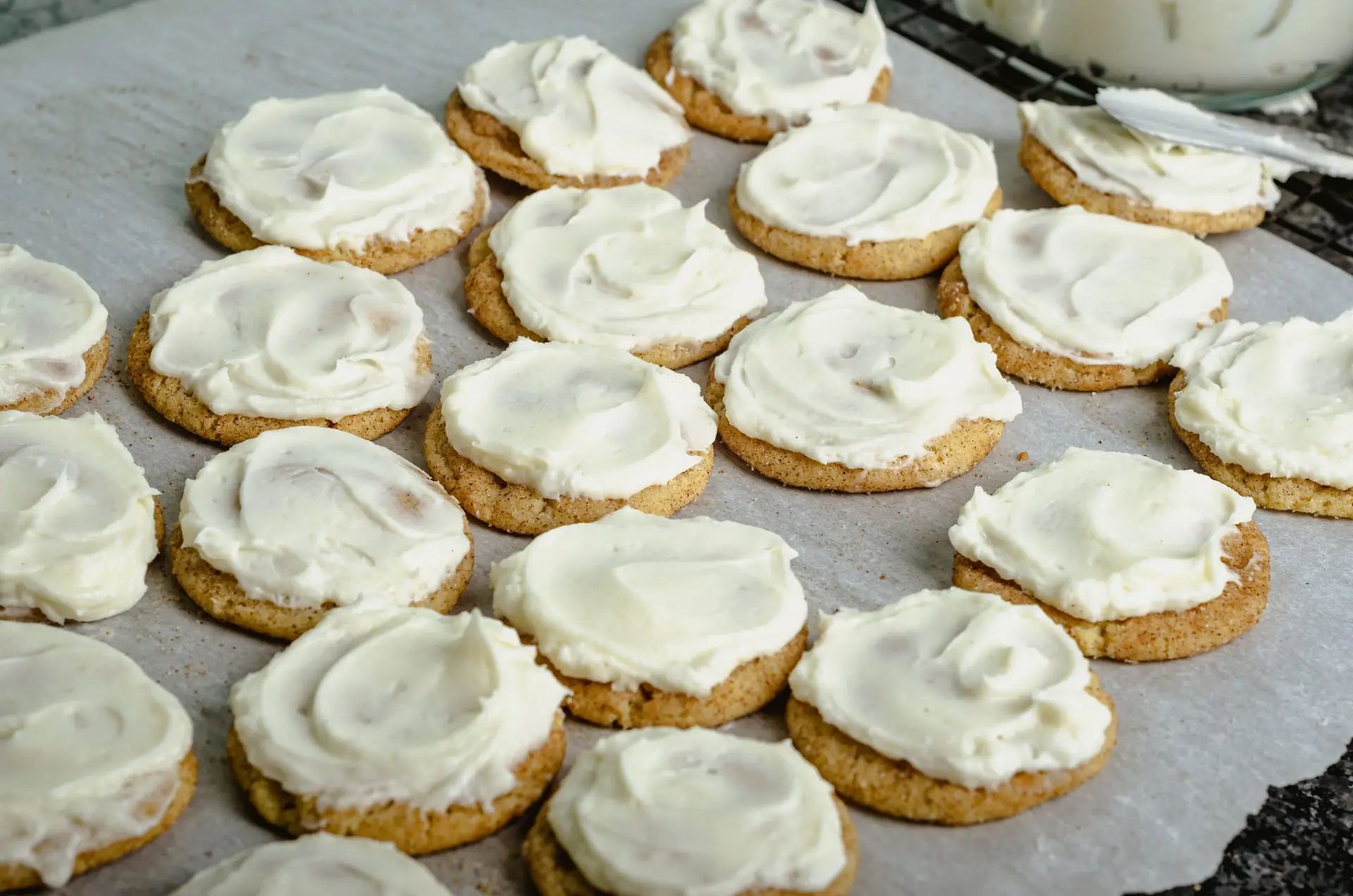
- Frost cooled cookies. There may be leftover frosting, depending on how much is used on each cookie.
- Place cookies in layers separated by waxed or parchment paper in an airtight container.
- If desired, freeze unfrosted cookies for longer storage. Thaw cookies, then frost and decorate.