

An academic landscape routed by coronavirus has agriculture students at the University of Wyoming adopting a Marine-like improvise, adapt and overcome attitude.
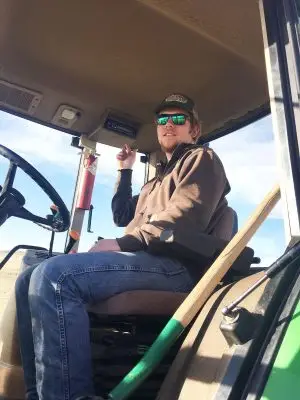
Undergraduate student Ty Paisley north of Wheatland is listening to courses via podcast through Bluetooth in a tractor while working because COVID-19 doesn’t stop winter turning to spring and pastures needing harrowing.
Livestock judging team member Courtney Newman outside Fort Collins and other team members are honing skills via online livestock judging contests because all live contests were cancelled.
Animal and veterinary sciences freshman Kiley Stevens in Juneau, Alaska, is taking advantage of group chats to keep up with her assignments.
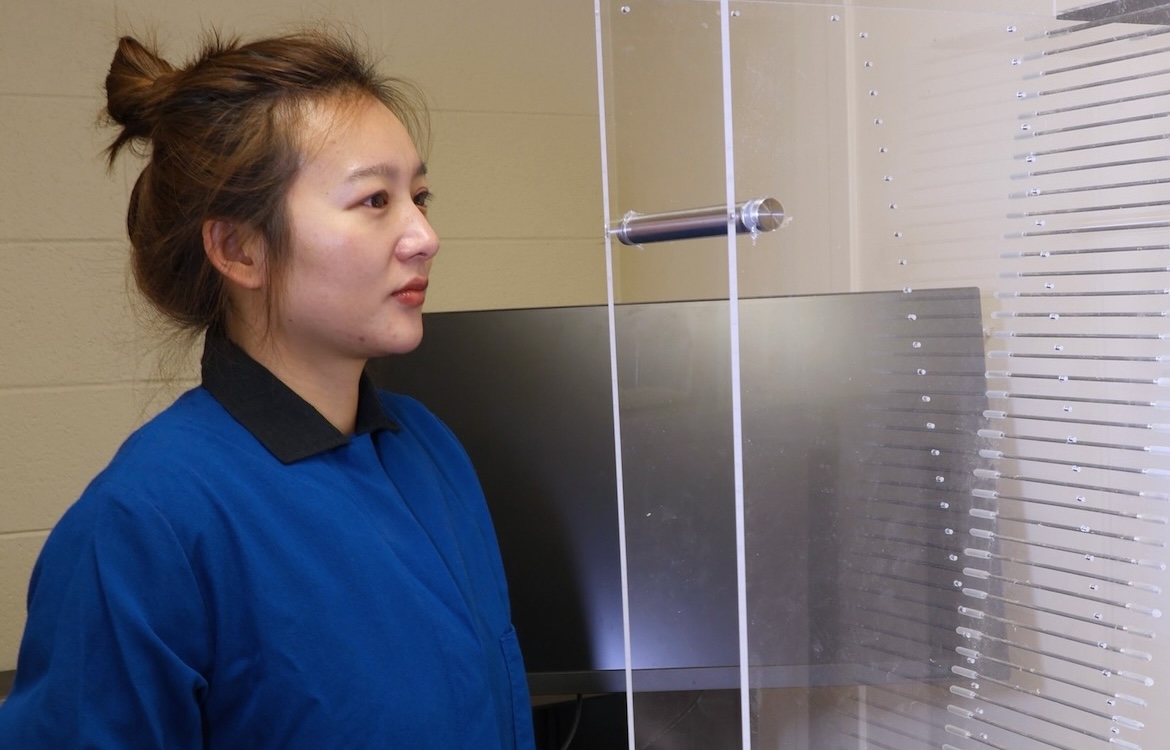
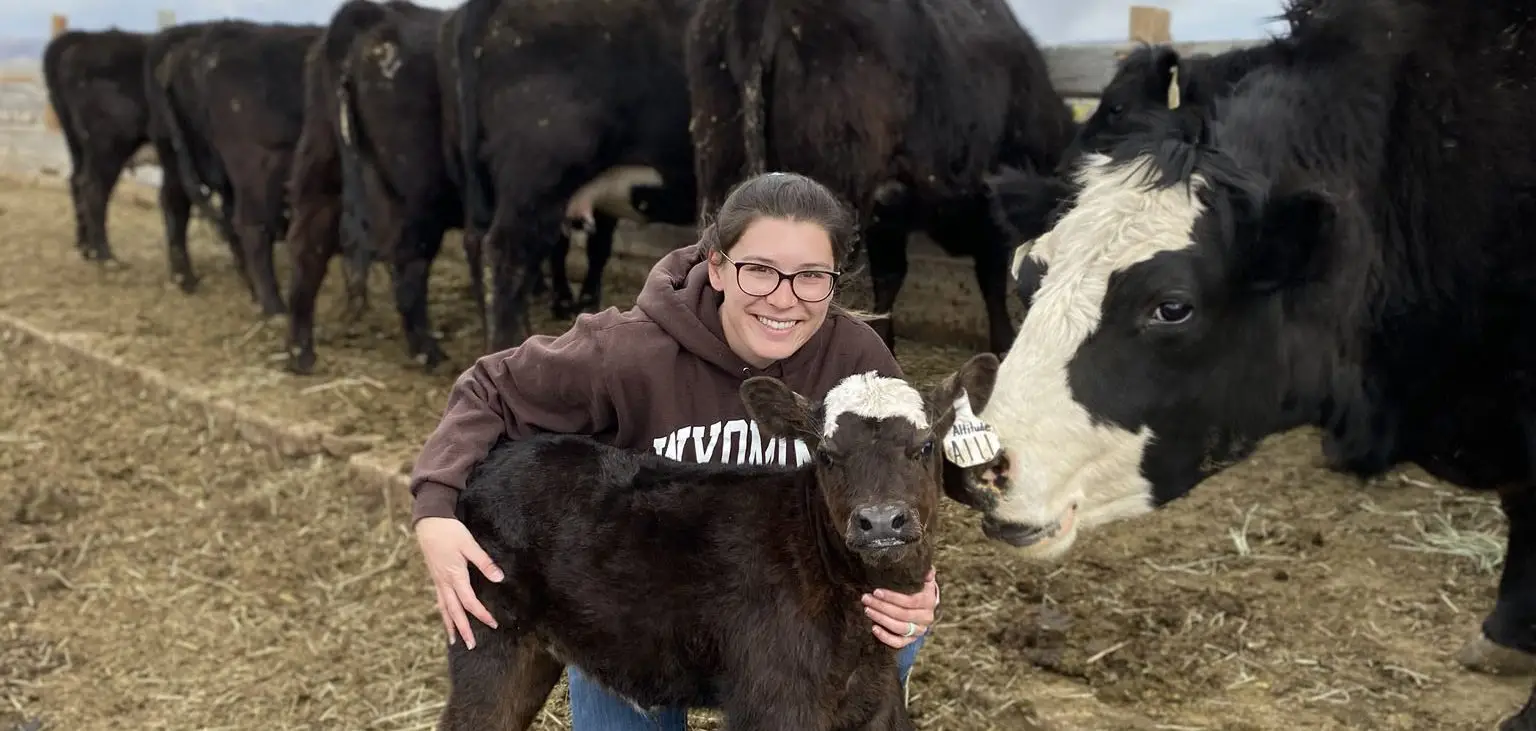
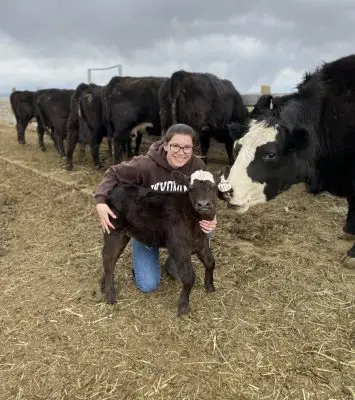
Graduate student Kelly Woodruff obtained a research exemption to conduct research near Laramie so every two hours she checks cows ready to calve for research data, because cows ready to calve don’t know UW has put in place research restrictions due to coronavirus safety concerns.
They’re only a few examples of how College of Agriculture and Natural Resources students are handling the changes when COVID-19 whacked their academic landscapes.
UW required most classes and laboratories be offered online, live or recorded.
Woodruff’s research subjects are at the beef unit of the Laramie Research and Extension Center. She suctions stomach fluid from newborn calves before they nurse, studying the effects of cow nutrient restriction on the developing calf biome. The cocktail is rich with bacteria, fungi, protozoa and viruses. Woodruff’s adviser, Hannah Hollinger in the Department of Animal Science, is interested in the development of the calf microbiome and whether the microbiome is different in a nutrient-restricted cow and how the restricted nutrient diet affects development of the calf.
Woodruff said she is thankful for the ability to continue her research. “Cows only calve once a year, and I can’t pick this up in a couple of months,” she said. “We are maintaining all social distancing guidelines.”
Calving started the end of March and will probably end the last of April or early May.
Paisley has had to work around very limited internet and cell service. He said he and his high school siblings are using a hotspot with their phones to complete coursework.
“I try to tune into classes when I can,” said Paisley, majoring in animal science with a business concentration and a minor in ag business. “With nice spring days, I can’t wait on classes. I also work quite a bit on studies at night.”
The entire Paisley family wrestles the changes wrought by COVID-19. Steve Paisley, an associate professor and the UW Extension beef specialist, teaches classes in animal science. He noted he has one student who is driving to a McDonald’s parking lot for internet to participate in his class.
Ty Paisley has the Zoom app on his phone and had installed a stereo in a tractor years ago. He listens to lectures and watches Zoom presentations while working.
“I’m trying to get harrowing done, and everything is dry right now, the right time to do it,” he said, prior to recent snowstorms that blanketed Wyoming. “I’ve got everything linked through. I’ve listened to a couple lectures and in the morning when I’m feeding I can listen to them, too.”
The Paisleys are also in the middle of calving, and he checks cows during the day and a couple times at night so his father, director of the James C. Hageman Sustainable Agriculture Research Extension Center near Lingle, can get some sleep before he has to go to work, a 45-minute drive.
Stevens in Alaska’s capital city said she writes down all due dates of assignments in a planner to stay on top of her classes.
She has good internet and cell service. Juneau is two hours behind Mountain Time.
“I also do my best to watch the lecture videos for all of my classes on the day I normally would if I were attending class,” Stevens said. “This way I keep myself to a normalized schedule.”
Group chats with classmates are important. Classes include statistics, animal biology, general chemistry 2 and a first year seminar course.
“Having group chats with people in the various classes helps all of us work out things we don’t understand, and it helps us not miss deadlines,” she said.
Newman is having to deal with livestock but in a much different way. Members of UW’s highly touted livestock judging team have had to convert to online judging contests instead of their usual on-location judging competitions. Team members also help at 4-H and FFA judging events during summer, but some of those are also cancelled.
The agricultural business and economics major lives outside Fort Collins but still runs into internet issues.
“It’s not great,” she said. “We are lucky to have a couple options. We can go into town where my parents still work by themselves. If we do need good internet, we can get by.”
Newman is taking six courses, some recorded and one Zoom. She likes the Zoom live presentations but also the flexibility of having lectures recorded.
Newman and other livestock judging team members have competed in one online contest to date, open to anyone in livestock judging from 4-H through collegiate levels. Videos of four animals (goats, hogs, sheep and cattle) are posted on YouTube. Each contestant has 30 minutes to look at the class then video record and post their reasons to YouTube. A judge is sent the link. Livestock coach Caleb Boardman has all members participating.
The team had been training and was on its way to the Houston Livestock Show competition when they heard that contest had been cancelled. The event was the second big competition of the spring, the other was the Denver National Western Livestock Show and Rodeo in January. Team members need to keep their skills honed for major competitions in Kansas City and Louisville this fall.
“Cancellation of (Houston) has been difficult, but it won’t set us back,” Newman said. “It was just an opportunity we didn’t get to take advantage of.”