


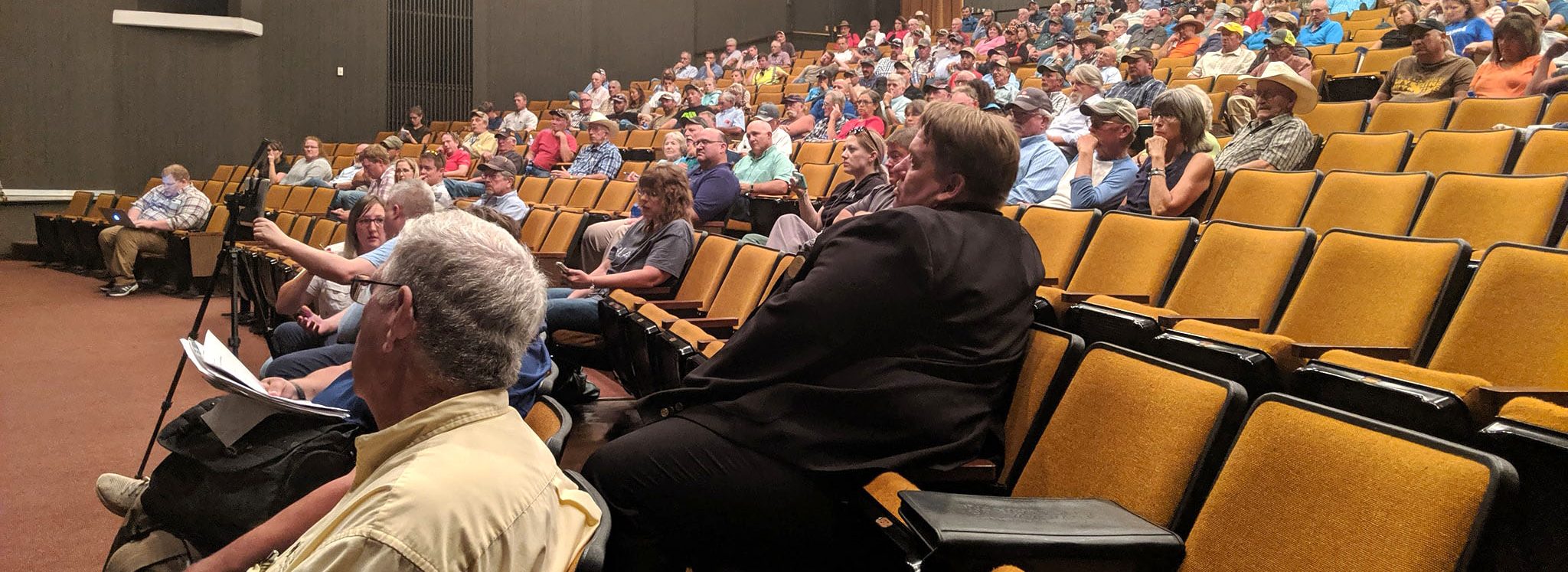

Wyoming and Nebraska could suffer an $89 million economic loss if crops on the 107,000 acres affected by an irrigation tunnel collapse near Fort Laramie are a total loss, according to information from the University of Wyoming and Nebraska Extension services.
Inspection and repairs have continued since the July 17 collapse and resulting breach of the Goshen/Gering-Fort Laramie Canal. The tunnel is a key component connecting water from the North Platte River to a canal system in Wyoming and Nebraska. The tunnel is 2,200-foot long, about 110 feet below ground and about 14 feet in diameter. It is unknown when water will be returned to the canal.
The economic analysis assumes a total loss of corn, dry edible beans and sugar beets in the region and one-third loss of alfalfa production, said Brian Lee and Roger Coupal, agricultural economists with the University of Wyoming.
Production of irrigated crops is critical to Goshen County, Wyo., and Scotts Bluff County, Neb. The farmers mainly produce irrigated alfalfa hay, corn, sugar beets and dry edible beans.
This economic impact model was produced with the best data available given the variability in agriculture, said Lee, based at the James C. Hageman Sustainable Agriculture Research and Extension Center near Lingle.
Other crops grown in this area were not considered due to lack of data, he said. Potential indemnity payments were not included because of the uncertainty of crop losses being covered by crop insurance.
“If farmers are unable to sell these commodities, there will be a negative impact not only on our farmers but also on main streets,” said Jessica Groskopf, Nebraska Extension regional economist. “It is important for our communities to understand the hardships our farmers are facing and realize the loss of these crops will ripple through our economy.”
The complete report is available at https://go.unl.edu/canal.
The affected counties receive less than 16 inches of average annual precipitation. This low precipitation makes surface-water irrigation a critical component of modern agriculture in this area, said Groskopf.