



UW Extension publication examines sainfoin weed control

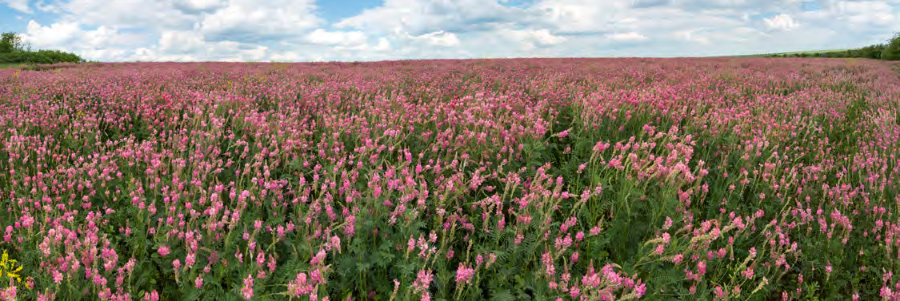
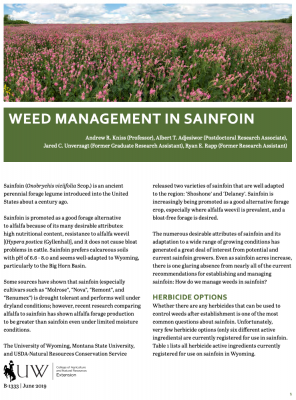
            Weed Management in Sainfoin is now available from the University of Wyoming Extension to help potential and current sainfoin growers manage weeds in their crop.

Sainfoin has become a desirable option as a forage alternative due to its adaptability to a wide range of growing conditions.

“We get a lot of questions on how to manage weeds, since most of the available information on sainfoin doesn’t provide specific weed control recommendations,” said Andrew Kniss, University of Wyoming professor for plant sciences.

The bulletin is broken into three parts: weed control considerations for pre-crop, during the establishment phase and in the established sainfoin crop.

“Weed management is different in sainfoin compared to alfalfa or some of the grass hay species because there are far fewer herbicides available,” said Kniss.

This free bulletin is available as a pdf, HTML text or ePub at bit.ly/sainfoin-weeds.

Share the Post:

Related Posts

field containing a thick strip of yellow grass with mostly green grass to the right side

UW-Led Institute Releases Film Highlighting 10 Years of Collaborative Invasive Grass Management

The University of Wyoming’s Institute for Managing Annual Grasses Invading Natural Ecosystems (IMAGINE) has released a short film highlighting a decade of collaborative efforts to manage invasive grasses in northeast Wyoming.

The film, titled “Northeast Wyoming Holds the Line Against Ventenata & Medusahead,” features the Northeast Wyoming Invasive Grass Working Group (NEWIGWG), one of the largest invasive grass working groups in the U.S.

Read More
Four people stand in a field; Jahshua Sanchez is holding a bird.

UW’s WYOBIRD Contributes to Study on Climate Sensitivity Among Tree Swallows

Across the board, tree swallow populations have similar sensitivity to warming amid climate change, but different abilities to respond to change. Breeding dates have advanced about one day per degree of warming, but northern populations face tighter time constraints and greater exposure to warming, according to recent research that included University of Wyoming students and faculty in the Wyoming Bird Initiative for Resilience and Diversity (WYOBIRD).

Read More